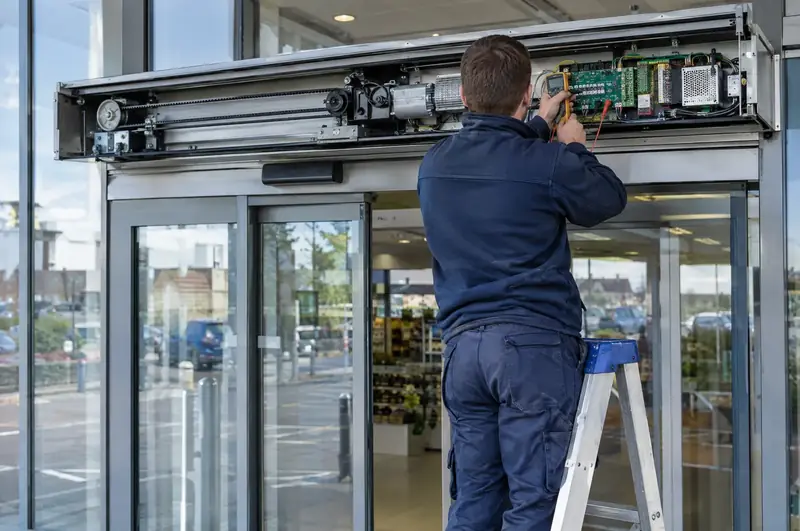
When an automatic door fails, the building usually finds out at the worst moment: a shop entrance stuck shut on a busy morning, a surgery door that will not open for a wheelchair user, or a door left wide open overnight. We repair sliding, swing, folding and revolving automatic doors, including most doors we did not install.
Before an engineer comes out, we agree the visit price with you in writing. On site they find the fault, explain it and either repair it during the visit or quote for parts before ordering anything. Some faults can be priced from photos and the make and model shown on the operator cover, which saves a wasted trip.
Tell us if the door is stuck open or shut, or unsafe, and we will tell you the earliest visit we can offer. In the meantime, the steps below keep people safe.
- Doors covered
- Sliding, swing, folding and revolving
- Visit price
- Agreed in writing before we attend
- Typical parts lead time
- typically 1 to 3 weeks
- Safety reference
- BS EN 16005
What are the most common automatic door faults?
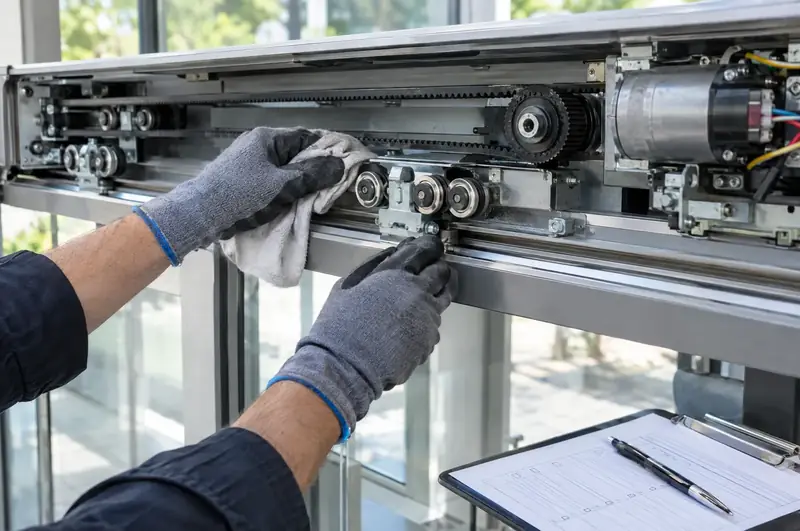
Most automatic door faults come from the sensors, the running gear along the track, the drive unit or the power supply. The symptom usually points to where the engineer should start.
| Symptom | Common causes |
|---|---|
| Door will not open | Programme switch in the wrong mode, power or battery fault, failed activation sensor, controller fault, lock not releasing |
| Opens or closes by itself | Sensor seeing movement nearby, wet or reflective floor, loose sensor, detection zone set too wide |
| Stops halfway or reverses | Safety sensor triggering, debris in the floor guide, worn rollers, tight or damaged track |
| Noisy, slow or juddering | Worn belt or rollers, dirty track, failing motor or gearbox |
| Error code or flashing light | A fault stored by the controller, which the engineer reads on site |
| Will not lock or release | Faulty electric lock, misaligned keep, wrong night mode settings |
| Cracked or broken glass | Impact damage, failed glazing support, leaf running out of line |
Power and battery faults are more common than people expect. A tripped fused spur, an isolator switched off by a cleaner or a flat backup battery can all look like a dead door.
What should I do while the door is faulty?
Make the door safe first, then call us. Most automatic doors have a programme switch, often a key switch or small panel near the door, that lets you choose a safer mode.
- If the door is stuck open, try the locked or night setting, or keep the opening supervised if security matters.
- If the door is stuck shut, use another entrance, put up a sign and make sure an alternative way out is open.
- If the door moves unpredictably or strikes people, switch it off at the programme switch and keep people away from the leaves.
- Do not force the leaves by hand or wedge them with objects, as this can damage the drive belt, carriages and track.
Please do not open the operator cover or attempt a repair to the drive yourself. The controller and motor carry mains voltage, and a door set up incorrectly can trap or strike the next person through it.
Which automatic doors can you repair?
We repair most powered pedestrian doors: single and bi-parting sliding doors, telescopic and curved sliders, swing door operators, folding doors and revolving doors. That includes doors fitted by other companies and doors from all the major European operator brands.
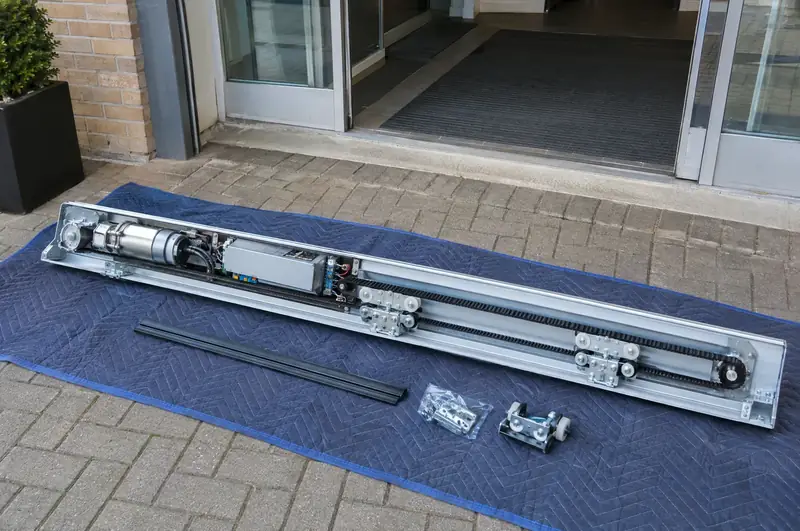
Older doors can be harder. Controllers and motors for some discontinued drive units are no longer made, and second-hand parts are not always reliable. Where a part is obsolete, we say so and give you the choice between a reconditioned part, where a dependable one exists, and a new drive unit on the existing frame and leaves.
How is a repair visit priced?
The visit price is set out in writing and agreed with you before the engineer travels. It covers attending, diagnosing the fault and a set period of work on site. If the repair needs parts the engineer does not carry, or more time than the visit includes, you get a quote first and nothing extra is done without your agreement.
Photos help a great deal. A picture of the label on the operator cover, the door from both sides and any error code on the display lets us identify the drive unit, bring the likely parts and sometimes price the whole repair in advance.
Evening and weekend visits are possible where the entrance can only close outside trading hours. They are priced differently, and the rate is confirmed in writing at the time of booking.
When is replacing the drive unit better value than repairing it?
Replacing the drive unit is usually better value when the operator needs a second major part within a year or two, when spares are obsolete, or when the repair cost approaches the price of a new operator. Motors, gearboxes and controllers are the expensive parts; belts, rollers and sensors are routine.
A drive unit replacement keeps the existing frame and glass leaves and gives you a supported operator with new sensors and a fresh set-up. We only suggest it where the numbers make sense, and the choice to repair instead is always yours.
What happens after the repair?
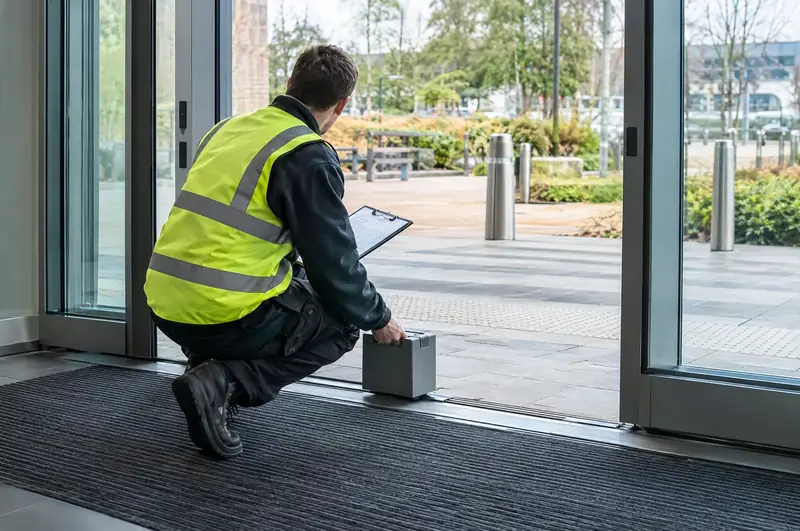
Before leaving, the engineer runs the door through its full cycle, checks the safety sensors still protect the closing edges and the area the door moves through, and confirms how it behaves when the power is cut. You receive a written job report listing the fault found, the parts fitted and any further work recommended.
Repeat faults are often a sign the door needs regular care. Planned servicing catches worn belts, rollers and sensors before they cause a breakdown, and a safety inspection shows whether an older door needs upgrades to suit the people who use it.
Repairs we carry out most often
| Option | What it is | Best for |
|---|---|---|
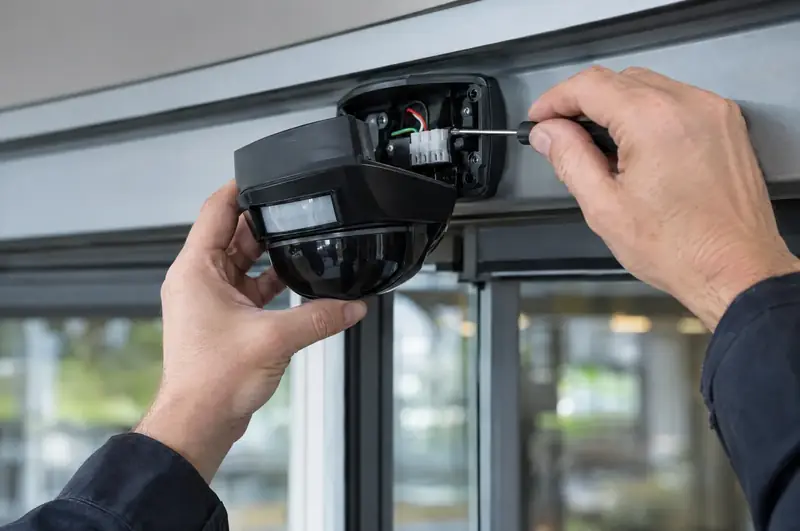
| Sensor replacement | A new activation or safety sensor, set up and tested | False openings or a door that ignores people |
| Drive belt | A new toothed belt between the motor and the carriages | Slipping, jerky or noisy movement |
| Rollers and floor guides | New carriage wheels and bottom guides | Leaves that drag, rattle or swing at the bottom |
| Controller | A new control board programmed for the door | Error codes and erratic behaviour |
| Motor or gearbox | A new drive motor, gearbox or both | A door that hums but will not move |
| Electric lock | A new lock, keep or locking settings | Doors that will not lock at night or release in the morning |
How much does an automatic door repair cost?
A repair visit, covering attendance, fault-finding and the first period of work, is from £95 ex VAT (£114 inc VAT) as a guide. The table shows what moves the price; your written quote is the price you pay.
| Item | Guide price | Notes |
|---|---|---|
| Repair visit including the first hour, standard hours | £95 – £195 | ex VAT; homes £114 – £234 inc VAT |
| Repair visit, evenings and weekends | £195 – £300 | ex VAT; homes £234 – £360 inc VAT |
| Additional labour | £65 – £95 | per hour, ex VAT; homes £78 – £114 inc VAT |
| Sensor replacement | £195 – £495 | fitted, ex VAT; homes £234 – £594 inc VAT |
| Drive belt replacement | £145 – £345 | fitted, ex VAT; homes £174 – £414 inc VAT |
| Rollers, carriage wheels or floor guides | £195 – £495 | fitted, ex VAT; homes £234 – £594 inc VAT |
| Door off track or realignment | £125 – £345 | ex VAT; homes £150 – £414 inc VAT |
| Controller (control board) replacement | £395 – £895 | fitted, ex VAT; homes £474 – £1,074 inc VAT |
| Motor or gearbox replacement | £695 – £1,395 | fitted, ex VAT; homes £834 – £1,674 inc VAT |
The visit price is agreed in writing before an engineer attends. Parts and further work are quoted before they are done. Prices for faulty parts depend on the make and model of the door.
Standards and the law
BS EN 16005 is the current standard for the safety in use of powered pedestrian doors, and BS 7036-0:2014 is the British code of practice for risk assessment and risk reduction used alongside it. Standards are not law in themselves, but they are the recognised benchmark for showing an automatic door is safe to use, and we set up, test and document doors with reference to them.
No law sets a fixed service interval. We recommend that a trained engineer checks the safety functions at least once a year, with service intervals set by the manufacturer’s instructions and how heavily the door is used, and that someone on site carries out simple regular checks and keeps a record.
The law that applies also depends on the nation. The table shows the main differences; each county and town page carries the rules for its own nation.
| Nation | Accessibility | Building regulations guidance | Fire safety law |
|---|---|---|---|
| England | The Equality Act 2010 | Approved Document M (Volume 2): powered opening where opening force would exceed 30 N, or 22.5 N from 30° to 60°; 1000 mm clear width for public entrance doors in new buildings | Regulatory Reform (Fire Safety) Order 2005: the responsible person |
| Wales | The Equality Act 2010 | Approved Document M (Wales): powered opening where opening force would exceed 20 N; 1000 mm clear width for public entrance doors in new buildings | Regulatory Reform (Fire Safety) Order 2005: the responsible person |
| Scotland | The Equality Act 2010 | Building (Scotland) Regulations 2004, non-domestic Technical Handbook: accessible entrance with at least 800 mm clear opening; building warrant for building work | Fire (Scotland) Act 2005: whoever has control of the premises |
| Northern Ireland | The Disability Discrimination Act 1995 | Building Regulations (Northern Ireland) 2012: powered doors must not trap people and must open on power failure; access guidance in Technical Booklet R | Fire and Rescue Services (Northern Ireland) Order 2006 and Fire Safety Regulations (Northern Ireland) 2010 |
Questions about automatic door repairs
Do you repair automatic doors you did not install?
Yes. We repair doors whoever fitted them. The engineers we send work on sliding, swing, folding and revolving doors from the major European operator brands. Send a photo of the label on the operator cover and we can usually confirm the make and model, and whether parts are available, before anyone visits.
Can you price a repair from photos?
Sometimes. Photos of the door from both sides, the operator label and any error code often show the likely fault, so we can quote for the part and labour in advance. Faults with several possible causes still need an engineer to test the door, and the price of that visit is agreed with you before they come.
My automatic door is stuck open. What should I do?
Try the programme switch first, as changing to the night or locked setting often closes the door. If it will not close, keep the opening supervised where security matters and keep people clear of the leaves. Do not force them shut. Let us know the door is stuck open and we will give you the earliest visit we can offer.
Why does my automatic door open on its own?
Doors that open for no reason usually have a sensor seeing movement it should ignore, such as people walking past, rain, blowing leaves or reflections from a wet floor. A sensor knocked out of line, or detection settings that are too wide, can do the same. An engineer can adjust or replace the sensor and retest the detection zone.
What do error codes on an automatic door mean?
Error codes are faults the controller has stored, such as a blocked sensor, a motor overload or a battery problem. Their meaning varies between makes, so the engineer reads them with the door's own diagnostic tools. Noting the code, or photographing the display, before you call helps us prepare for the visit.
Are parts available for older automatic doors?
For many doors, yes. For some older or discontinued drive units, new controllers and motors are no longer made. We check what is available before quoting, including reconditioned parts where they are reliable. If key parts are obsolete, we explain the options, including a new drive unit that keeps the existing frame and leaves.
Do you charge for parts separately?
Yes. The visit price covers attending, diagnosing the fault and a set period of work. Parts, and any work beyond that period, are quoted to you before they are done. If you decide not to go ahead with a quoted repair, you only pay the visit price you agreed.
Can you replace broken glass in an automatic door?
Yes. A cracked or shattered leaf is made safe first, usually by switching the door off and taping or boarding the glass, then a replacement is measured and made in safety glass. Until it is fitted, keep people away from the damaged leaf and use another entrance if you have one.