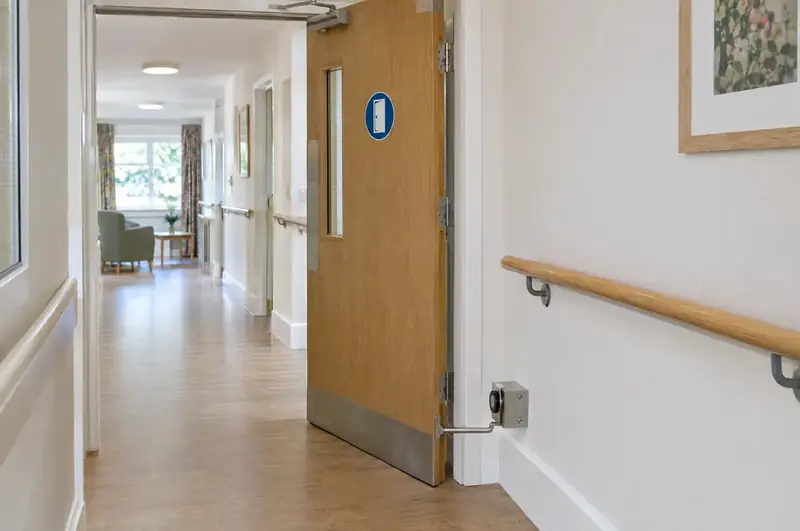
Fire doors only protect a building when they are shut, yet heavy self-closing doors are hard work for residents with walking frames, staff pushing trolleys and anyone carrying a tray. Many end up wedged open, which defeats the door entirely. A hold-open device solves both problems: the door stays open for daily use and is released to close as soon as the alarm goes off.
We supply and fit electromagnetic hold-open units wired to the fire alarm, free-swing closers that let a door move as if it had no closer, and battery units triggered by radio or by the sound of the alarm. Each one is chosen to suit the door, the alarm system and what your fire risk assessment says.
The survey is free. You receive a fixed, itemised written quote that lists every door, the device chosen for it and any alarm connection work, so nothing is left to guess.
- Device types
- Magnetic, free-swing, acoustic and radio
- Typical lead time
- typically 1 to 3 weeks
- Usually suits
- Care homes, offices, schools, hospitals
- Decided by
- Your fire risk assessment
How does a fire door hold-open device work?
A hold-open device holds a fire door in a set position until it receives a release signal, then lets the door's own closer shut it. The signal normally comes from the fire alarm, and most devices also release if their power or battery fails, so the door fails safe by closing.
- Electromagnetic hold-open: a magnet on the wall or floor holds a steel plate on the door. When the alarm cuts power to the magnet, the door closes under its closer.
- Free-swing closer: a closer that lets the door move freely, so it is light to open and stays wherever it is left. On alarm it switches back to acting as a normal closer and shuts the door.
- Radio-triggered unit: a battery device on the door that releases when a radio transmitter connected to the alarm panel sends a signal.
- Acoustic unit: some battery units listen for the alarm sound. Whether they are suitable depends on the fire risk assessment, the alarm sounders and how noisy the area is.
Where can fire doors be held open?
Fire doors can be held open only where the fire risk assessment for the building says it is acceptable, and only with a device that releases them when the fire alarm operates. The person responsible for fire safety in the building makes that decision, usually with advice from a fire risk assessor.
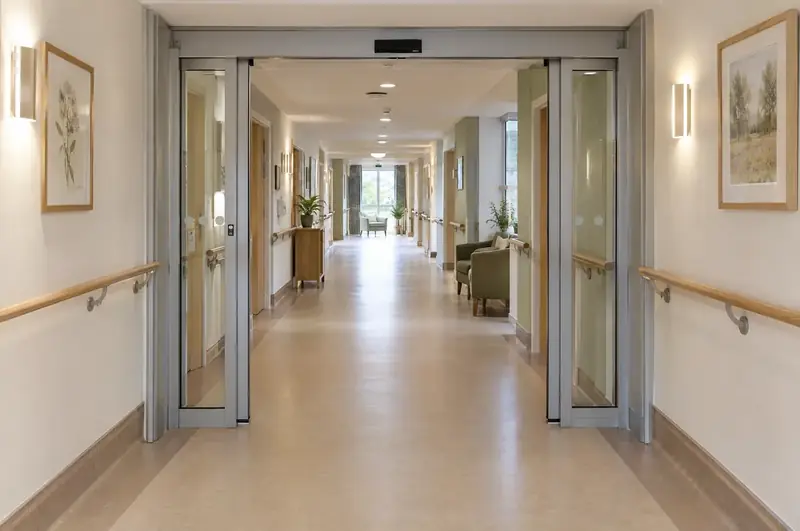
Typical candidates are corridor cross doors, lounge and dining room doors in care homes, office corridor doors and kitchen or lobby doors that staff pass through all day. Doors protecting a single escape stair, plant rooms and some bedroom doors may need a different approach, such as a free-swing closer, or may need to stay shut.
The rule is simple: a fire door that is held open has to close by itself when the fire alarm operates. A wedge, hook or door stop never meets that requirement, because nothing releases it in a fire.
Which hold-open device suits which door?
The right device depends on how the door is used, what the alarm system can do and the needs of the people moving through it. As a quick guide:
| Situation | Usually suits |
|---|---|
| Corridor door that should stay fully open all day | Wall or floor magnet wired to the alarm |
| Room door that residents or patients open and close themselves | Free-swing closer, so the door is light to use |
| Building where new alarm cabling is difficult | Radio-triggered battery unit |
| Smaller premises with a simple, clearly audible alarm | Acoustic unit, if the fire risk assessment allows |
Free-swing closers matter in care settings. A resident can open their own door without fighting a closer, leave it ajar if they wish, and it still shuts when the alarm sounds. That combination of independence and protection is hard to achieve any other way.
What does the free hold-open survey check?
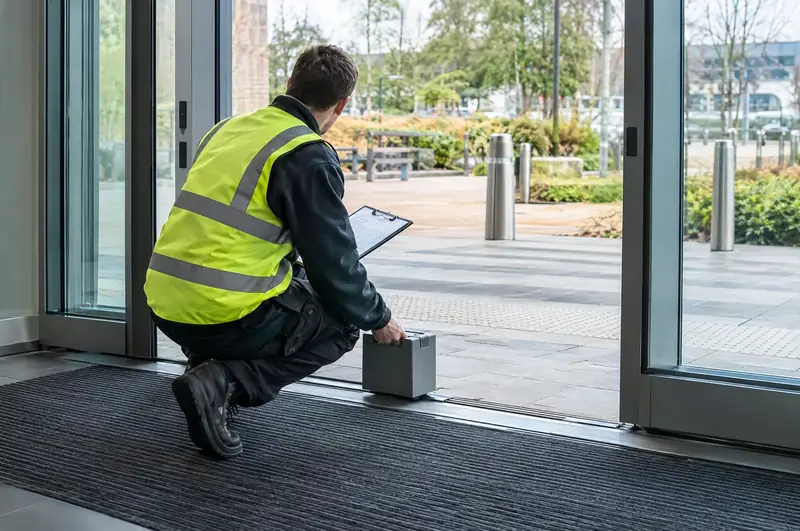
The survey checks each door, its closer, the frame and the alarm system the devices will link to. The engineer notes:
- whether the door closes and latches fully from the open position under its own closer;
- The condition of the closer, hinges, seals and any intumescent strips the fixings could affect;
- where the door rests when open and the best position for a magnet or floor unit;
- The alarm panel type, spare outputs and where cable runs or radio links are practical;
- power supplies near each door for hard-wired units;
- what the fire risk assessment says about each door you want held open.
If a door cannot close properly on its own, a hold-open device would not make it safe. We tell you, and the closer adjustment or door repair is included in the quote as a separate item.
How is the work carried out and tested?
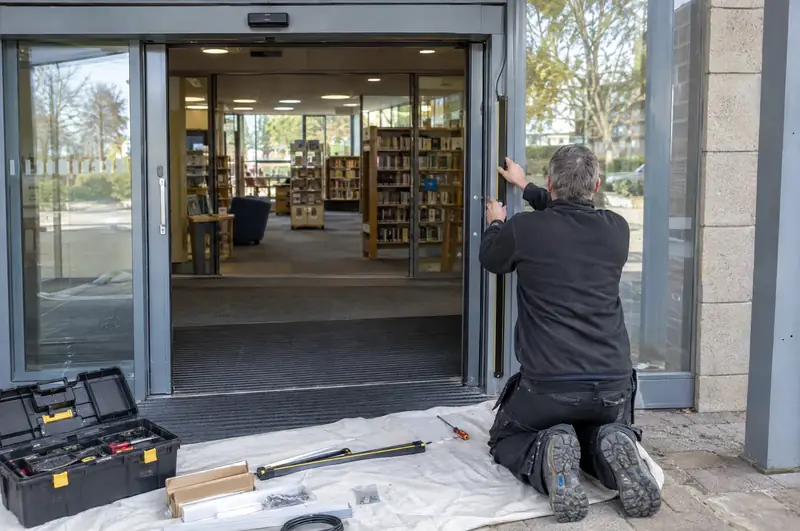
Devices are fitted in positions and with fixings that respect the door's fire certification, then each door is tested by releasing it from fully open and checking it closes and latches. Most single-floor jobs are completed in a day.
Where a device must be wired to the alarm panel, the connection at the panel is made by, or agreed in advance with, your fire alarm engineer. We coordinate visits so the alarm can be tested with the doors once both parts of the work are done.
At handover you receive a list of every door, the device fitted and how it releases, plus short instructions for staff on what to check at each alarm test.
How should hold-open devices be checked after installation?
Hold-open devices should release every time the fire alarm is tested, and someone should walk the route to confirm each door has closed and latched. Recording that walk alongside the alarm test is the simplest way to show the devices are working, and it fits naturally into the building's routine fire safety checks.
Battery units need fresh batteries at the interval the maker states, and most give a warning when they run low. Magnets and free-swing closers should be inspected during routine door maintenance. If a door is slow to close, stops short of latching or is found propped open, report it so it can be adjusted, and remind staff that a held-open door still needs a clear path to swing shut.
Hold-open options compared
| Option | What it is | Best for |
|---|---|---|
| Wall magnet | Electromagnet on the wall holding a plate fixed to the door | Corridor and lobby doors held fully open |
| Floor magnet | Electromagnet fixed to or set into the floor | Doors that open too far from a wall for a wall unit |
| Free-swing closer | Closer that lets the door swing freely and shuts it on alarm | Bedroom and lounge doors in care homes |
| Radio battery unit | Wireless device released by a transmitter at the alarm panel | Listed or finished buildings where cabling is hard |
| Acoustic battery unit | Device that releases when it hears the alarm sound | Smaller sites, where the fire risk assessment allows |
How much do fire door hold-open devices cost?
A hold-open device supplied and fitted to one fire door is from £145 ex VAT as a guide, depending on the type and any alarm connection. The table shows what moves the price; your written quote is the price you pay.
| Item | Guide price | Notes |
|---|---|---|
| Battery acoustic hold-open unit | £145 – £295 | per door, fitted, ex VAT |
| Hard-wired hold-open magnet linked to the fire alarm | £245 – £595 | per door, ex VAT; alarm panel work extra |
| Free-swing door closer linked to the fire alarm | £395 – £895 | per door, fitted, ex VAT |
Which hold-open device is suitable depends on your fire risk assessment. Linking to the fire alarm may need work by your alarm engineer.
Standards and the law
BS EN 16005 is the current standard for the safety in use of powered pedestrian doors, and BS 7036-0:2014 is the British code of practice for risk assessment and risk reduction used alongside it. Standards are not law in themselves, but they are the recognised benchmark for showing an automatic door is safe to use, and we set up, test and document doors with reference to them.
Automatic doors on an escape route need special arrangements, such as failing safely to open, a monitored fail-safe opening system or a break-out facility, so they never block people leaving in an emergency. Fire doors that are held open must close when the fire alarm operates.
The law that applies also depends on the nation. The table shows the main differences; each county and town page carries the rules for its own nation.
| Nation | Accessibility | Building regulations guidance | Fire safety law |
|---|---|---|---|
| England | The Equality Act 2010 | Approved Document M (Volume 2): powered opening where opening force would exceed 30 N, or 22.5 N from 30° to 60°; 1000 mm clear width for public entrance doors in new buildings | Regulatory Reform (Fire Safety) Order 2005: the responsible person |
| Wales | The Equality Act 2010 | Approved Document M (Wales): powered opening where opening force would exceed 20 N; 1000 mm clear width for public entrance doors in new buildings | Regulatory Reform (Fire Safety) Order 2005: the responsible person |
| Scotland | The Equality Act 2010 | Building (Scotland) Regulations 2004, non-domestic Technical Handbook: accessible entrance with at least 800 mm clear opening; building warrant for building work | Fire (Scotland) Act 2005: whoever has control of the premises |
| Northern Ireland | The Disability Discrimination Act 1995 | Building Regulations (Northern Ireland) 2012: powered doors must not trap people and must open on power failure; access guidance in Technical Booklet R | Fire and Rescue Services (Northern Ireland) Order 2006 and Fire Safety Regulations (Northern Ireland) 2010 |
Questions about fire door hold-open devices
Is it legal to hold a fire door open?
Yes, as long as the fire risk assessment allows it and the door closes automatically when the fire alarm operates. That is exactly what a hold-open device does. Wedges, hooks and door stops are not acceptable because nothing releases them in a fire. If you are unsure whether a particular door can be held open, ask your fire risk assessor before anything is fitted.
What is a free-swing door closer?
A free-swing closer is a door closer that lets the door move freely during normal use, as if it had no closer at all. The door is light to open and stays wherever it is left. When the fire alarm operates, or the power fails, the closer switches back on and shuts the door. It suits people who struggle with heavy doors.
Do acoustic hold-open units work with any fire alarm?
Not always. Some battery units listen for the alarm sound and release when they hear it. Whether they are suitable depends on the fire risk assessment, the type and volume of the sounders and the background noise near the door. Where they are not suitable, a radio-triggered unit or a wired magnet is the usual alternative.
Will a hold-open device affect the fire rating of my door?
It should not, provided it is fitted correctly. Fixings are positioned to avoid the door's intumescent seals and any areas the door's certification restricts. The door must still close and latch fully under its own closer, so the survey checks the closer and frame before a device is recommended.
Do you need to connect to my fire alarm panel?
Wired magnets and free-swing closers usually need a release signal from the alarm system. The connection at the panel is made by, or agreed in advance with, the engineer who looks after your alarm. Radio and acoustic units can avoid most panel work, which is why they are popular in smaller premises and finished buildings.
What happens to held-open doors in a power cut?
Wired magnets and free-swing closers are designed to release when their power fails, so the doors close. Battery units run on their own batteries and release on the alarm signal, and most also release when the battery runs too low. In each case the door fails safe by closing, which is what you want from a fire door.
How long does it take to fit hold-open devices?
A handful of devices on one floor is usually a day's work. Larger jobs, or work that needs alarm cabling, are planned floor by floor so the building stays protected throughout. Once the quote is accepted, supply is typically 1 to 3 weeks, and the quote shows the expected programme.
Can hold-open devices be fitted to doors in a care home?
Yes, and care homes are one of the most common places for them. Lounge, dining room and corridor doors are often held open on magnets, and free-swing closers on bedroom doors let residents open their own door easily. The home's fire risk assessment and evacuation strategy decide which doors can use which device.