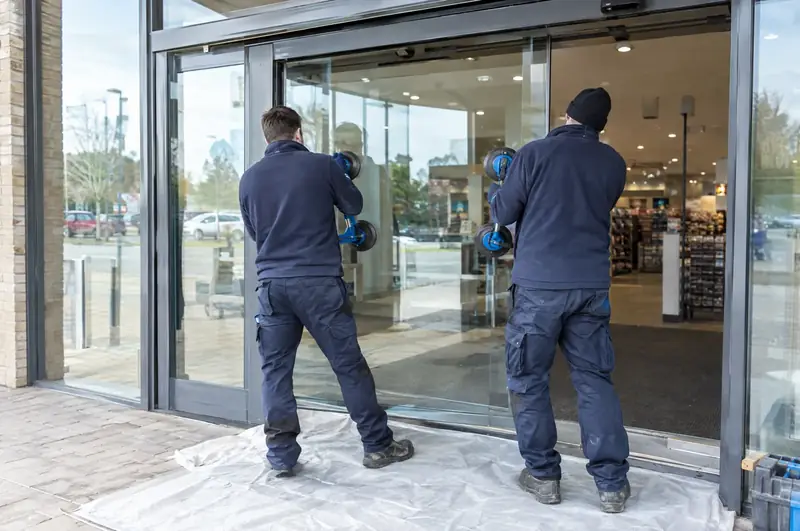
Many automatic doors still have a good operator but show their age everywhere else: scratched or cracked glass, leaves that rattle on worn rollers, draughts through flattened brush strips and a threshold that catches wheels. Refurbishment fixes the parts people see and feel, and the hidden parts that make the door run smoothly.
We replace glass leaves, tracks, rollers, floor guides, seals, brush strips and thresholds, and can refinish the frame, on sliding, swing and folding doors from most makers. The work can be combined with new sensors or a new drive unit if those are needed too, so the whole door is brought up to standard in one programme rather than in a string of separate call-outs.
The survey is free. You receive a fixed, itemised written quote that separates each item, so you can choose what to do now and what to plan for later. Warranty terms for the new parts are set out in the quote.
- Typical work
- Glass, tracks, rollers, seals, floor guides
- Typical lead time
- typically 2 to 4 weeks
- Usually suits
- Sound doors that look and run tired
- Safety reference
- BS EN 16005
What does automatic door refurbishment include?
Refurbishment is a set of replacements chosen for your door rather than a fixed package. Common items are:
- Glass leaves: new toughened or laminated safety glass in the existing leaf frames, or complete new leaves;
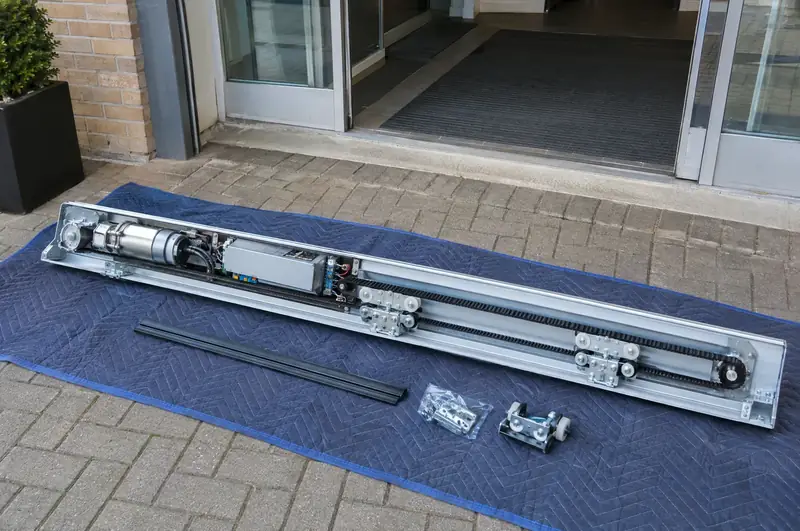
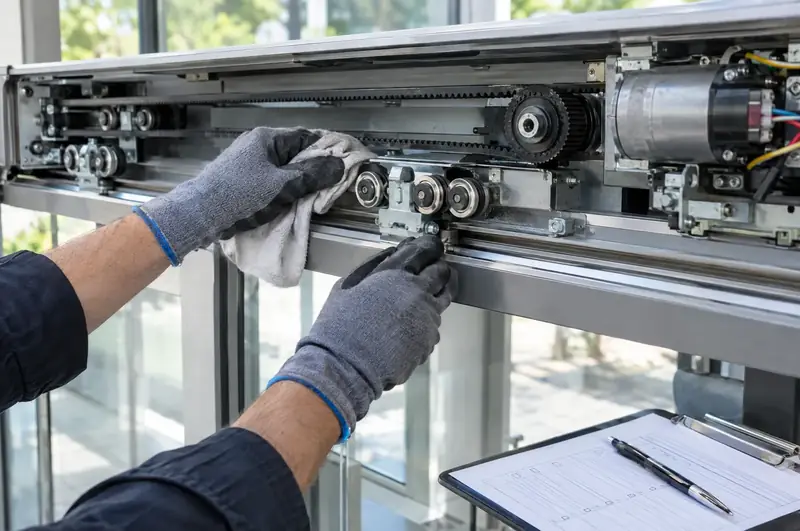
- Track and carriages: a new track profile and rollers so the leaves run quietly and level;
- Floor guides: new guides that stop the leaves swinging at the bottom;
- Seals and brush strips: new weather seals and brushes to cut draughts and noise;
- Threshold: a new level threshold where the old one is worn or catches wheels;
- Frame refinishing: cleaning, repair and recoating of tired aluminium frames;
- Manifestation and signs: new markings on the glass and new door signs.
Swing and folding doors have their own wear points, such as hinges, pivots and the arms that connect the leaf to the operator, and these can be renewed in the same way. On folding doors, worn hinges between the panels are a common cause of sagging and uneven closing.
When is refurbishment better than a new door?
Refurbishment is better value when the frame is sound, the opening size still works and the operator is reliable or can be replaced on its own. It keeps the existing structure, avoids building work and usually costs a fraction of a new entrance.
A new door is the better choice when the frame is badly corroded or damaged, the glass is not safety glass, you need better insulation or security, or the opening has to be wider for the people using it. The survey compares both routes, and we will tell you if refurbishing would be money poorly spent. Where it is close, we can price both so you can weigh the cost against how long you plan to keep the building.
Can a broken glass leaf be replaced on its own?
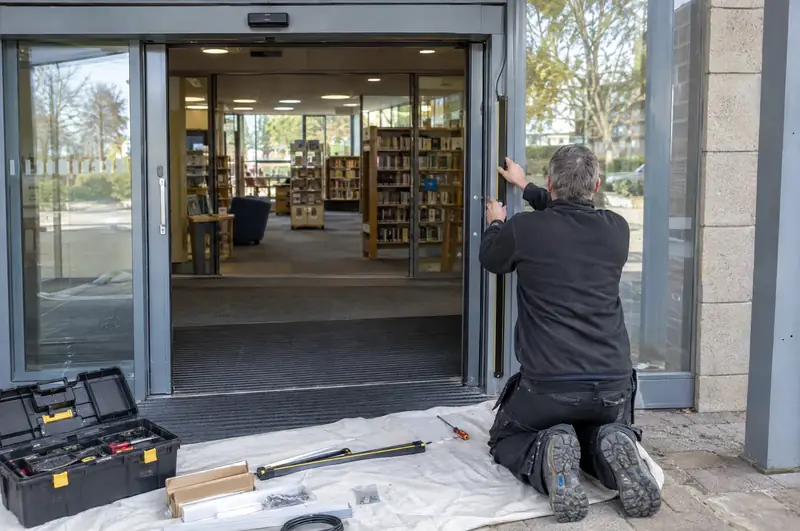
Yes. A broken or cracked leaf is made safe, measured and replaced with new safety glass to match the others. A single leaf can be reglazed in its existing frame, or a complete new leaf made where the frame is damaged.
New glass is lifted into place with suction lifters, and the leaf is rehung, levelled and adjusted on the track. Manifestation is reapplied so people can see the glass. If the damage came from the door being struck, the engineer also checks the track, carriages and floor guide for knock-on damage before the door goes back into service.
What does the free survey check?
The survey looks at the whole door to separate what needs replacing from what can stay. The engineer checks:
- The frame, transom and side screens for corrosion, damage and secure fixing;
- each leaf, its glass type and any chips, cracks or failed seals;
- The track, rollers and carriages for wear and noise;
- floor guides, the threshold and the floor around the door;
- brush strips and weather seals;
- The operator, sensors and safety set-up, in case they need attention too.
The quote lists every item and its price separately. You can approve the full refurbishment or start with the most urgent items, such as a cracked leaf or a threshold that catches wheels, and add the rest when the budget allows.
How long does a refurbishment take?
Most sliding door refurbishments take one or two days on site once the parts have arrived. Glass and made-to-measure leaves are typically 2 to 4 weeks from order, so survey measurements are taken carefully to avoid delays.
The door can often stay in use for part of the work, with one leaf out at a time. Where the entrance has to close, the work is planned for quiet hours, and temporary protection is fitted if a leaf has to be removed overnight. Healthcare and care settings can usually keep a second entrance open while the work goes on.
How is the door set up after refurbishment?
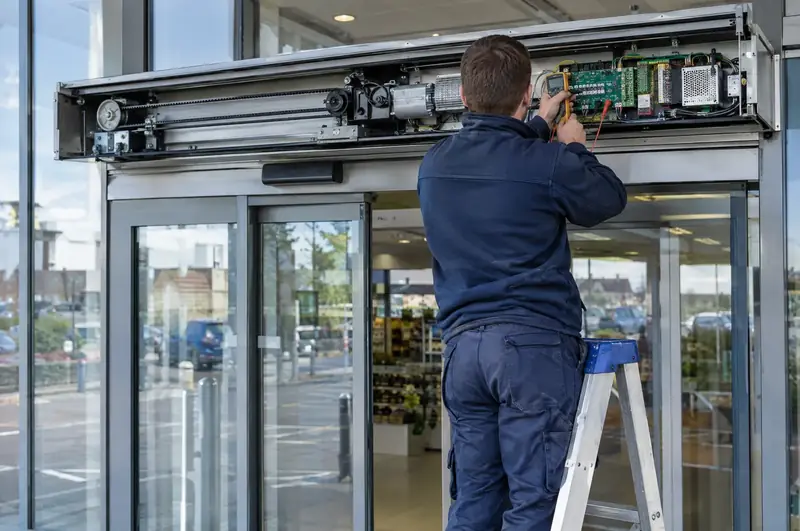
Once the new parts are in, the door is adjusted and tested as a whole. New rollers and guides change how the leaves run, so speeds, sensor zones and obstacle detection are checked and reset with reference to BS EN 16005.
You receive a record of the parts fitted and the test results. Regular servicing keeps the new parts running well, and if the operator is near the end of its life, a drive unit replacement can be carried out during the same work to save a second visit.
If the refurbishment shows up safety gaps, such as an unprotected side screen or a door without presence sensors, they are noted and can be priced as safety and compliance upgrades.
Refurbishment options compared
| Option | What it is | Best for |
|---|---|---|
| Running gear refresh | New rollers, carriages, floor guides and brushes | Doors that rattle, stick or drag |
| Track overhaul | New track profile and realigned leaves | Worn or grooved tracks causing noise and wear |
| Glass leaf replacement | New safety glass or a complete new leaf | Cracked, scratched or broken leaves |
| Seals and threshold | New weather seals, brush strips and a level threshold | Draughts, noise and wheels catching at the door |
| Full refurbishment | Running gear, seals, guides, glass and frame refinishing together | Sound entrances that look and run tired |
How much does automatic door refurbishment cost?
Refurbishing an existing automatic door is from £395 ex VAT as a guide, depending on which parts are replaced and how many leaves need new glass. The table shows what moves the price; your written quote is the price you pay.
| Item | Guide price | Notes |
|---|---|---|
| Running gear refresh: rollers, guides, brushes and seals | £395 – £895 | per door, ex VAT |
| Track overhaul | £395 – £895 | per door, ex VAT |
| Replacement glass leaf | from £495 | each, ex VAT; size and glass type on survey |
| Full refurbishment of a sliding door | £1,495 – £2,995 | running gear, seals, guides and one leaf, ex VAT |
Standards and the law
BS EN 16005 is the current standard for the safety in use of powered pedestrian doors, and BS 7036-0:2014 is the British code of practice for risk assessment and risk reduction used alongside it. Standards are not law in themselves, but they are the recognised benchmark for showing an automatic door is safe to use, and we set up, test and document doors with reference to them.
Whoever motorises a manual door, or builds an automatic door from separate parts, may take on the manufacturer’s legal duties for the finished door: a risk assessment, a technical file kept available for the authorities, a Declaration of Conformity, the conformity marking and instructions. You receive the Declaration of Conformity and the instructions at handover.
The law that applies also depends on the nation. The table shows the main differences; each county and town page carries the rules for its own nation.
| Nation | Accessibility | Building regulations guidance | Fire safety law |
|---|---|---|---|
| England | The Equality Act 2010 | Approved Document M (Volume 2): powered opening where opening force would exceed 30 N, or 22.5 N from 30° to 60°; 1000 mm clear width for public entrance doors in new buildings | Regulatory Reform (Fire Safety) Order 2005: the responsible person |
| Wales | The Equality Act 2010 | Approved Document M (Wales): powered opening where opening force would exceed 20 N; 1000 mm clear width for public entrance doors in new buildings | Regulatory Reform (Fire Safety) Order 2005: the responsible person |
| Scotland | The Equality Act 2010 | Building (Scotland) Regulations 2004, non-domestic Technical Handbook: accessible entrance with at least 800 mm clear opening; building warrant for building work | Fire (Scotland) Act 2005: whoever has control of the premises |
| Northern Ireland | The Disability Discrimination Act 1995 | Building Regulations (Northern Ireland) 2012: powered doors must not trap people and must open on power failure; access guidance in Technical Booklet R | Fire and Rescue Services (Northern Ireland) Order 2006 and Fire Safety Regulations (Northern Ireland) 2010 |
Questions about automatic door refurbishment
How long does a refurbished automatic door last?
With a sound frame and a reliable operator, a refurbished door can give many more years of service. New running parts wear at the same rate as on a new door, so regular servicing matters. We avoid quoting a lifespan in years, because heavy use, weather exposure and day-to-day care make such a difference.
Can you match the glass in my existing door?
Usually, yes. The survey records the glass type, thickness and any tint or pattern, and new safety glass is ordered to match. Very old or discontinued patterned glass may not be available, in which case we suggest the closest match or reglazing the whole set of leaves for a consistent look.
Will refurbishment cure draughts at my entrance?
It often helps a great deal. New brush strips and seals close the gaps between leaves, frame and floor, and realigned leaves meet properly when closed. A single set of sliding doors still lets air in each time it opens, so very exposed entrances may also need a draught lobby.
Can the aluminium frame be refinished?
Yes. Frames can be cleaned, minor damage repaired and the surface recoated on site to refresh their colour. Heavily corroded or damaged sections may need replacing instead. Refinishing is quoted as a separate item, so you can decide whether it is worth doing now or later.
Do you refurbish doors installed by other companies?
Yes, most refurbishments are on doors fitted by someone else. Rollers, guides, seals and glass are available for most sliding and swing doors from the major European operator brands. Where a particular part is no longer made, we suggest an equivalent or a different approach.
Will the door work differently after refurbishment?
It should run more quietly and smoothly. Because new rollers and guides change how the leaves move, the door is set up and tested again afterwards, including its speeds and sensor zones. Most users notice that it opens more smoothly and closes more fully.
Can refurbishment fix a threshold that catches wheelchairs?
Yes. A worn or raised threshold can be replaced with a level one, and the floor guide repositioned so it does not catch wheels or walking aids. If the floor itself is uneven, some making good may be needed, which the survey picks up and the quote lists.
Can I refurbish in stages?
Yes. The quote prices each item separately, so you can start with urgent work, such as a cracked leaf or worn rollers, and plan seals, the threshold or frame refinishing for later. Doing related items together, such as rollers and floor guides, avoids paying for set-up twice.