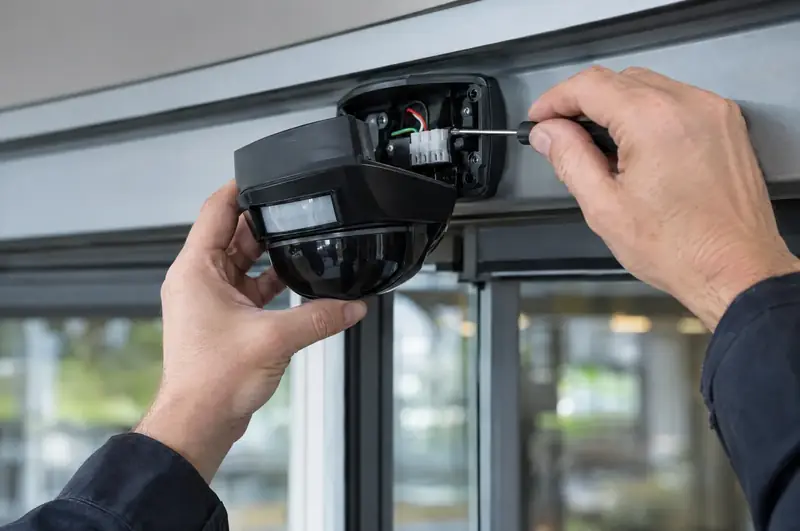
Sensors decide when an automatic door opens, and they stop it closing on people. When one starts to fail, the door may open for passing traffic, ignore someone standing in the doorway or stop halfway for no clear reason. Many older doors have sensors that only detect movement, with nothing watching the closing edge at all.
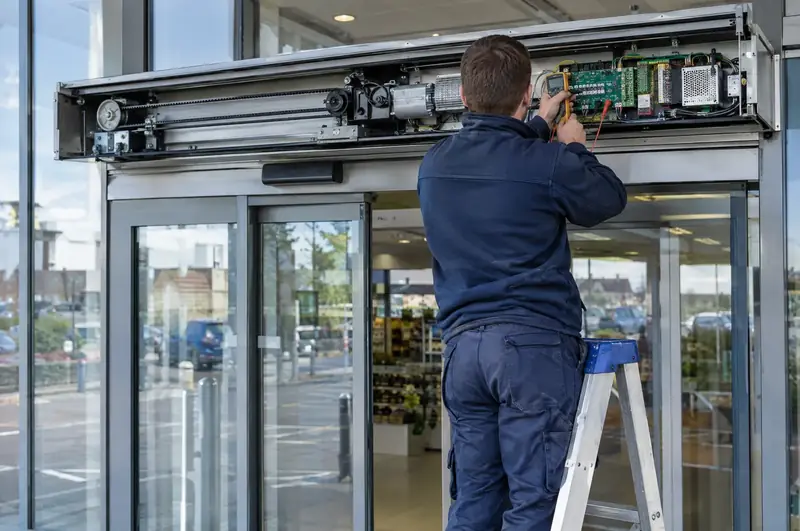
We replace and upgrade sensors on sliding, swing, folding and revolving doors from most makers. Each new sensor is matched to the door's controller, its detection zone is set for the opening and the way people approach it, and it is tested with a test body before the engineer leaves.
The cost of the visit is agreed with you in writing before an engineer attends. Where a door needs more than one sensor, or other parts, everything is quoted before the work goes ahead.
- Sensor types
- Activation, safety, combined, light curtain
- Typical lead time
- typically 1 to 2 weeks
- Usually suits
- Older doors, false openings, near misses
- Safety reference
- BS EN 16005
What is the difference between activation and safety sensors?
Activation sensors open the door when someone approaches. Safety sensors stop or reverse the door when someone is in its path. A door needs both, and on many modern doors a single unit does both jobs. Knowing which type has failed is the first step in choosing a replacement.
- Activation (motion) sensor: usually microwave radar, mounted above the door, detecting movement towards it.
- Presence or safety sensor: usually active infrared, watching the threshold or swing area for a person who is standing still.
- Combined sensor: one housing with radar for opening and infrared for safety, common on sliding doors.
- Light curtain or side-screen sensor: a vertical row of beams on the leaf edge or a post, protecting the gap between a sliding leaf and a fixed screen.
- Swing door safety sensor: mounted on the leaf to detect people in its opening and closing path.
Motion-only sensors are the weak point on many older doors. They open the door reliably, but once someone stops moving in the doorway they can no longer see them.
When should automatic door sensors be replaced?
Sensors should be replaced when they no longer detect reliably, when they cause false openings that adjustment cannot cure, or when the door has no safety sensors where people could be trapped or struck. Sensors do not last forever: covers weather, internal parts age and older models fall behind what current doors expect. Signs include:
- The door opening for people walking past, or for rain and blowing leaves;
- The door closing on someone standing still in the doorway;
- The door stopping, reversing or staying open for no obvious reason;
- a cracked, faded or misted sensor cover;
- an older motion-only sensor with no presence detection at the threshold;
- a risk assessment that recommends extra protection.
How are detection zones set?
A detection zone is the area each sensor watches. The engineer sets it to suit the door, the floor and the way people approach, using the sensor's own settings and a remote or handheld programmer.
For activation, the aim is to open the door in good time for people heading towards it while ignoring cross traffic and passing vehicles. For safety, the zone has to cover the whole threshold or swing area, including people who are short, using a wheelchair or standing still. Getting both right takes careful adjustment on site, not just fitting the hardware.
Floors make a difference. Polished, wet or dark surfaces reflect infrared differently, so zones are checked on the actual floor finish and readjusted if the floor is changed later.
How is a new sensor tested?
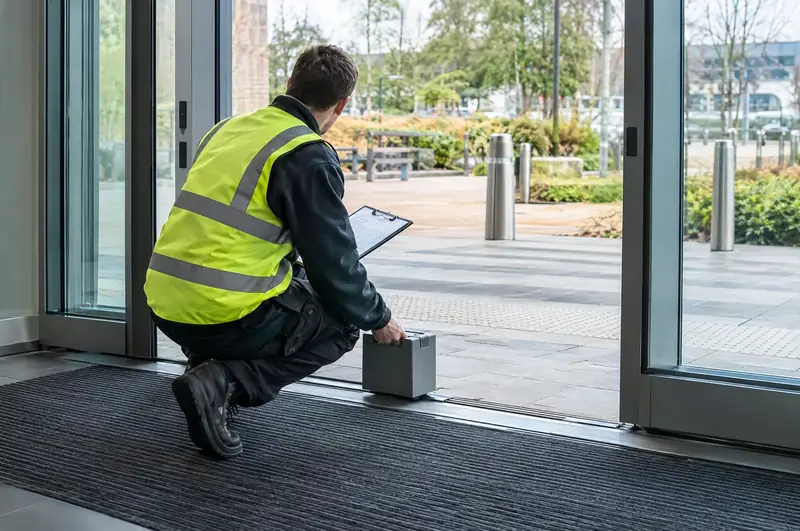
Each sensor is tested with a test body, a standard object placed at points in the door's path, to confirm the door detects it and stops or reverses before contact. The engineer also walks the approach at different speeds and angles and checks the door ignores people passing by.
Swing doors are tested on both sides, because a person can be struck by the leaf as it opens towards them as well as when it closes. Test results are recorded in a written job report, together with the sensor type, its position and the settings used. That record is useful for your service history and for any later safety inspection.
Can sensors on older doors be upgraded?
Most older doors can take modern sensors, because the controller only needs a compatible signal. Some very old controllers cannot monitor safety sensors, which newer sensors expect. In that case the engineer explains the options, which may include a controller upgrade or a new drive unit.
Upgrading sensors is often the most effective single change to an older door's safety, and it is a common recommendation after a risk assessment. Where several gaps need closing at once, our page on safety and compliance upgrades explains the wider options, and doors that should only open on request may suit touch-free activation instead of a motion sensor.
What can I do while a sensor is faulty?
If the fault makes the door unsafe, such as closing on people, switch it to a safe mode with the programme switch, often manual, open or locked, and keep people away from the leaves. Do not try to re-aim, open or reset the sensor yourself, as settings are easily lost and the door may then fail to detect people.
Let us know whether the door is stuck open, stuck shut or unsafe, and we will give you the earliest visit available. A photo of the sensor and the label on the operator cover helps the engineer bring the right replacement.
Sensor options compared
| Option | What it is | Best for |
|---|---|---|
| Radar motion sensor | Detects movement towards the door to open it | Busy entrances where nearly everyone goes through |
| Combined radar and infrared | Opens the door and watches the threshold in one unit | Sliding doors in shops, offices and surgeries |
| Infrared presence sensor | Detects a person standing still in the door's path | Threshold and swing area protection |
| Light curtain | Vertical beams on the leaf edge or a post | Gaps between sliding leaves and side screens |
| Leaf-mounted swing sensor | Sensor on the door leaf watching its path | Swing doors in corridors and care settings |
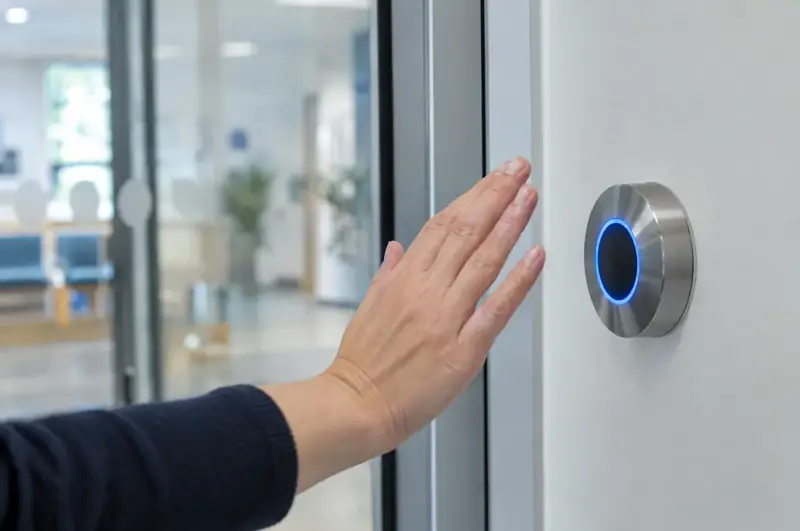
| Touch-free switch | Wave sensor that opens the door on request | Doors that should not open for passers-by |
How much does automatic door sensor replacement cost?
A new activation or safety sensor, supplied, fitted and set up, is typically £195 to £495 ex VAT per sensor as a guide. The table shows what moves the price; your written quote is the price you pay.
| Item | Guide price | Notes |
|---|---|---|
| Add or replace a safety or activation sensor | £195 – £495 | per sensor fitted, ex VAT |
| Touch-free switch or push pad | £145 – £395 | per switch, ex VAT |
| Side-screen or light-curtain protection | from £295 | per door, ex VAT; on survey |
Sensor prices cover the part, fitting and set-up. If a sensor is fitted on a visit of its own, the visit charge (from £95 ex VAT) is added, and we confirm the total in writing before an engineer attends. Each sensor is set up for the door and tested before the engineer leaves.
Standards and the law
BS EN 16005 is the current standard for the safety in use of powered pedestrian doors, and BS 7036-0:2014 is the British code of practice for risk assessment and risk reduction used alongside it. Standards are not law in themselves, but they are the recognised benchmark for showing an automatic door is safe to use, and we set up, test and document doors with reference to them.
No law sets a fixed service interval. We recommend that a trained engineer checks the safety functions at least once a year, with service intervals set by the manufacturer’s instructions and how heavily the door is used, and that someone on site carries out simple regular checks and keeps a record.
The law that applies also depends on the nation. The table shows the main differences; each county and town page carries the rules for its own nation.
| Nation | Accessibility | Building regulations guidance | Fire safety law |
|---|---|---|---|
| England | The Equality Act 2010 | Approved Document M (Volume 2): powered opening where opening force would exceed 30 N, or 22.5 N from 30° to 60°; 1000 mm clear width for public entrance doors in new buildings | Regulatory Reform (Fire Safety) Order 2005: the responsible person |
| Wales | The Equality Act 2010 | Approved Document M (Wales): powered opening where opening force would exceed 20 N; 1000 mm clear width for public entrance doors in new buildings | Regulatory Reform (Fire Safety) Order 2005: the responsible person |
| Scotland | The Equality Act 2010 | Building (Scotland) Regulations 2004, non-domestic Technical Handbook: accessible entrance with at least 800 mm clear opening; building warrant for building work | Fire (Scotland) Act 2005: whoever has control of the premises |
| Northern Ireland | The Disability Discrimination Act 1995 | Building Regulations (Northern Ireland) 2012: powered doors must not trap people and must open on power failure; access guidance in Technical Booklet R | Fire and Rescue Services (Northern Ireland) Order 2006 and Fire Safety Regulations (Northern Ireland) 2010 |
Questions about sensor upgrades and replacement
Can a new sensor stop the door opening for people walking past?
Often, yes. Modern activation sensors can be set to detect only people moving towards the door and to ignore cross traffic along the pavement or corridor, and the zone can be narrowed. Where false openings still waste heat, a touch-free switch on one side may suit the door better than a motion sensor.
Do automatic doors legally need safety sensors?
Workplace law expects powered doors to have suitable and effective features that stop people being trapped. On most automatic doors that means safety sensors covering the closing edges and the area the door moves through, set up after a risk assessment. BS EN 16005 describes how powered pedestrian doors are made safe in use.
Can you replace just one sensor?
Yes. If one sensor has failed and the others are sound, we replace only that one. The engineer checks the rest while on site, because a door with a mix of old and new sensors can behave unevenly. If more work turns out to be needed, it is quoted to you before it is done.
Will a new sensor work with my existing door?
In most cases, yes. Sensors from the major makers work with most controllers, and the engineer sets the outputs to match. Some very old controllers cannot monitor modern safety sensors. If that applies to your door, we explain the options before anything is fitted.
What is a light curtain on an automatic door?
A light curtain is a vertical strip of infrared beams fitted to the edge of a sliding leaf or the post beside it. It detects hands, arms or bodies in the gap between the moving leaf and a fixed screen or wall, and stops the door. It is a common upgrade on older sliding doors with side screens.
How long does sensor replacement take?
Fitting and setting up one sensor usually takes one to two hours, including testing with a test body. When the sensor is in stock it can often be fitted during the first visit. Specialist sensors and light curtains are ordered once the door is identified, and delivery is typically 1 to 2 weeks.
Do sensors need regular maintenance?
Sensors need little beyond a clean cover and a check that they have not been knocked out of line. Their detection zones should be tested at every service. Covers that are cracked, faded or misted inside should be replaced, as they reduce detection and can cause false openings.
Can sensors be set up for wheelchair users and children?
Yes. The safety zone is set and tested to detect people who are low down or standing still, including wheelchair users, children and people using walking frames. Where users move slowly, the door's hold-open time can be lengthened so nobody is rushed through the opening.