Who uses a home automatic door opener?
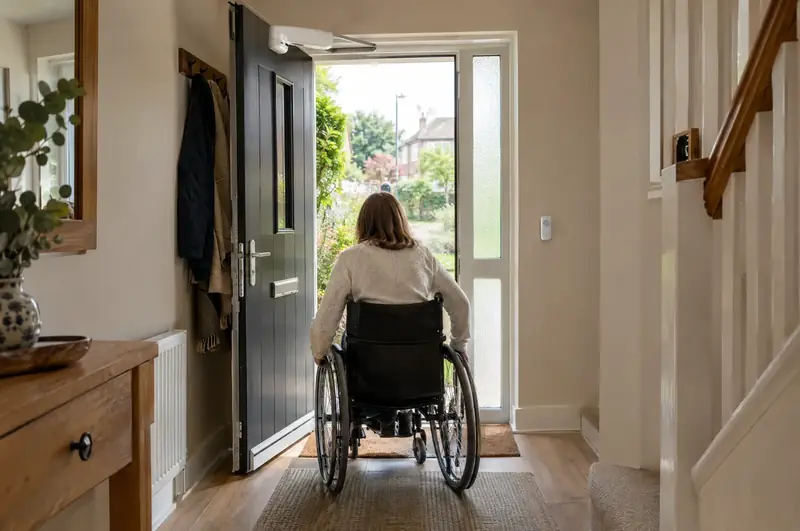
A home door opener is for anyone who finds a standard door hard or impossible to open: wheelchair users, people with arthritis or limited grip, people with conditions that affect strength or balance, and disabled children and adults who want more independence. Carers and families use them too, so they can let someone in or out without stopping what they are doing.
The most common places are the front door, the back door to the garden, the door between the hallway and the kitchen or living room, and the bedroom or bathroom doors that matter most day to day. Many households start with one door and add others later.
An opener does not have to mean a new door. In most cases the operator is fitted to the existing door, as long as it is sound, hangs well and has a frame strong enough to carry it. See can you make an existing door automatic? for what makes a door suitable.
What types of home door opener are there?
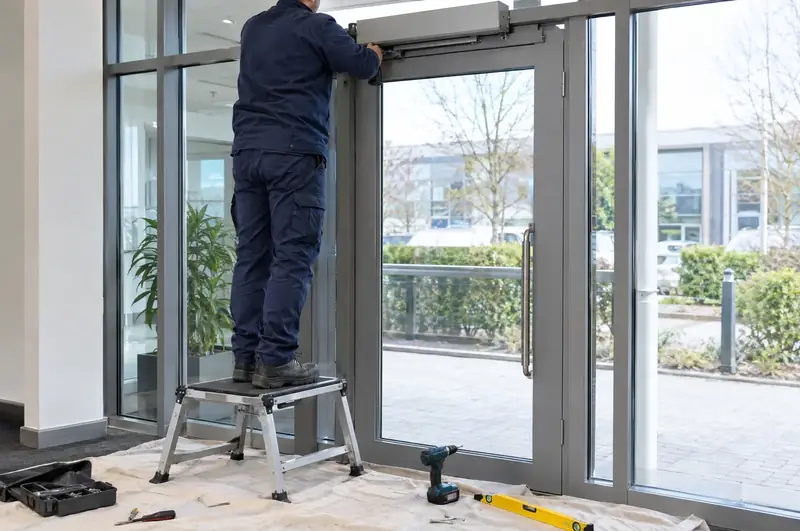
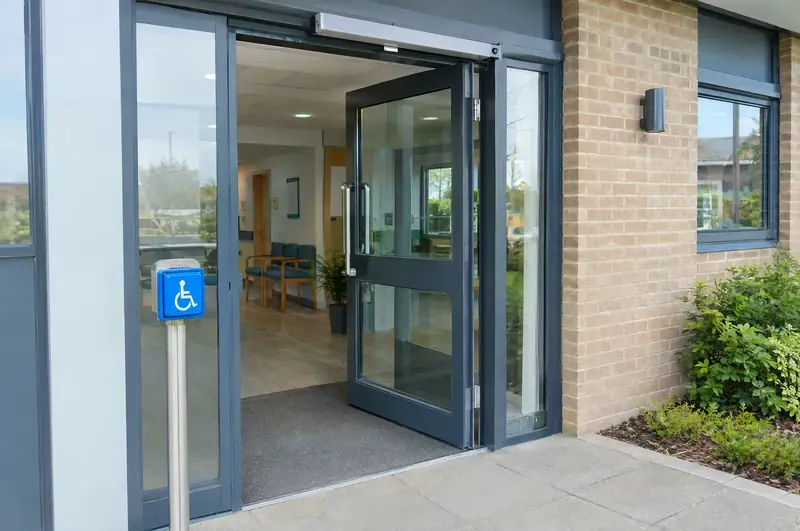
Most home openers are low-energy swing door operators: a slim motor unit fixed to the top of the door or frame, with an arm that pushes or pulls the door open. They move gently and with limited force, which suits homes where children, older people or pets may be near the door.
| Option | What it is | Best for |
|---|---|---|
| Push-arm swing opener | Operator on the frame head, with an arm that pushes the door away | Front doors that open inwards, most internal doors |
| Pull-arm swing opener | Operator on the other face, with an arm in a slide channel that pulls the door | Doors where the operator has to sit on the opposite side |
| Sliding door operator | A drive along the top of a sliding internal door | Pocket or surface-sliding doors between rooms |
| Opener with electric lock | Operator linked to an electric strike or a motorised lock | Front and back doors that must lock when closed |
| Opener linked to door entry | Operator tied into an intercom or video doorbell system | People who need to let carers or visitors in from another room |
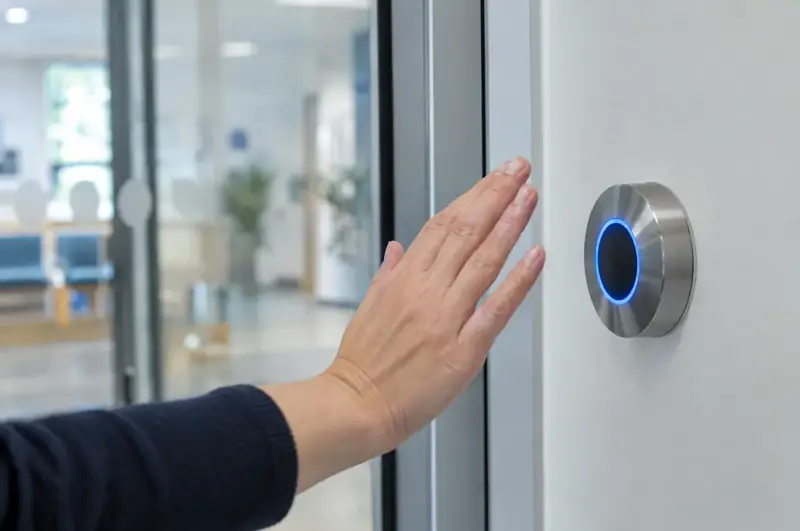
Activation is chosen around the person using the door. Options include a large push button on the wall, a wireless fob on a keyring or wheelchair, a pendant, a touch-free wave switch, and links to door entry or home automation systems. Most homes end up with a mix, for example a button inside, a fob outside and a remote for a carer. See touch-free and push-button activation.
How do locks and security work with an opener?
An automatic opener can work with a locked door, but the lock has to release before the opener moves. On front and back doors that usually means an electric strike in the frame or a motorised multi-point lock in the door, so the door unlocks, opens and then relocks when it closes.
Many uPVC and composite doors have multi-point locks that only engage when the handle is lifted. These can often be changed for a motorised version that locks itself, but not every door can take one. The survey checks the lock, the door and the frame and recommends what will work.
A few points help keep the home secure:
- The door should close and lock on its own after use, so it is never left on the latch.
- Fobs and remotes can be added or removed, which is useful when carers change.
- A key should still open the door from outside in case of a fault.
- If you live in a flat, the front door of the flat is often a fire door. The building owner or landlord usually needs to agree any change to it, and the door must still close fully on its own.
What happens to a home door opener in a power cut?
In a power cut, most home openers let the door be opened by hand, and the operator's spring closes it again, much like a door with an ordinary closer. Some openers can also take a battery backup that keeps them working for a limited time.
It is worth planning for a power cut in advance, especially for someone who cannot open a door by hand. Points to discuss at the survey include how heavy the door feels to push with the opener unpowered, whether a battery backup is worth fitting, how an electric lock behaves without power (some stay locked, some release), and who holds a key.
Openers usually run from a fused spur near the door. Your written quote sets out whether the electrical connection is included or needs arranging separately.
How much does a home automatic door opener cost?
A supplied and fitted home door opener is typically £1,495 to £2,995 inc VAT per door as a guide. Home opener prices include VAT, and the final price depends on the door and what it needs.
The main things that affect the price are:
- the door and frame, and whether any repair or adjustment is needed first
- the lock, especially if a motorised lock or electric strike is needed
- the activation devices, such as buttons, fobs, touch-free switches and links to door entry
- wiring, power and making good
- how many doors are fitted at the same visit
We start with a free site survey and give you a fixed, itemised written quote with no obligation. That quote can also support a grant application. Warranty terms are set out in your written quote. See our prices page, or get a quick figure from the guide price tool.
If you agree a contract at home, by phone or online, consumer law usually gives you a 14-day cancellation period. Your quote and contract explain how cancellation works, including what happens if you ask for work to start within that period.
Can a Disabled Facilities Grant pay for a door opener?
Disabled Facilities Grants (and, in Scotland, the council's Scheme of Assistance) can sometimes help pay for door openers in the home; your local council or housing authority decides. The rules differ in each UK nation.
England and Wales
A Disabled Facilities Grant is a council grant towards changes to a disabled person's home so they can carry on living there. Owners, tenants and landlords can apply. The council may send an occupational therapist or trained assessor to work out what changes are needed, and it decides whether a door opener is included. In England the grant is up to £30,000, and the amount usually depends on household income and savings, although disabled children under 18 can get a grant without their parents' income being taken into account.
In Wales, councils also run Disabled Facilities Grants, of up to £36,000, so ask your council how it assesses applications and what help it offers. In both nations, check with your council before arranging anything, and do not start work before the council approves the application, or you may not get any grant.
Scotland
Disabled Facilities Grants are not available in Scotland. Instead, councils help with adaptations through their Scheme of Assistance under the Housing (Scotland) Act 2006. Where a structural or other permanent adaptation is essential to a disabled person's needs, the council must give a grant, usually of 80% of the approved cost, or 100% for people on certain benefits. Whether a door opener counts is decided locally, so check with your council about an assessment before arranging any work.
Northern Ireland
In Northern Ireland, the Disabled Facilities Grant is run by the Northern Ireland Housing Executive. The grant is normally only allowed for work recommended by your local occupational therapist, the amount depends on the approved cost of the work and your financial circumstances, and homeowners, landlords and private tenants can apply. Start with your Health and Social Care Trust, GP or social worker, check the current limits with the Housing Executive, and do not begin work until it approves the application.
If you rent from a council, the Housing Executive or a housing association, speak to your landlord first, as adaptations to their homes are often arranged through them.
Is there VAT relief on a home door opener?
Some work and equipment for disabled people can qualify for VAT relief where HMRC's conditions are met. Eligible disabled people may be able to have the installation of a home door opener zero-rated under HMRC VAT Notice 701/7, but conditions apply and not every part of a job is treated the same way.
The notice gives the example of a manual garage door replaced with one automated because of a person's disability: the separate service of making the door automated can be zero-rated, but the replacement door itself is not. The relief is for a chronically sick or disabled person's own personal or domestic use, in a private home rather than a communal residence such as a nursing home, and the supplier needs a written eligibility declaration.
We talk this through at the survey and show the VAT treatment clearly in your written quote. If you are unsure whether you qualify, HMRC's guidance is the place to check, and HMRC has advisers who deal with VAT reliefs for disabled people.
For more on fitting openers at home, see our home automatic door openers service and the homes sector page.
Questions
Can an automatic opener be fitted to a uPVC or composite front door?
Often, yes. The door must be sound and hang well, and the frame must be strong enough to carry the operator. The bigger question is the lock: many uPVC and composite doors need a motorised multi-point lock or an electric strike so the door can unlock itself before it opens. The survey checks this and recommends what will work with your door.
Will the door still close if the opener breaks down?
Most home openers have a spring that closes the door when there is no power or the motor stops, and the door can usually be pushed open by hand. Ask at the survey how heavy the door feels unpowered, because that matters for someone who cannot push hard. A battery backup is an option on some openers.
Do I need an occupational therapist assessment first?
You do not need one to buy an opener privately. If you want help through a Disabled Facilities Grant or a council or Housing Executive scheme, an occupational therapist or trained assessor is usually involved in deciding what work is needed. Ask for the assessment before arranging work, because starting early can affect your grant.
Can a carer open the door from another room or from outside?
Yes. A wireless fob, a pendant or a link to a door entry or video doorbell system can open the door from elsewhere in the home. A keypad or fob outside can let carers in without handing out keys, as long as everyone agrees how access is managed and fobs are removed when carers change.
Is a home door opener safe around children and pets?
Home openers are usually low-energy operators that move slowly and with limited force, and they are set to stop or reverse if they meet resistance. Opening and closing speeds and hold-open times are set on site to suit the household. Safety sensors can be added where an assessment shows they are needed, for example if young children often play near the door.