What is BS EN 16005?
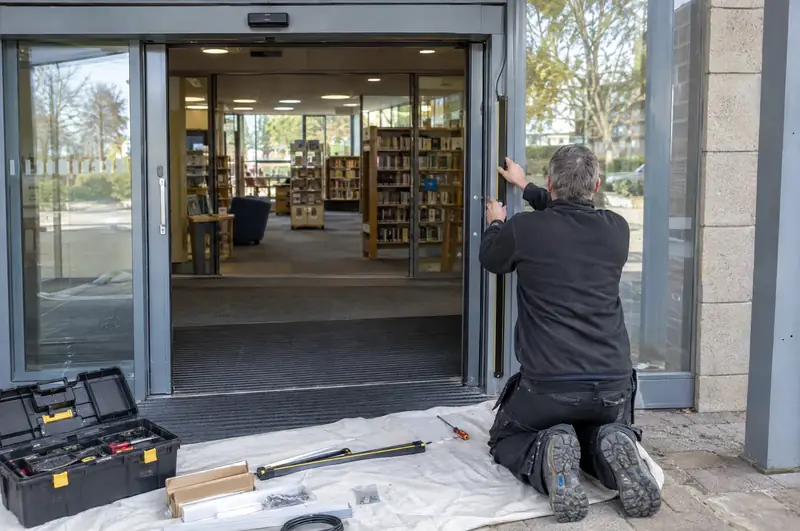
BS EN 16005 is the standard for the safety in use of power-operated pedestrian doors. It sets requirements and test methods for automatic sliding, swing, revolving, balanced and folding doors, inside and outside buildings, and its full title is "Power operated pedestrian doorsets. Safety in use. Requirements and test methods".
The current edition is BS EN 16005:2023+A1:2024, which replaced the earlier edition, now withdrawn. The BS EN prefix means it is a European standard adopted as a British Standard, so the same requirements are used across the UK and Europe.
It covers doors used for everyday access, doors on escape routes, and power-operated fire-resisting and smoke-control doors. It deals with hazards across the whole life of the door, from installation and use to maintenance and dismantling.
Is BS EN 16005 a legal requirement?
No. BS EN 16005 is not a law in itself and it is not retrospective, but it is the recognised way to show that an automatic door is safe, and the duties that the law does set are commonly shown to be met by following it.
Three areas of law matter most:
- Machinery law. A powered door is treated as machinery. When a manual door is fitted with an operator, the finished door must meet the Supply of Machinery (Safety) Regulations 2008 before it is first used in Great Britain, and whoever motorises it may take on the manufacturer's duties. Northern Ireland follows the EU machinery rules, and the new EU Machinery Regulation applies there from 20 January 2027.
- Workplace health and safety law. In workplaces, powered doors must have suitable and effective features to prevent them trapping anyone and, where needed for safety, must be able to be opened by hand unless they open automatically if the power fails. Great Britain and Northern Ireland have matching rules.
- Maintenance duties. Doors in workplaces must be kept in efficient working order and in good repair under a suitable system of maintenance.
Following BS EN 16005 is how manufacturers, installers and building managers usually show that these duties have been met. If something goes wrong, a door that was set up, tested and documented with reference to the standard is far easier to account for than one with no records.
What does BS EN 16005 cover in practice?
In practice, BS EN 16005 sets out the hazards a powered door can create and how each one should be protected, tested and documented. The main hazard zones and the usual protection are:
| Hazard | Where it happens | Usual protection |
|---|---|---|
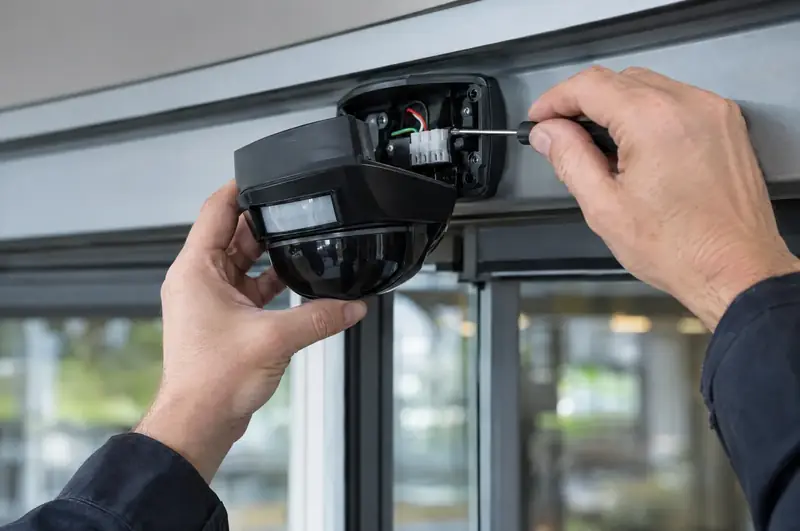
| Being struck or crushed | Where sliding leaves close, or in the area a swing leaf moves through | Presence and safety sensors that stop or reverse the door |
| Drawing in and shearing | The gap between a sliding leaf and a side screen or wall | Guards, barriers or sensors at the side screens |
| Finger trapping | The hinge edge of a swing door | A finger guard on the hinge side |
| Walking into glass | Glazed leaves and screens | Safety glass, and markings so the glass can be seen |
| Being trapped in an emergency | Doors on escape routes | Break-out leaves or monitored fail-safe opening |
| Revolving door wings | Wing edges, the drum entry and the centre | Sensors, controlled speed and emergency stops |
The standard also covers low-energy movement, where a door moves slowly and with limited force so that less additional sensor protection may be needed. That is only appropriate where a risk assessment shows a low risk to the people using the door.
It also expects instructions for use and maintenance to be handed over with the door, so the owner knows how to check it and look after it.
What is BS 7036-0 and how does it fit in?
BS 7036-0:2014 is the UK code of practice for risk assessment and risk reduction at power-operated pedestrian doors, and it is used alongside BS EN 16005. Where BS EN 16005 sets out what a safe door needs, BS 7036-0 guides the site-specific risk assessment that decides how those requirements apply at your entrance.
A good risk assessment looks at:
- who uses the door, including children, older people, disabled people and anyone who may move slowly or unpredictably
- how busy the door is and which directions people move in
- where the door is, including slopes, wind exposure and nearby hazards
- what the door is for, such as an escape route, a secure entrance or a clinical area
- how the door is activated and controlled
The older parts of BS 7036 from 1996 were withdrawn in 2014, so a current risk assessment should refer to BS 7036-0:2014 and BS EN 16005.
Does an older automatic door have to meet the current edition?
No. Standards are not retrospective, so a door installed before the current edition does not become unlawful when the standard is updated. The duty to keep it safe and maintained does continue, and a risk assessment shows whether upgrades are sensible.
Older doors often show gaps when checked against current practice, such as no protection at the side screens, no finger guard on a swing door, worn or outdated sensors, or a battery that no longer opens the door in a power cut. A safety inspection finds these, and safety and compliance upgrades close them, usually without replacing the door.
When a door is substantially changed, for example with a new drive unit, we set up, test and document the altered door with reference to the current standard.
What paperwork should an automatic door have?
A new or newly motorised automatic door should come with a Declaration of Conformity, the correct conformity marking, a risk assessment, test records, and instructions for use and maintenance. These show the door was supplied and set up correctly, and they are the first thing an insurer, an inspector or a new facilities manager will ask for.
- Declaration of Conformity. The document in which the manufacturer, or whoever motorised the door, declares that it meets machinery safety law.
- Conformity marking. In Great Britain machinery can carry either the UKCA or the CE marking, as CE recognition has been extended indefinitely. In Northern Ireland it carries the CE marking, with the UKNI marking added where a UK body carried out the conformity assessment.
- Risk assessment. The site-specific assessment, with the measures taken to reduce each risk.
- Commissioning and test records. What was set, tested and checked at handover.
- Instructions and logbook. How to use, check and maintain the door, and a record of every service, repair and check since.
If you have taken over a building and cannot find these, a safety inspection is a sensible starting point. It records the door's condition and gives you a baseline to work from.
How is a door checked against BS EN 16005?
A door is checked against BS EN 16005 by testing each safety function, checking every hazard zone, confirming how the door behaves in a power failure and recording the results in a written report. That is different from a routine service, which is mainly about keeping the door working.
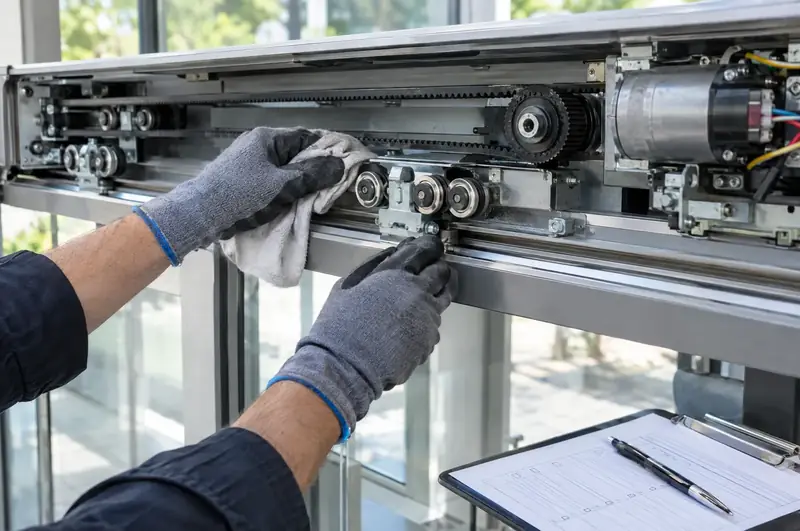
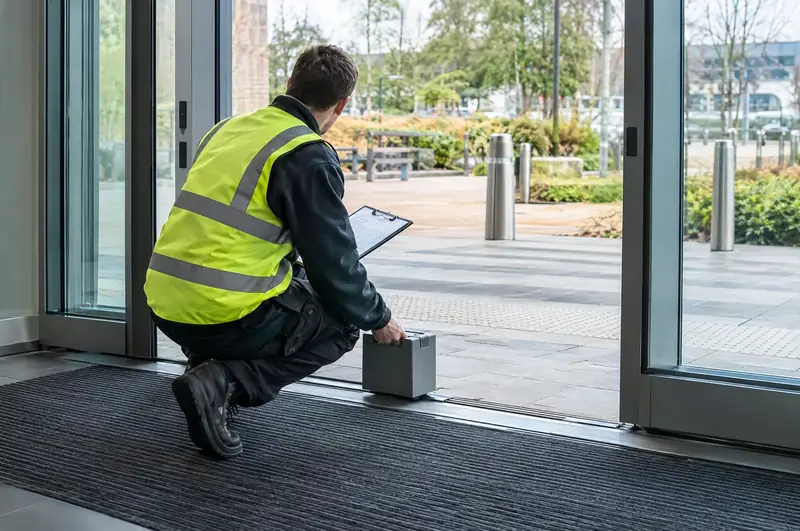
On a typical inspection the engineer tests that the activation and safety sensors detect a person in the right places, checks speeds, forces and hold-open times, tests break-out and fail-safe functions where fitted, looks at guards, glass, signs and controls, and reviews the risk assessment. A safety inspection and risk assessment is typically £125 to £250 ex VAT per door as a guide, and the visit price is agreed in writing before we attend.
The report lists anything that needs attention in order of priority, so you can plan upgrades rather than react to them. Any work it recommends is quoted separately.
What should a building manager do next?
A building manager should start by finding out what records exist for each automatic door, then fill the gaps with an inspection, a maintenance plan and simple site checks. A short plan is enough for most buildings:
- List every automatic door, with its type, location and who uses it.
- Gather the paperwork for each one: Declaration of Conformity, risk assessment, instructions and service history.
- Book a safety inspection for any door with missing records or no recent check.
- Set a service interval for each door based on the manufacturer's instructions and how hard it works.
- Ask site staff to carry out and record simple regular checks between visits.
- Plan any upgrades the inspection recommends, starting with the highest priority.
Our guides to servicing intervals and escape route doors cover two of the areas inspections most often raise.
Questions
What do the letters in BS EN 16005 mean?
BS stands for British Standard and EN for European Norm, meaning a European standard. A BS EN standard is a European standard adopted in the UK by BSI, the national standards body, and 16005 is its number.
Is the older edition of BS EN 16005 still current?
No. The current edition is BS EN 16005:2023+A1:2024, and the earlier edition has been withdrawn. Doors installed under the earlier edition are not unlawful, because standards are not retrospective, but a risk assessment will show whether any upgrades make sense.
Do low-energy doors have to meet BS EN 16005?
Yes. Low-energy movement is covered within BS EN 16005, and a low-energy door still needs a site-specific risk assessment. Lighter safety provisions are only appropriate where that assessment shows a low risk to the people who use the door.
Who is responsible for an automatic door's safety?
Day to day, the employer or whoever controls the building is responsible for keeping the door safe and maintained. Whoever installs or motorises the door is responsible for supplying it safely, with the right paperwork. In practice the owner, occupier or facilities manager keeps the records and arranges servicing.
Is there a BS EN 16005 certificate for a door?
No certificate makes a door permanently safe. A commissioning record or inspection report shows how the door performed when it was tested, which is why regular servicing and inspection matter. BS EN 16005 is a design and test standard for doors, and BSI does not certify installers to it.