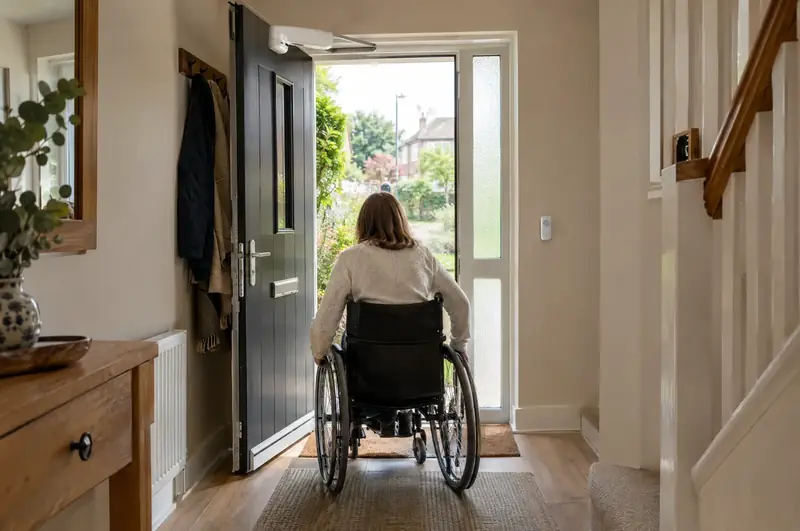
Who are home door openers for?
Most of the households we help have someone who uses a wheelchair or scooter, walks with a frame or sticks, has arthritis or a weak grip, or has a condition that makes a heavy door tiring or unsafe to open. Often a family member or carer contacts us on their behalf.
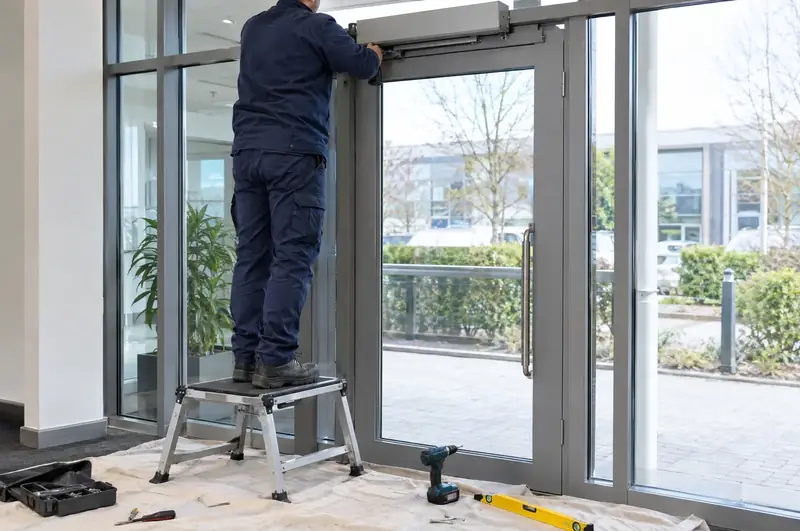
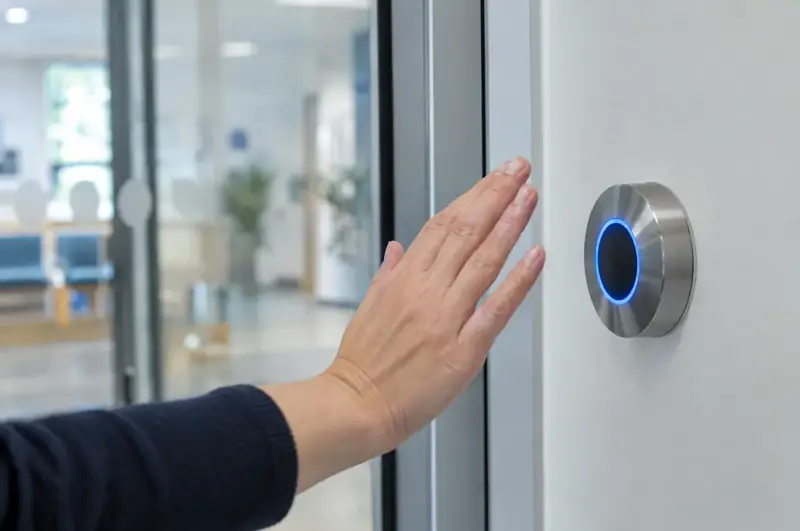
An opener is a small motor fitted above the door, with an arm that opens and closes it gently. The person presses a wall button, a remote fob or a wristband, or the door opens from a proximity tag as they approach. The door can still be opened by hand and locked with a key as normal.
Which doors at home can have an opener?
Almost any door that hangs well on sound hinges can take an opener, including uPVC, composite, timber and aluminium doors. Front doors are the most common, followed by back and patio doors, and bedroom, bathroom and living room doors so someone can move around the house on their own.
- Front and back doors: usually with an electric lock, so the door is secure whenever it closes.
- Internal doors: often on a wall button or wristband, with no lock needed.
- Porch doors: an inner and outer door can open one after the other from a single press.
- Patio and French doors: two openers working together give access to the garden, where the threshold allows.
Our home door openers page explains the options in more detail, and automating an existing door covers other types of door.
Is a home door opener safe and secure?
Home openers run slowly and with low force, and they stop or reverse if the door meets something. The speed, the time the door stays open and the force are set at handover for the person who will use it, with children, pets and visitors in mind. BS EN 16005 is the standard for the safety in use of power-operated pedestrian doors, and we set up and test home openers with reference to it.
On front and back doors, an electric lock or electric keep releases when the opener is triggered and locks again as the door closes. Fobs use coded radio signals, and a lost fob can be removed from the system. In a power cut the door can be opened by hand, and a battery backup can keep the opener working for a limited number of openings.
Can I get help paying for a door opener?
Help is sometimes available. Disabled Facilities Grants in England, Wales and Northern Ireland can sometimes help pay for door openers in the home; your local council or housing authority decides, and in Northern Ireland the grants are run through the Housing Executive. Scotland has no Disabled Facilities Grant, and councils help through their Scheme of Assistance instead. Help is means-tested, usually follows an occupational therapist's assessment, and must be approved before any work starts.
Some work and equipment for disabled people can qualify for VAT relief where HMRC's conditions are met. If we think relief may apply, we say so on the quote and explain the eligibility declaration HMRC asks for, but we cannot promise it. If you rent, talk to your landlord or housing provider first, as they may arrange or pay for the work.
Our guide to home automatic door openers covers grants, choices and costs.
What happens at the home survey and on fitting day?
The survey is free and there is no obligation. We look at the door, frame, hinges, lock, threshold and where power can come from, and we talk to the person who will use the door, with their family or carers if they wish. We also check the space around the door, so it does not swing into a narrow hall, a step or a ramp.
You receive a fixed, itemised written quote with the price including VAT. Lead time is typically two to four weeks once you accept, and most single doors are fitted in a day with little mess. Before we leave, the opener is set up, tested and shown to everyone who will use it. As a home customer you have cancellation rights, which are set out with your quote along with the warranty terms.
How much does a home door opener cost?
A door opener supplied and fitted to one door is typically £1,495 to £2,995 inc VAT as a guide. Adding an electric lock, a proximity tag, a second door or a battery backup increases the price, and the price guide lists each option. Prices for homes include VAT.
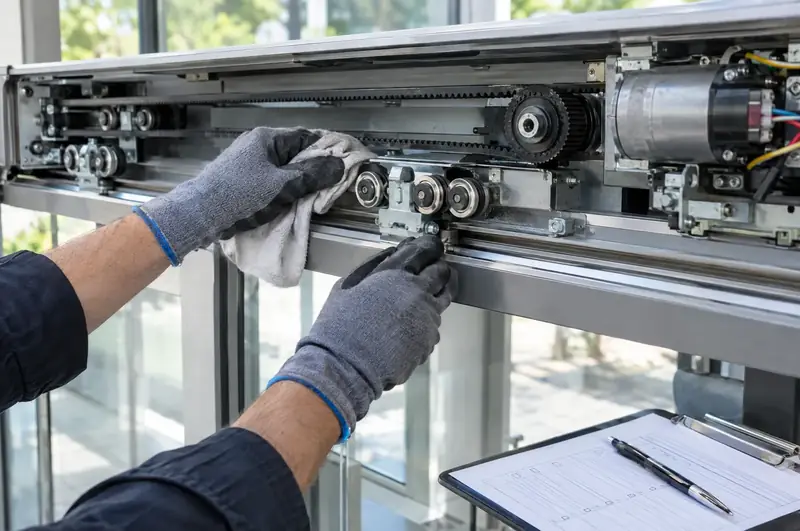
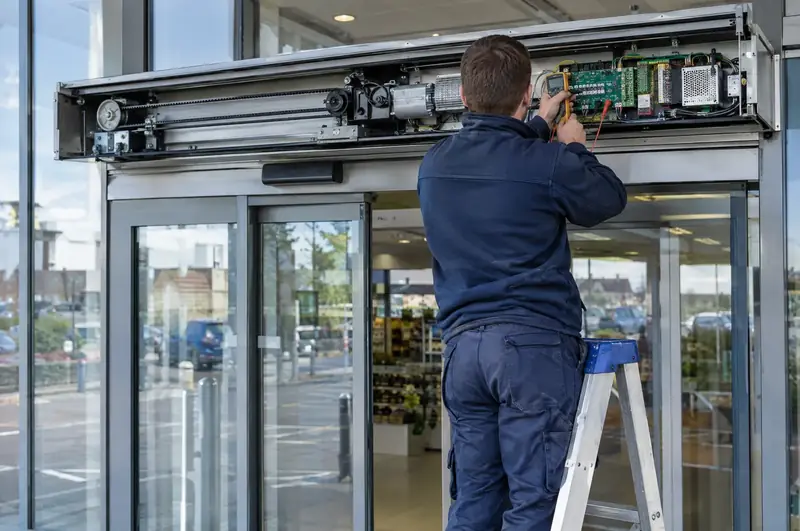
Looking after the opener is straightforward. We suggest a check by a trained engineer at least once a year, and servicing and repair visits are priced in writing before we attend.
Questions
Will a door opener work on my uPVC front door?
Usually, yes. Most uPVC and composite front doors can take an opener if the door hangs well and the hinges and frame are sound. Multi-point locks need attention, because the lock must release before the door can open, so we normally add an electric lock or electric keep that works with the opener. We check your door and lock at the free survey.
Can I still use my key?
Yes. An opener does not stop the door working as a normal door. You can still lock it and open it with your key, and push or pull it open by hand. Where we fit an electric lock, it is chosen so the door can be opened with a key from outside and by hand from inside, including during a power cut.
What happens to a home door opener if the power goes off?
The door can be opened and closed by hand like a normal door, and electric locks are chosen so nobody is locked in. If getting in and out during a power cut matters, for example for a wheelchair user who lives alone, a battery backup can keep the opener working for a limited number of openings. We explain how your door behaves at handover.
Does a Disabled Facilities Grant pay for a door opener?
Sometimes, but it is not automatic. Disabled Facilities Grants in England, Wales and Northern Ireland can sometimes help pay for door openers; in Scotland, councils help through their Scheme of Assistance instead. Your council or housing authority decides, the help is means-tested and usually follows an occupational therapist's assessment, and approval is needed before work starts. If you are applying, we wait for the decision before fitting.
Can you fit an opener in a council or housing association home?
Yes, with your landlord's permission. Many social landlords arrange adaptations themselves after an occupational therapist's assessment, so speak to your landlord first. If they agree to you arranging the work, we can survey the door, send a fixed written quote and provide any details your landlord asks for before we start.