What is the difference between low-energy and full-energy operators?
A low-energy swing door operator opens and closes a door slowly and with limited force, while a full-energy operator moves the door at normal speed and force and relies on safety sensors to stop it striking anyone. Both are fixed above the door and push the leaf open with an arm.
BS EN 16005, the standard for the safety in use of power-operated pedestrian doors, treats low-energy movement as its own category. The door's speed, force and energy are kept within limits set in the standard, so that less additional sensor protection may be needed. That only applies where a site-specific risk assessment shows a low risk to the people using the door.
The two types look much the same once fitted. The difference is in how the door behaves, how it is opened, and which safety devices it needs.
When does a low-energy operator make sense?
A low-energy operator makes sense on doors with light or occasional traffic where users may need extra time, such as accessible toilets, consulting rooms, offices, flat entrance doors and quieter side entrances.
England's building regulations guidance says low-energy powered door systems may be used in locations not subject to frequent use or heavy traffic, because the opening and closing action is relatively slow. It also expects a low-energy swing door to be capable of working in manual, powered or power-assisted mode.
Low-energy doors are usually opened on request, with a push pad, a touch-free switch or a remote button, rather than by a motion sensor. That means the door only moves when someone asks it to, which suits rooms where people want privacy or where an opening door would be a nuisance.
- accessible toilets and changing rooms
- consulting and treatment rooms
- offices and meeting rooms
- flat entrance doors and communal doors with modest use
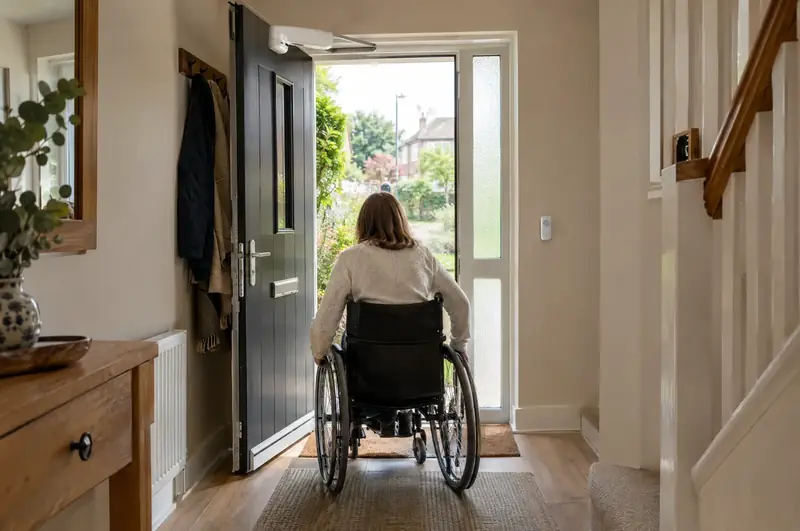
- doors in homes, for wheelchair users and carers
When do you need a full-energy operator?
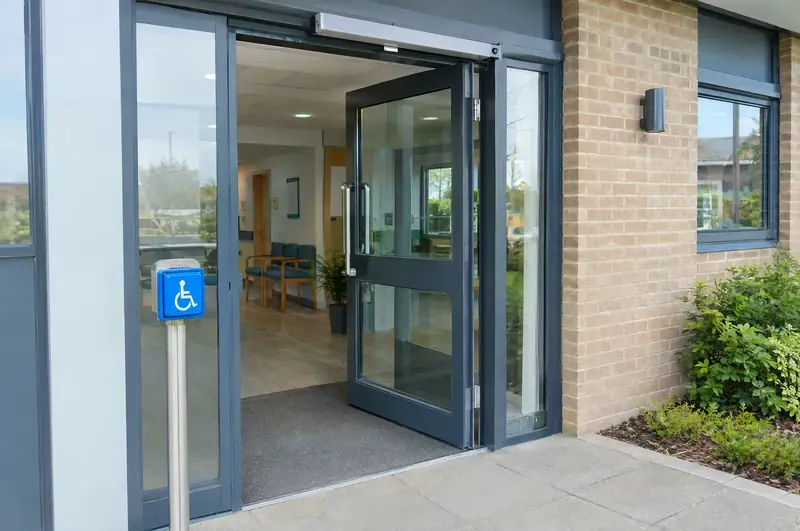
You need a full-energy operator when the door is busy, when it should open automatically as people approach, or when people need to pass through quickly and in numbers. Main entrances, busy corridors, hospital and care home routes used by beds and trolleys, and doors used by the public all day are typical examples.
Because a full-energy door moves faster and with more force, it is protected by safety sensors on the leaf that watch the swing area on both faces, and by finger protection at the hinge edge. Motion sensors usually open it, and the hold-open time can be set to suit slower users.
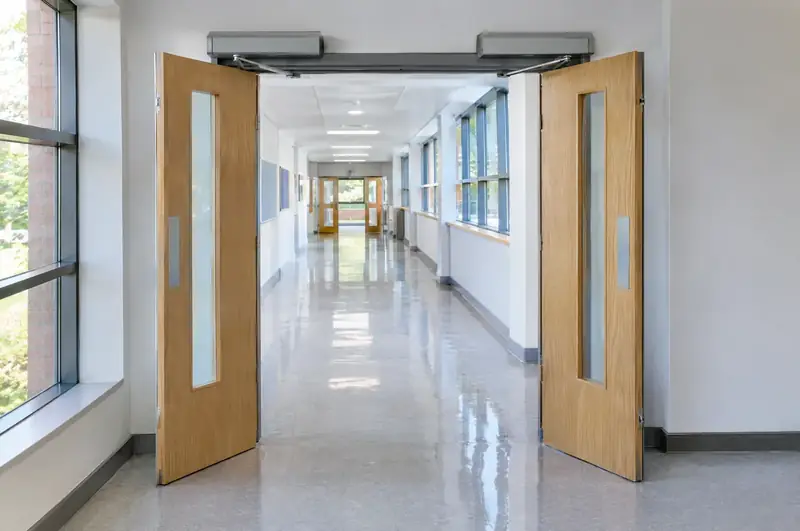
Full-energy operators also cope better with heavy doors, wind on external doors and the constant cycling of a busy route. On a pair of cross-corridor doors in a hospital, for example, a full-energy set-up lets porters move beds through without stopping, while sensors on both faces protect anyone standing in the swing. See automatic swing doors for options.
How do low-energy and full-energy operators compare?
Low-energy operators trade speed for gentleness and lower cost, and full-energy operators trade cost for capacity. The table sets out the main differences.
| Factor | Low-energy operator | Full-energy operator |
|---|---|---|
| How it moves | Slowly and gently, within limits set in BS EN 16005 | At normal speed and force |
| Usual activation | Push pad, touch-free switch or remote button | Motion sensors, with switches as an option |
| Safety sensors | Fewer may be needed, if the risk assessment supports it | Safety sensors protect the swing area on both faces |
| Traffic | Light or occasional use | Busy and continuous use |
| Manual use | Works in manual, powered or power-assisted mode | Can be opened by hand, or opens automatically, if the power fails |
| Typical places | Toilets, offices, consulting rooms, homes | Main entrances, wards, corridors, public buildings |
| Guide price | typically £1,795 to £2,995 ex VAT per single door | from £2,495 ex VAT per door |
Is a low-energy door safe for vulnerable users?
A low-energy door can be safe for vulnerable users, but only if the risk assessment shows it is, because who uses the door matters as much as how fast it moves. Low-energy movement is only appropriate where a risk assessment shows a low risk to vulnerable users such as older, frail or disabled people and young children.
In a care home, hospital or school, a full-energy operator with proper safety sensors can be the safer choice even where traffic is light, because some users may not notice or react to a door moving towards them. In other places the answer is a low-energy operator with additional sensors.
Homes are a different case. A home door opener is used by a small number of people who know how it behaves, so a gentle low-energy operator with a push button and remote fob usually suits well. Where children or visitors with dementia live in or visit the home, the set-up should take that into account, for example with a slower closing speed or an extra sensor.
BS 7036-0 is the UK code of practice for risk assessment and risk reduction at powered doors, used alongside BS EN 16005, and it guides that decision. We set up, test and document doors with reference to both.
Can an existing door take either type?
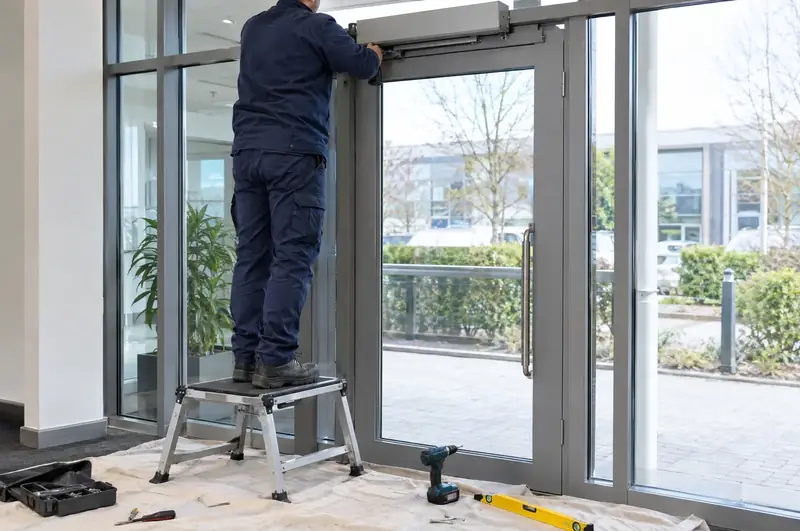
Most sound swing doors can take either type of operator, so the choice depends on traffic and users more than on the door. The survey checks the door's weight and width, the hinges, the frame and the space above the door, and whether it is a fire door.
Fire doors can be automated with operators suitable for fire doors. Fire doors that are held open must close automatically when the fire alarm operates, so the operator is linked to the alarm and lets the door close when it sounds.
If traffic grows, a low-energy installation can be upgraded with a full-energy operator and safety sensors later, but choosing the right type at the start costs less. Our guide to making an existing door automatic covers suitability in more detail.
How much do low-energy and full-energy operators cost?
A low-energy operator on a single door is typically £1,795 to £2,995 ex VAT as a guide, and a full-energy automatic swing door is from £2,495 ex VAT per door, because it needs a heavier-duty operator and safety sensors. Home door openers, which are usually low-energy, are typically £1,495 to £2,995 inc VAT per door.
Extras are priced separately. A touch-free switch or push pad is from £145 ex VAT (£174 inc VAT) per switch fitted, and card or fob access control is from £795 ex VAT per door. Commercial prices exclude VAT, and home door opener prices include it.
See accessible door operators, the price guide or the guide price tool.
Which activation and controls suit each type?
Low-energy doors are best matched to controls that open the door on request, while full-energy doors usually open automatically on approach and add switches only where needed. The common options are:
- Push pads. The standard choice for low-energy doors, fixed at a height wheelchair users can reach and clear of the door's swing.
- Touch-free wave switches. Open the door with a hand movement near the switch, useful where hygiene matters.
- Radio buttons and fobs. Let a wheelchair user or carer open the door from further away, common on home and flat entrance doors.
- Motion sensors. Open the door as people approach, normally used with full-energy operators.
- Card, fob or keypad readers. Control who can open the door and when, with either type of operator.
- Programme switches. Let staff set the door to automatic, open, locked or exit only, for example at closing time.
Whatever the controls, they should be easy to see and use, and the door should give people enough time to get through. See touch-free and push-button activation.
How do you choose between them?
Choose low-energy for a door with light use by people who can press a button and wait a moment, and full-energy for a busy door, a door that must open on approach, or a door used by people who may not react to it. These questions settle most cases:
- How many times a day is the door used, and at what times?
- Who uses it: the public, staff, patients, residents, children?
- Should it open as people approach, or only when someone asks?
- Does it need to pass beds, trolleys or groups of people quickly?
- Is it a fire door, or on an escape route?
A free site survey looks at the door and how it is used, and the fixed, itemised written quote recommends one type and explains why.
Questions
Do low-energy doors need safety sensors?
Sometimes. Low-energy movement can reduce the need for additional sensors, but only where the site-specific risk assessment shows a low risk to the people who use the door. Doors used by children or vulnerable people may still need sensors.
Can a low-energy door open automatically as people approach?
It can be set up with a motion sensor, but low-energy doors are usually opened on request with a push pad or touch-free switch. Because they open slowly, a door that should open on approach often works better as a full-energy door with safety sensors.
Will a low-energy door still work in a power cut?
Low-energy operators can usually be pushed open by hand when the power is off. Battery backup can keep the door working for a time, which can matter at a home front door or a single accessible entrance.
Which type is best for an accessible toilet?
A low-energy operator with push pads inside and out is a common choice, often with an electric lock so the user can lock and unlock the door from inside. The risk assessment confirms the details for each building.
Which type do home door openers use?
Most home door openers are low-energy, because the door is used by a few people who know it and the opener needs to be gentle. See home automatic door openers for options and costs.