
Do automatic shop doors need planning permission?
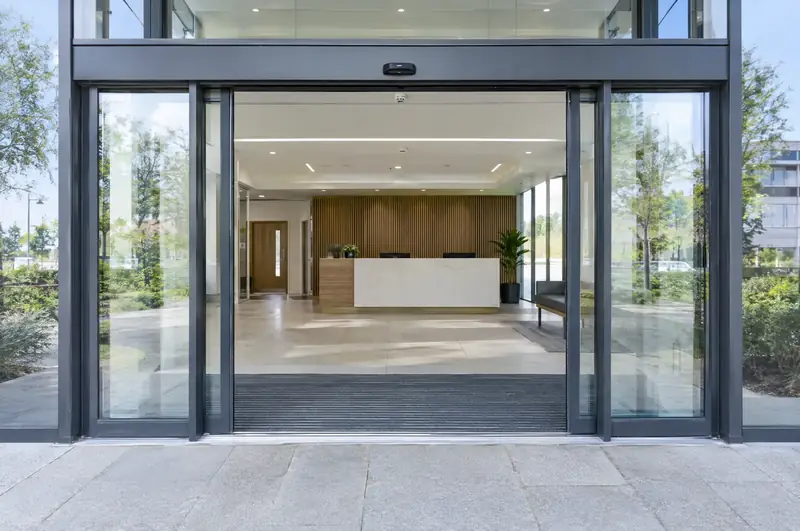
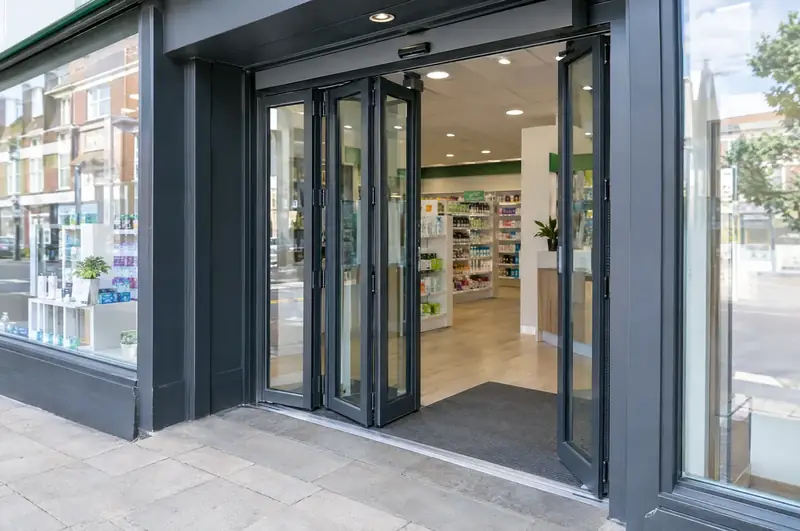
Automatic shop doors need planning permission if the work materially affects the external appearance of the building, unless it falls within permitted development rights. Replacing a traditional shopfront with a new glazed entrance usually changes the appearance, so it often needs permission. Fitting an operator to an existing door, or replacing doors like for like within the existing frontage, often does not.
This follows from planning law in each UK nation. Works that affect only the interior of a building, or do not materially affect its external appearance, are not treated as development under the Town and Country Planning Act 1990 in England and Wales, the Town and Country Planning (Scotland) Act 1997 in Scotland, and the Planning Act (Northern Ireland) 2011 in Northern Ireland.
Whether a change is material is a judgement for the local planning authority. If you are unsure, ask the council before ordering doors. Many councils offer pre-application advice, and some publish shopfront design guides.
What usually changes the appearance of a shopfront?
The changes that most often count as material are the ones people notice from the street: the size and position of the opening, the frame material and colour, the amount of glass, and anything added to the outside.
| Change | Planning permission likely? | Notes |
|---|---|---|
| Operator fitted to an existing door, with no external change | Usually not | Check first if the building is listed |
| Like-for-like replacement doors in the same opening | Often not | Different materials, colours or frame sizes may change that |
| New sliding doors in a wider or moved opening | Often yes | Changes the frontage seen from the street |
| A whole new shopfront or entrance | Usually yes | Treated as a full shopfront alteration |
| A draught lobby built out from the frontage | Usually yes | May also affect the pavement or highway |
| New signs on the doors or frontage | Separate advertisement rules may apply | Ask the council |
This is a general guide, not a decision. The council's view on your building is what counts, and listed buildings and conservation areas are treated more strictly.
What changes in a conservation area?
In a conservation area, the council takes particular care over changes to how buildings and streets look, so shopfront changes get closer attention, and some works that would be minor elsewhere may need permission. Many conservation areas have extra local controls, and traditional shopfronts are often an important part of their character.
That does not rule out automatic doors. Operators can often be hidden in a head transom or behind a fascia, frames can be finished to suit the shopfront, and a swing operator can sometimes automate an existing timber door without changing its appearance. Early contact with the council's conservation officer helps, especially if you want to change the opening.
A free site survey looks at what can be done within the existing frontage, which is often the simplest route in a conservation area. See can you make an existing door automatic?
Do I need listed building consent?
You need listed building consent for works that would affect a listed building's character as a building of special architectural or historic interest. That can include internal work and changes that would not need planning permission, such as fixing an operator to a historic door or cutting into an original frame.
Each UK nation has its own listed building regime:
- England: the Planning (Listed Buildings and Conservation Areas) Act 1990, with consent usually given by the local planning authority.
- Wales: the Historic Environment (Wales) Act 2023, whose listed building provisions came into force on 4 November 2024, with applications made to the local planning authority.
- Scotland: the Planning (Listed Buildings and Conservation Areas) (Scotland) Act 1997, with consent usually given by the planning authority.
- Northern Ireland: the Planning Act (Northern Ireland) 2011, with consent given by the council or the Department.
Carrying out unauthorised works to a listed building is a criminal offence, so get consent first. If a building is listed, plan extra time and expect the council to look closely at materials, fixings and how easily the work could be reversed.
Do I need my landlord's consent?
If you lease your shop, you will usually need your landlord's written consent before altering the shopfront or entrance. Most commercial leases restrict alterations, especially to the exterior and structure, and some forbid them altogether.
Check the alterations clause in your lease and contact the landlord or managing agent early. They may want drawings, a method statement, insurance details and details of the installer, and they may set conditions on working hours, reinstatement at the end of the lease or the design of the frontage. In a shopping centre, the centre's own rules and design standards usually apply as well.
Your written quote and survey notes can support the landlord's approval process, because they set out what will be fitted and how.
Do automatic shop doors need building regulations approval?
A new entrance, or a significant change to an existing one, is often building work that needs building regulations approval, separate from any planning permission. Building regulations cover how the work is done: access, fire safety and escape, safety glazing and protection from impact, and energy efficiency.
Building regulations guidance on access to buildings applies to new buildings and to building work on existing buildings; the details differ in each UK nation:
- England: the Building Regulations, with guidance in Approved Documents M (access), B (fire safety) and K (protection from falling, collision and impact).
- Wales: the Building Regulations as they apply in Wales, with Wales's own Approved Documents.
- Scotland: a building warrant from the local authority, with the Technical Handbooks as guidance.
- Northern Ireland: building control at the council, with guidance in the Technical Booklets, including R for access and E for fire safety.
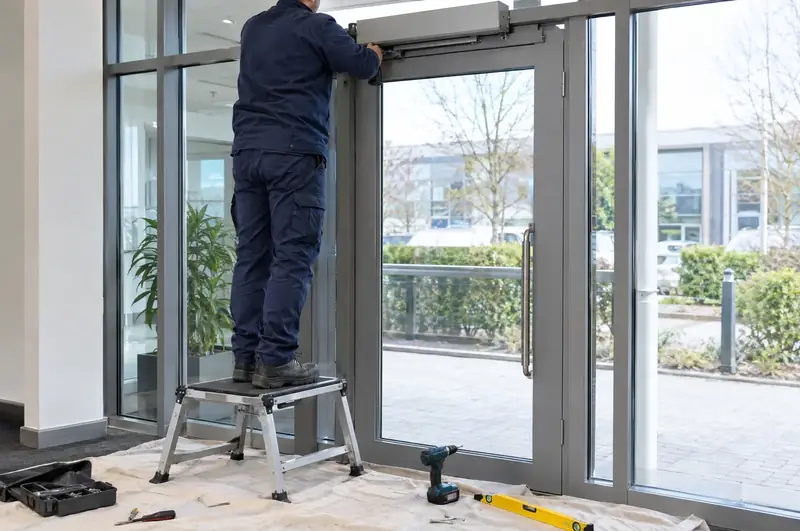
Fitting an operator to an existing door may not need approval, but if the door is on an escape route or is a fire door, the change has to fit the fire strategy for the building. Your installer or building control body can confirm the route for your job.
Service providers and employers have duties to make reasonable adjustments for disabled people under equality and accessibility law. An automatic door is a common adjustment at entrances. See automatic doors and accessibility law.
How should I plan an automatic shop door project?
Plan an automatic shop door project in a set order: check the consents, get the door specified, then apply for anything needed before ordering. That way the design does not have to change after approval.
- Check whether the building is listed or in a conservation area. The council's website or planning team can tell you.
- Read your lease and contact the landlord or managing agent.
- Book a free site survey so the door type, opening, operator position and power supply are worked out.
- Ask the council whether planning permission or listed building consent is needed, using the survey details. Use pre-application advice if the change is significant.
- Confirm the building regulations route with building control.
- Fix the installation date once consents are in place, with work timed around trading hours.
New automatic sliding doors are typically £4,495 to £12,995 ex VAT per entrance as a guide, and automating an existing door is from £1,795 ex VAT (£2,154 inc VAT) per door. Every installation starts with a free site survey and a fixed, itemised written quote, with no obligation. See the shops and retail sector page for more on shop entrances.
Questions
Can I fit an automatic opener to a listed shop's original door?
Sometimes. An operator can often be fitted to a sound historic door, but because it involves fixings into historic fabric, it may need listed building consent. Discuss it with the council's conservation officer first. Discreet positions for the operator and switches, and fixings that can be removed later without damage, help the case.
How long does planning permission or listed building consent take?
Times vary between councils and with the complexity of the application. Allow for it in your plans, and do not order doors that depend on a consent until it has been granted. Your council's planning pages give its current guidance on how applications are handled.
Who applies for the consents, me or the installer?
Usually the building owner or tenant applies, often through an architect or planning agent for larger changes. We can supply door details and survey notes to support the application, and your written quote describes the work clearly for the council and the landlord.
Does my shop have to have an automatic door?
There is no general rule that every shop must have one. Service providers have duties to make reasonable adjustments for disabled people under equality and accessibility law, and an automatic door is a common adjustment at entrances. Whether it is reasonable for your shop depends on your circumstances. See automatic doors and accessibility law.
What happens if work is done without the right consent?
The council can take enforcement action and may require the work to be reversed or put right. For listed buildings, unauthorised works are a criminal offence. Getting consent first is usually quicker and cheaper than correcting things afterwards.