What is an automatic door risk assessment?
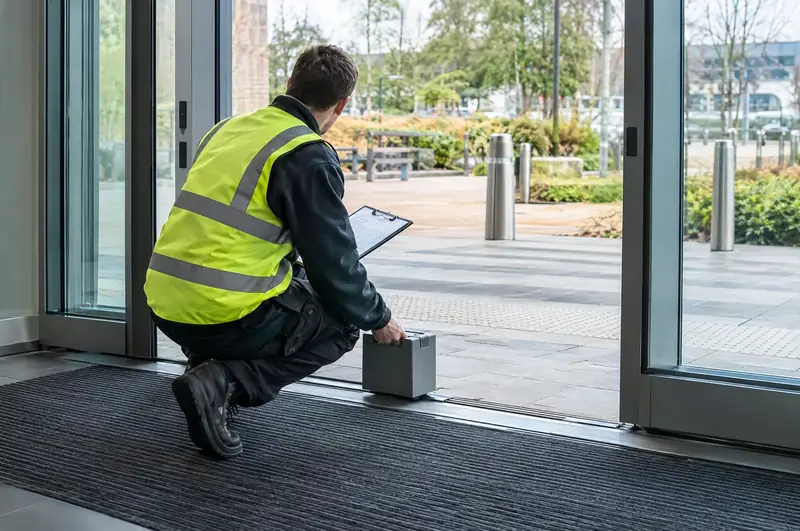
An automatic door risk assessment is a written, site-specific review of the ways a particular powered door could cause harm, who could be harmed, and whether the door's safety measures are enough. It is about one door, in one place, used by particular people, rather than door types in general.
The same model of sliding door can be low risk in an office reception and higher risk at a supermarket entrance used by children, older shoppers and people with trolleys. The assessment captures those differences, and the settings and safety devices are chosen to match.
BS EN 16005 is the standard for the safety in use of power-operated pedestrian doors. BS 7036-0:2014 is the UK code of practice for risk assessment and risk reduction at powered pedestrian doors, used alongside BS EN 16005. A risk assessment is the usual way to apply them to a real door, and we set up, test and document doors with reference to them.
Which hazard zones does it look at?
A hazard zone is any place where a moving door, or the gap between a door and something fixed, could crush, shear, strike, trap or draw in part of a person's body. The assessment works around the whole door and checks each zone in turn.
| Hazard zone | What can happen | Typical protection |
|---|---|---|
| Closing edges, where leaves meet each other or the frame | Fingers, hands or a body crushed in the closing gap | Presence sensors, limited force, slower closing, edge profiles |
| Opening area of a swing door | Impact on someone standing in the swing path | Door-mounted safety sensors, low-energy settings, guarding |
| Side screens and walls beside a sliding leaf | Hands drawn into or sheared in the gap as the leaf slides past | Small gaps, finger guards, sensors covering the zone |
| Hinge side of a swing door | Fingers crushed in the hinge gap | Finger guards over the gap |
| Revolving door wings, posts and canopy | Trapping or impact at the wing edges and overhead | Safety edges, sensors, speed and force control |
| Glass leaves and screens | Impact with glass that people do not see | Safety glass and manifestation markings |
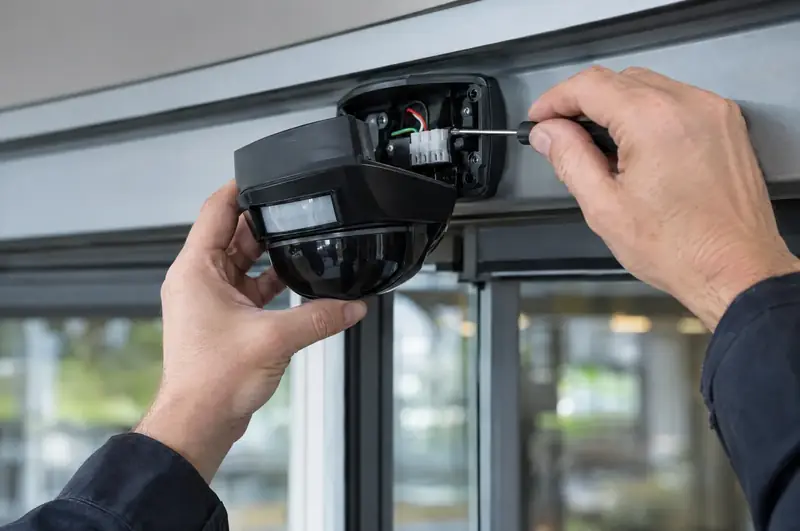
Crushing, shearing, impact and drawing-in are the main types of hazard. Sensors are only one answer. The shape of the door, the size of gaps, guards, and speed and force settings all play a part, and the assessment records which measures protect each zone.
Who uses the door, and why does it matter?
The users of a door matter because the same door affects different people in different ways. A fit adult walking briskly is at little risk from a door that opens in time. A child, an older person, someone using a wheelchair or walking frame, or a person with a visual impairment may move more slowly, stop in the threshold or not see the glass.
The assessment asks who uses the door, at what times and how often, including:
- children, who may play near doors or put their hands in gaps
- older people and people with mobility impairments, who may stop in the opening
- disabled people using wheelchairs, scooters, walking aids or assistance dogs
- people with visual or cognitive impairments
- staff moving trolleys, beds, stock or deliveries
- the public at busy times, and staff or contractors out of hours
Service providers and employers have duties to make reasonable adjustments for disabled people under equality and accessibility law. An automatic door is a common adjustment at entrances, and the risk assessment helps make sure it stays safe for the people it is meant to help. See automatic doors and accessibility law.
What about traffic and the surroundings?
Traffic and surroundings matter because they decide how often the door moves, how people approach it and what can interfere with its sensors. An entrance on a busy pavement behaves very differently from a door at the end of a quiet corridor.
The assessor looks at:
- how many people use the door, and whether they arrive in groups or a steady stream
- approach routes, cross traffic and queues near the door
- slopes, steps, ramps and the floor surface, including mats and wet floors
- weather exposure, wind and draughts between doors
- lighting, and how visible the glass and door edges are
- nearby objects such as displays, furniture, handrails and other doors
- whether the door is on an escape route or is a fire door
The surroundings change over time. A new display stand, a moved desk or a replaced mat can change how a door's sensors behave, so it is worth reviewing the assessment whenever the area around the door changes.
What does the assessment produce?
A risk assessment produces a written record of the door, its hazard zones and users, the safety measures in place, the test results, and a list of any changes needed, ranked by urgency. That record is what you keep on file and show when asked how the door is managed.
Typical outcomes include:
- No action needed: the door's protection matches its use, with a date for the next review.
- Adjustments: settings such as speed, hold-open time, force or sensor fields changed on site.
- Upgrades: added or replaced sensors, finger guards, signage or glass markings. See safety and compliance upgrades.
- Take out of use: where a hazard cannot be controlled until work is done, the door is switched to a safe setting.
Any upgrade work is set out item by item in a written quote, so you can decide what to do and when. Upgrades start with a free site survey and a fixed, itemised quote.
Who needs an automatic door risk assessment?
Anyone responsible for an automatic door used by employees or the public should have a risk assessment for it. In practice that means employers, building owners and managers, landlords of shared buildings, and organisations such as schools, councils, surgeries, shops and care providers.
Workplace health and safety law requires employers to assess risks, and it expects powered doors to have safety features that prevent people being trapped or struck, and to be safe if the power fails. Doors in workplaces must be kept maintained and in good working order. Regular servicing and a written record are the usual way to show that.
A powered door is treated as machinery. Whoever motorises a manual door, or assembles an automatic door from separate parts, may take on the manufacturer's duties for it, including the conformity paperwork and marking. In Great Britain, the finished door must meet the Supply of Machinery (Safety) Regulations 2008 before it is first used. A risk assessment is part of that work, so it should come with any new door or retrofit.
An assessment is also worth doing when a door changes use, after an accident or near miss, when the area around it changes, and after major repairs or upgrades.
How does it relate to servicing and BS EN 16005?
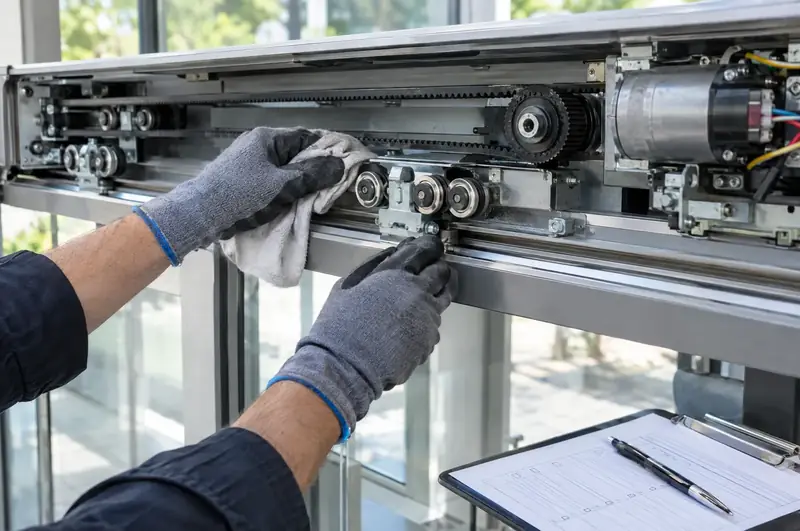
A risk assessment is not the same as a service. A service keeps the door in good working order. A risk assessment asks whether the door's protection is right for how it is used. The two work together, and many owners have the assessment done alongside a service visit.
Standards are not law in themselves, and they are not retrospective, so an older door does not become unlawful when a standard is updated. They are still the recognised benchmark for showing a door is safe to use, and the risk assessment shows whether upgrades are sensible. See BS EN 16005 explained for what the standard covers.
Our safety inspections and risk assessments are typically £125 to £250 ex VAT per door as a guide. The visit price is agreed in writing before we attend, and any upgrades are quoted before they are done.
Questions
How often should an automatic door risk assessment be reviewed?
Review it when something changes: the door is altered or repaired, its use changes, the area around it changes, or there is an accident or near miss. Many owners also review it at a regular service visit. There is no single fixed interval for every door, so base it on how much the door is used and the risk.
Is an automatic door risk assessment a legal requirement?
Employers must assess risks to employees and others affected by their work under workplace health and safety law, and an automatic door is part of that. The law does not set a particular format for doors, but a written, door-specific assessment made with reference to BS EN 16005 is the usual way to show the risks have been considered.
Can an older door pass a risk assessment?
Yes, if its protection suits how it is used. Many older doors need only adjustments or a few added safety devices. Some lack features that cannot be added economically, and then a new drive unit or door is the better route. The assessment tells you which, and any work is quoted before it is done.
Does a low-energy swing door need a risk assessment?
Yes. Low-energy doors move slowly and with limited force, which reduces some hazards, but the assessment still checks the swing path, hinge gaps, users and surroundings. It may conclude that fewer safety devices are needed than on a full-energy door, but that conclusion should be recorded for that door.
What do I need to have ready for the assessment?
Access to the door at a time when it can be taken out of use briefly, any previous service or inspection records, the door's make and model if known, and information about who uses it and any incidents. If the door is on an escape route or linked to a fire alarm, have the fire strategy or fire risk assessment to hand.