Why has my automatic door stopped working?
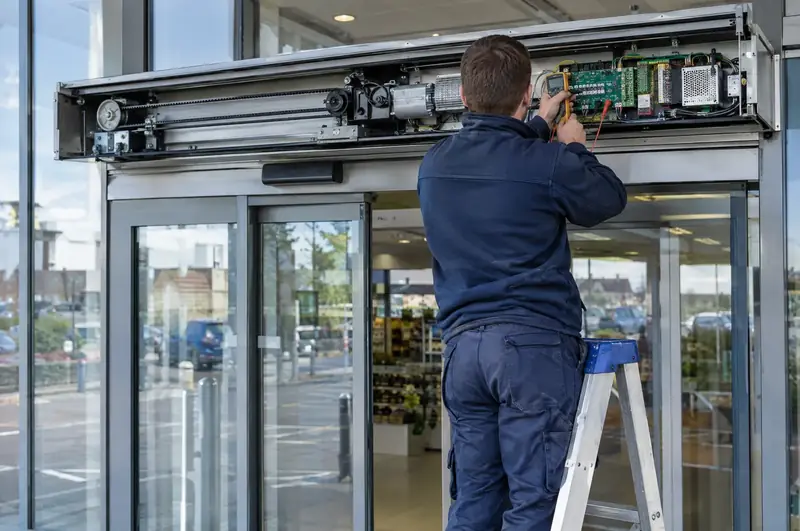
An automatic door usually stops working for one of four reasons: its settings have been changed, something is blocking a sensor or the track, it has lost power, or a part has worn out or failed. The first three can often be found by a site manager in a few minutes. The fourth needs an engineer.
Automatic doors are also designed to fail safe. If the controller cannot confirm that a safety sensor is working, or the door meets resistance it does not expect, it will often stop, slow down or stay open. A door that refuses to close is frequently doing its job and telling you something is wrong.
If the door has hit or closed on someone, has broken glass, or has a leaf off its track, stop using it. Switch it off or to a safe setting, keep people away and call an engineer. Do not try to fix it yourself.
What do the symptoms usually mean?
Most faults show up as one of a handful of symptoms, and each symptom points to a short list of likely causes.
| Symptom | Likely causes | Safe first check |
|---|---|---|
| Door will not open at all | Programme switch on off, night or exit only; power lost; lock engaged; failed drive or controller | Check the switch position and the power to the door |
| Door opens but will not close | Something in the safety sensor field; debris in the floor guide; switch on hold open; a failed monitored sensor | Clear the threshold and look for objects near the door |
| Door stops or reverses part way | An obstruction in the track or floor guide; worn rollers; a sensor seeing something | Look for stones, litter or a lifted mat in the path |
| Door opens on its own | The activation sensor is picking up rain, traffic, flags, displays or vibration | Look for new objects or moving things in front of the sensor |
| Grinding, knocking or squealing | Worn rollers, belt or bearings; debris in the track; loose fixings | Take the door out of use and call an engineer |
| Slow or jerky movement | Worn parts, friction in the track, or a controller in a fault or safe mode | Note any warning light or code, then call an engineer |
| Swing door will not close fully | Wind or air pressure, a loose arm, or a latch or lock out of adjustment | Check for open doors elsewhere causing a through-draught |
| Door works, then fails now and then | A loose connection, a failing sensor or power supply, or overheating | Note when it happens and what else was going on |
Writing down what happens, when, and any warning lights or codes on the programme switch helps the engineer bring the right parts and can shorten the visit.
What checks can I safely make myself?
The safe checks are the ones that do not involve opening the operator, moving the leaves by force or changing safety settings. A site manager or keyholder can usually work through these in a few minutes:
- Check the programme switch. Make sure it is set to the normal automatic mode, not off, night, exit only, hold open or a reduced opening width. Someone may have changed it at closing time or during cleaning.
- Check for obstructions. Look along the floor guide, threshold and track for stones, litter, a lifted mat or a door stop. Look in front of the sensors for A-boards, displays, plants, hanging signs or decorations.
- Check the power. Confirm the building has power, that the door's isolator or fused spur is on, and that no breaker has tripped. If a breaker trips again, leave it off and call an engineer.
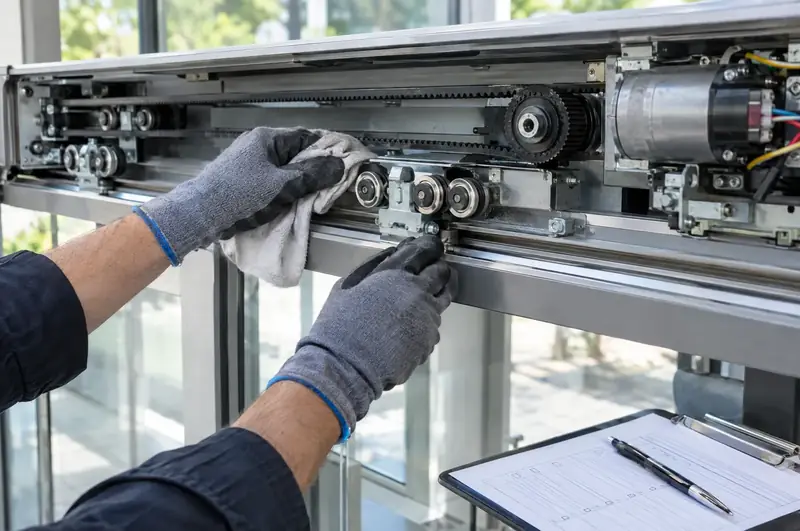
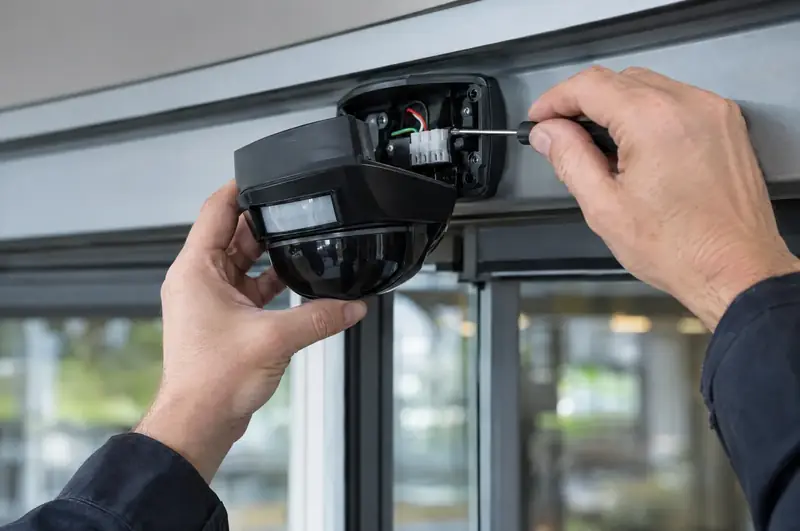
- Clean the sensors gently. Wipe the sensor face with a soft dry cloth if the manufacturer's instructions allow it. Do not move or open the housing.
- Reset, but only as the instructions say. Some doors can be reset by switching off at the isolator, waiting and switching on again. Do this only where the manufacturer's instructions for the door provide for it, and with nobody in the doorway.
If the door works normally after these checks, keep an eye on it. If the same fault comes back, book a visit so the cause can be found rather than reset away.
What should I avoid doing?
Avoid anything that removes the door's safety protection or puts people near moving parts and mains electricity. Automatic doors carry enough weight, force and stored energy to injure someone.
- Do not open the operator cover. It contains mains voltage, moving belts and gears and, on some doors, spring tension.
- Do not force the leaves. Pushing or levering a powered door can damage the drive, bend tracks or break glass. Use a manual or emergency release only if the door is designed for it and you have been shown how.
- Do not bypass the sensors. Covering, taping or disconnecting a safety sensor, or changing settings to stop a door misbehaving, removes the protection that stops it trapping or striking people.
- Do not wedge or tie a powered door open unless the door's instructions allow it, and never on a fire door.
- Do not keep using a door that is unsafe. Switch it off or to a safe setting, put up a sign and direct people to another entrance.
Workplace health and safety law expects powered doors to have safety features that prevent people being trapped or struck, and doors in workplaces must be kept maintained and in good working order. Quick fixes that defeat safety devices work against both.
When should I call an engineer?
Call an engineer when the safe checks have not cleared the fault, when the fault keeps coming back, or straight away if the door has hit or closed on anyone, has damaged glass, has a leaf off its track, makes grinding noises or smells of burning.
It also makes sense to book a visit when a door that should protect people is not doing so, for example a sliding door that closes while someone is standing in the opening, or a swing door that does not stop when it meets something. Those faults may not stop the door working, but they make it unsafe.
Our automatic door repairs cover sliding, swing, folding and revolving doors from the major European operator brands, whoever installed them. We do not promise arrival times, so if the door has to be secured, tell us when you get in touch and we will talk through the options for making it safe in the meantime.
How much does an automatic door repair cost?
A repair visit is from £95 ex VAT (£114 inc VAT) as a guide, and the visit price is agreed with you in writing before an engineer attends. Any parts or further work are quoted before they are done, so nothing is added without your agreement.
Some repairs can be priced from photos and the door's make and model, which helps when a part has to be ordered. It helps to send:
- a photo of the whole door from each side
- a photo of the label on the operator or programme switch showing the make and model, if you can see it without opening anything
- a short video of the fault
- any warning lights or codes
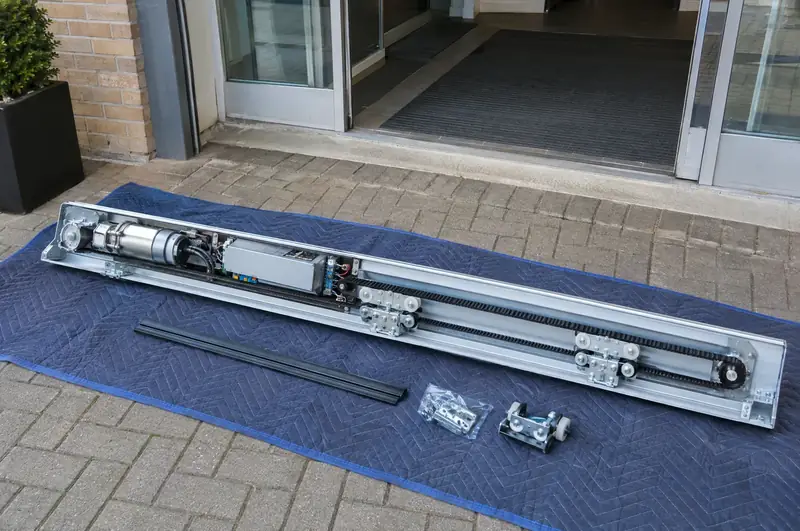
If the door is old and parts are no longer available, the engineer will tell you. A drive unit replacement on the existing frame and leaves is often the next step, and it starts with a free site survey and a fixed written quote.
How do I stop faults coming back?
Most repeat faults come from wear that has not been picked up, settings that no longer suit how the door is used, or changes to the area around the door. Planned servicing, a tidy threshold and a quick daily look deal with most of them.
- Keep the floor guide and threshold clear, and fix lifted or curled mats.
- Keep displays, signs and stock out of the sensor fields.
- Make sure staff know which programme switch setting to use and who may change it.
- Report knocks from trolleys, pallets or vehicles straight away, because a bent leaf or knocked sensor causes faults later.
- Keep the written service record, so each visit can see what was found last time.
Planned automatic door servicing catches many faults before they stop the door. No law sets a fixed interval. We recommend a trained engineer checks the safety functions at least once a year, with service intervals set by the manufacturer's instructions and how heavily the door is used, and busy doors are often serviced more often. See how often automatic doors should be serviced.
Questions
Is it safe to keep using an automatic door that is playing up?
It depends on the fault. A door that opens by itself is usually a nuisance rather than a danger. A door that closes on people, does not stop when it meets something or has damaged glass is unsafe and should be taken out of automatic use straight away. If you are unsure, switch it to a safe setting and ask an engineer.
Can I reset an automatic door myself?
Some doors can be reset by switching off at the isolator, waiting and switching back on. Only do this where the manufacturer's instructions for the door allow it, and with nobody in the doorway. If the fault returns after a reset, the cause needs finding, so book a visit rather than resetting the door again and again.
Why does the door work in the morning but fail later in the day?
Faults that come and go often follow a pattern: heat building up in the operator, sunlight or rain affecting sensors, deliveries leaving debris in the track, or someone changing the programme switch. Note the times and conditions when it happens. That record helps the engineer find the cause quickly.
Do you repair automatic doors you did not install?
Yes. We repair automatic doors from the major European operator brands, whoever installed them. Sending photos of the door and its make and model label helps us check parts availability and, for some faults, price the repair before anyone visits.
Is there a charge for an engineer to look at the door?
Yes, a repair visit is a paid visit, and the price is agreed with you in writing before an engineer attends. Parts and any further work are quoted before they are done. Some repairs can be priced from photos and the door's make and model, which can save a visit.