What do offices need from automatic doors?
Office doors face peaks rather than constant flow: a rush first thing, at lunchtime and at the end of the day, with visitors, couriers and deliveries in between. The main entrance needs to cope with those peaks, make a good first impression and stay secure outside working hours.
Inside, doors between reception, lift lobbies, corridors and meeting areas need to be easy for everyone to use, including disabled staff and visitors. Many of them also need to close for fire safety or restrict access to certain floors.
A door that sticks, bangs or opens for every passer-by wastes heat and distracts reception staff, and a door that fails leaves the building either insecure or shut. Getting the sensors, speeds and modes right at handover, and keeping them right at each service, avoids most of those problems.
Which automatic doors suit office buildings?
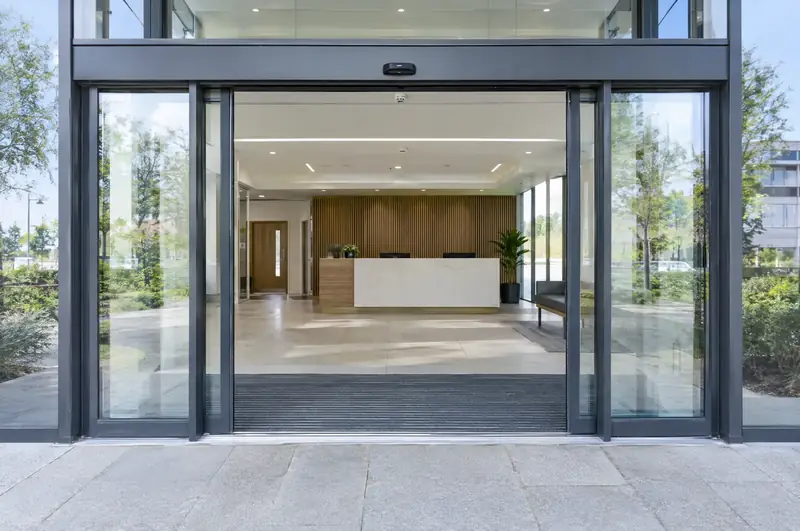
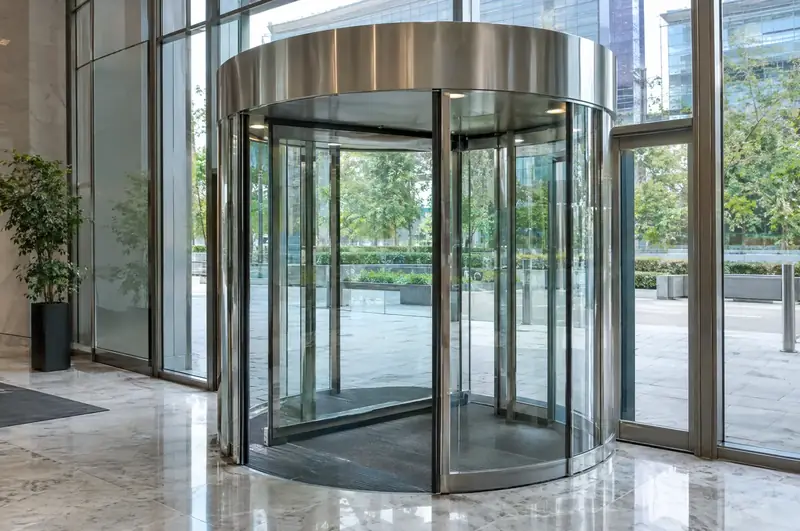
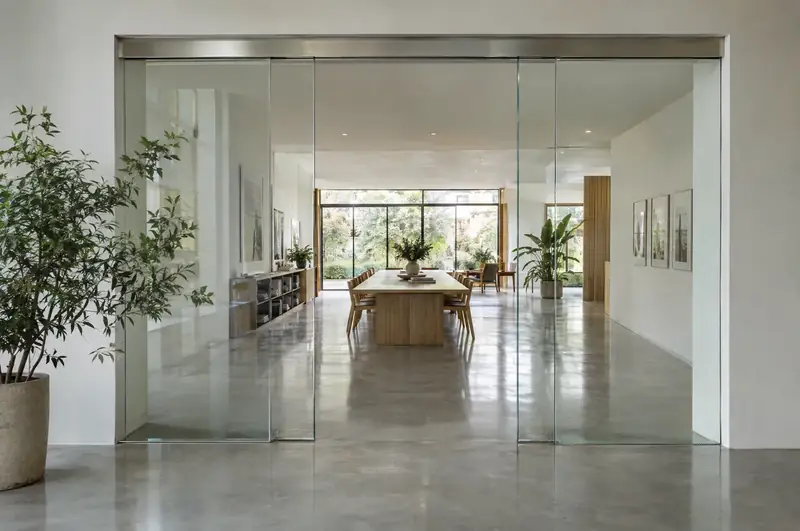
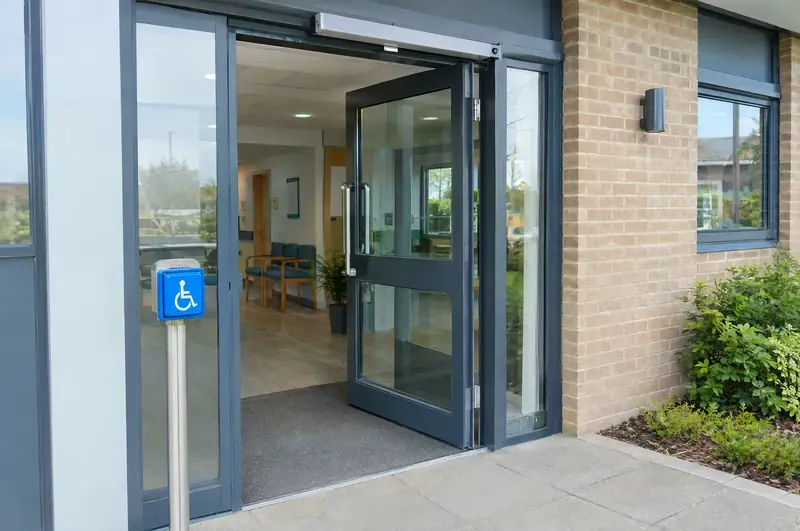
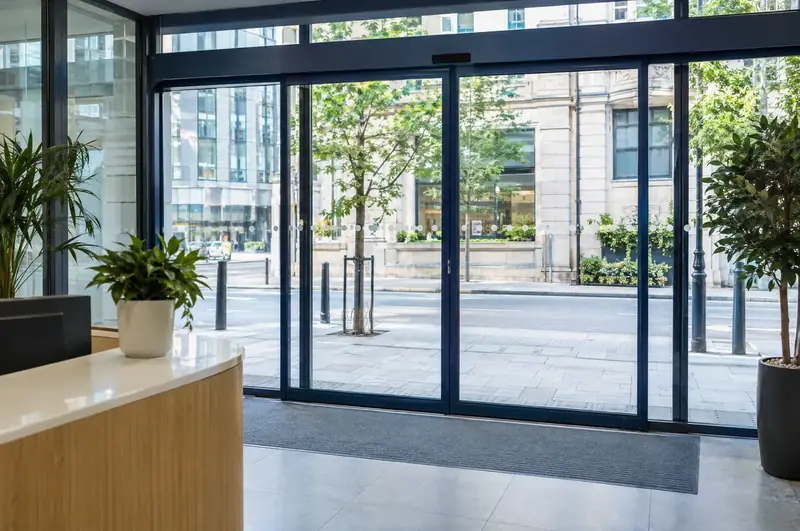
Automatic sliding doors suit most office entrances, and frameless glass automatic doors give an all-glass reception. Larger buildings with heavy traffic may suit a revolving door or an automatic entrance lobby to hold heat in. A revolving door is not accessible on its own, so an accessible sliding or swing door is provided alongside it.
Inside, accessible door operators suit doors to meeting rooms, toilets and quieter corridors, and automatic swing doors or automatic internal doors suit busy routes such as lift lobbies. Our guide to sliding or swing doors walks through the choice.
How do automatic doors work with access control?
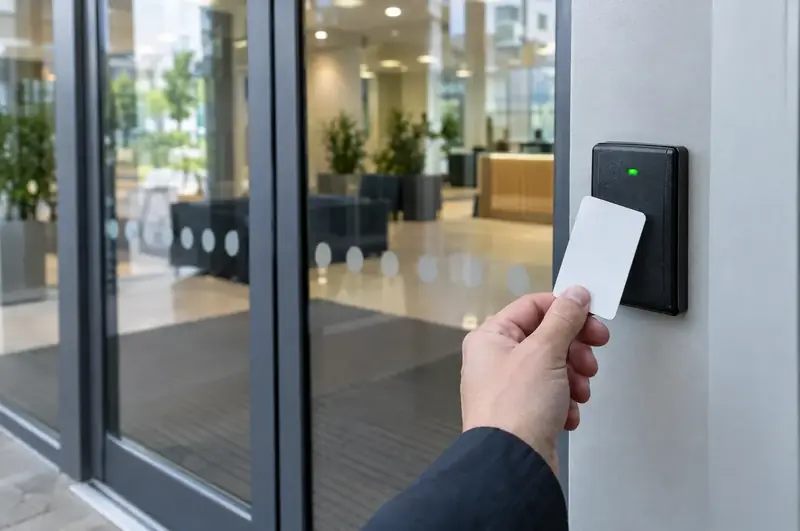
Most office entrances now combine an automatic door with access control. The door can run in automatic mode during reception hours and switch to card, fob or keypad entry at other times, with free exit from the inside. An intercom lets reception or a tenant release the door for visitors.
Timers, programme switches and the building management system can change the door's mode at set times. We work with your security installer where the readers and controllers are theirs, and agree who is responsible for each part before work starts.
Where the door also has an electric lock, it must release when the fire alarm operates, where the fire strategy requires that, and must never trap anyone inside. We check this against your fire strategy at the survey.
What are the safety and accessibility duties?
Employers and service providers have duties to make reasonable adjustments for disabled people under equality and accessibility law, and an automatic door is a common adjustment at entrances and on key internal routes. Building regulations guidance on access applies to new buildings and to building work on existing buildings; the details differ in each UK nation.
Workplace health and safety law expects powered doors to have safety features that prevent people being trapped or struck, to be safe if the power fails, and to be kept maintained and in good working order. BS EN 16005 is the standard for the safety in use of power-operated pedestrian doors. We set up, test and document every door with reference to it and leave the paperwork with you.
In multi-let buildings it helps to be clear who looks after which door. Landlords often look after the main entrance and common parts, and tenants the doors inside their own space, but your leases decide.
Can work be done outside office hours?
Yes. Main entrance work is often done at weekends or in the evening so the building opens as normal on the next working day. We agree a programme with the building manager, protect finished floors and reception areas, and keep the building secure while the entrance is changed. Any out-of-hours cost is shown in the quote.
Internal operators and access control can usually be fitted during the day, one door at a time, with each door back in use before the engineer leaves.
How do you service office doors and quote for work?
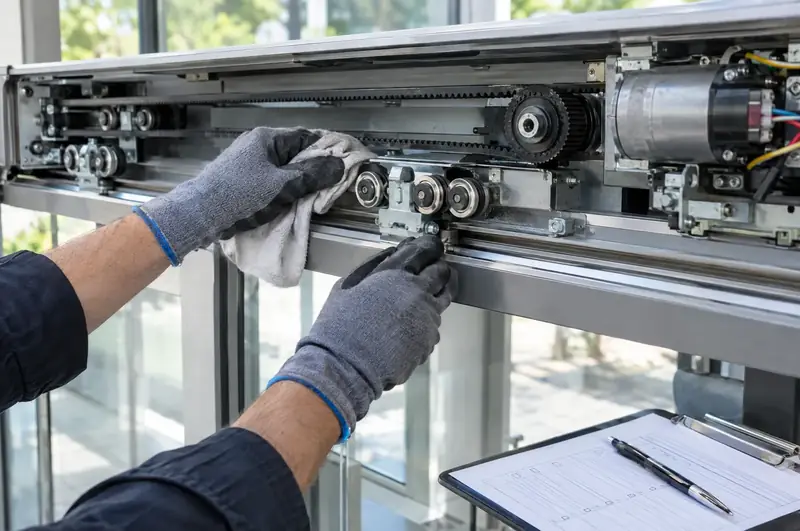
We recommend a trained engineer checks the safety functions at least once a year, with service intervals set by the manufacturer's instructions and how heavily the door is used. A service contract can cover all the automatic doors in a building on one visit, with a written record for each door. Repairs are paid visits priced in writing before we attend.
New doors and upgrades start with a free site survey and a fixed, itemised written quote. The survey looks at the opening, structure, floor, power, access control and fire strategy, and the quote itemises the door, safety devices, access control interface and any out-of-hours work. As a guide, a new automatic sliding door is typically £4,495 to £12,995 ex VAT and an automatic revolving door is typically £29,995 to £59,995 ex VAT. The guide price tool gives a range for your entrance.
Questions
Should our office have a revolving door or a sliding door?
A sliding door suits most offices: it gives a wide, accessible opening and costs less. A revolving door holds more heat in and keeps reception quieter at very busy, exposed entrances, but it is not accessible on its own, so an accessible sliding or swing door is needed alongside it. The survey looks at your traffic, space and budget before we recommend either.
Can the entrance door work with our existing card readers?
Usually, yes. Most operators accept a signal from an access control system, so a valid card or fob can open the door or switch it between modes. We check your readers, controller and wiring at the survey and work with your security installer where the system is theirs. Exit from the inside stays free, and any lock is set up to suit your fire strategy.
Who is responsible for the entrance doors in a multi-let building?
It depends on your leases. Landlords and managing agents usually look after the main entrance and common parts, and tenants the doors inside their own demise, but some leases say otherwise. Whoever is responsible should keep the door maintained, with a written record. We can quote landlords and tenants separately and keep each party's records apart.
Can you service all the doors in our building on one contract?
Yes. A single service contract can cover every automatic door in the building, including doors of different makes and ages, with each door visited and recorded on one visit where possible. The contract price is agreed in writing before the first visit, and any repairs found are quoted before they are done.
Will an automatic door reduce heat loss at reception?
It can. An automatic door closes promptly after each person, and a partial opening setting uses only part of the width in cold weather. Where reception is very exposed, a draught lobby with two sets of doors or a revolving door holds more heat in. Our guide to draught lobbies and heat loss explains the options.