What do hospitals need from automatic doors?
Hospital doors need to open reliably for a very wide mix of people: patients on crutches, wheelchair users, porters pushing beds and trolleys, visitors with children and staff carrying equipment. They also need to cut down hand contact, hold heat in at busy entrances and stay safe for people who move slowly or unpredictably.
That usually means wide clear openings, sensors that detect someone standing still in the doorway, opening speeds suited to frail users and hold-open times long enough for a bed to pass. Doors in clinical areas add infection control, cleaning and sometimes air pressure or shielding to the list.
- Main entrances: high footfall, heat loss and step-free access for wheelchairs and trolleys.
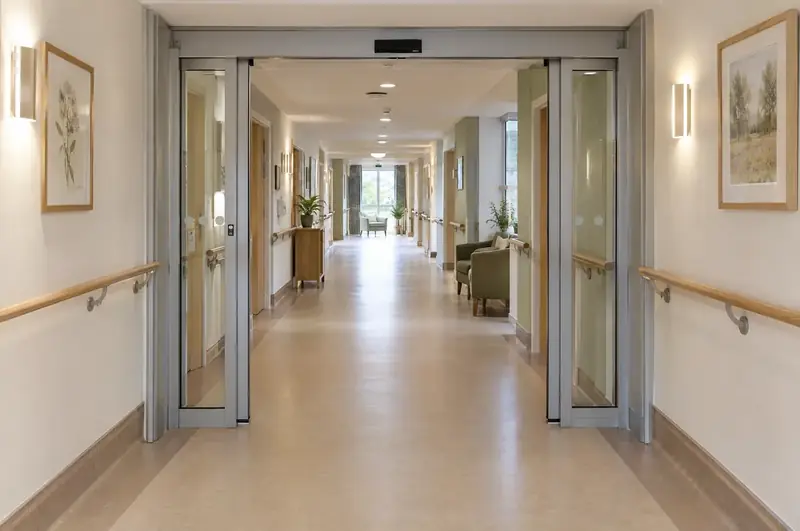
- Ward and corridor doors: cross-corridor doors that open for beds and close for fire and smoke control.
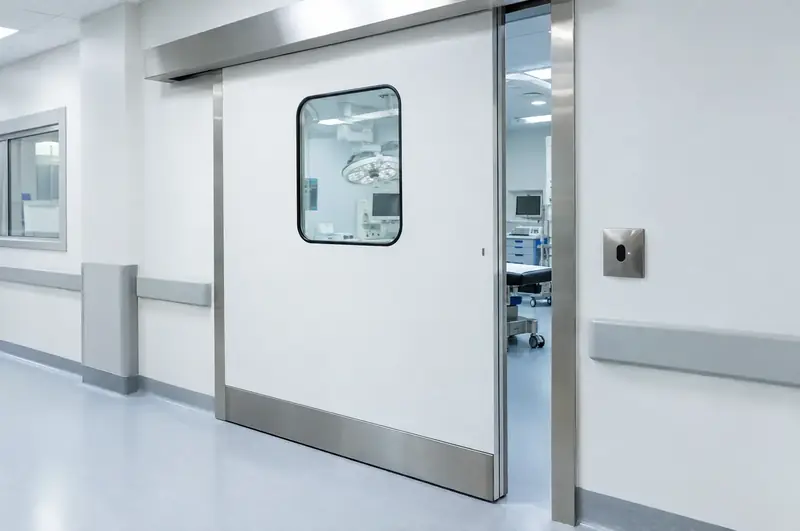
- Theatres, labs and imaging rooms: sealed doors that protect clean air and pressure regimes.
- Back-of-house routes: service corridors, pharmacy, stores and goods entrances that need access control.
Which automatic doors suit healthcare buildings?
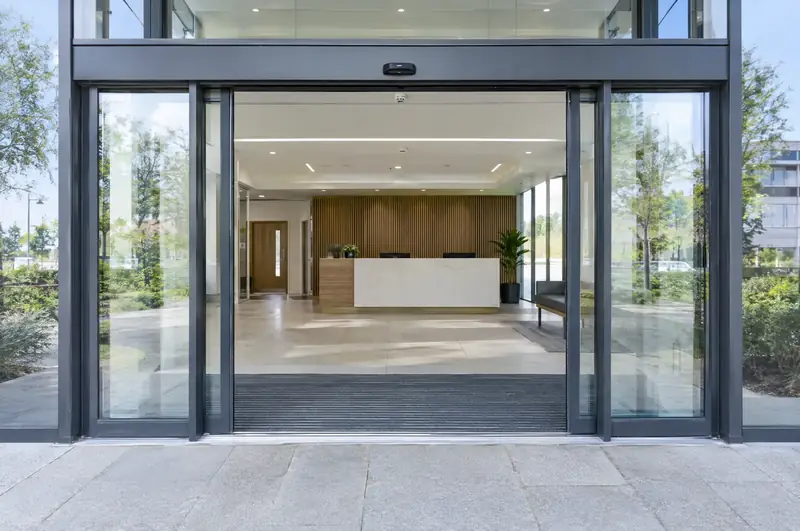
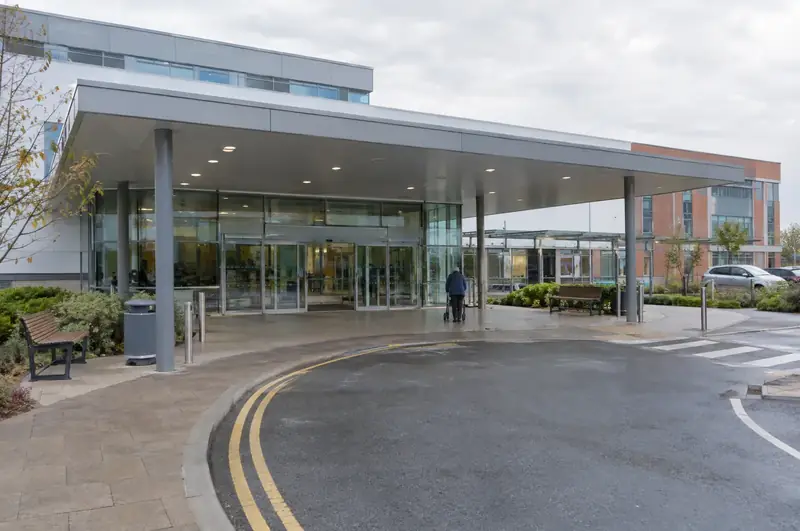
Automatic sliding doors are the usual choice for main entrances because they open without swinging into anyone and give a wide, level opening. Bi-parting doors suit most entrances, and telescopic sliding doors give a wider opening where there is little wall beside the door, which helps with beds and stretchers.
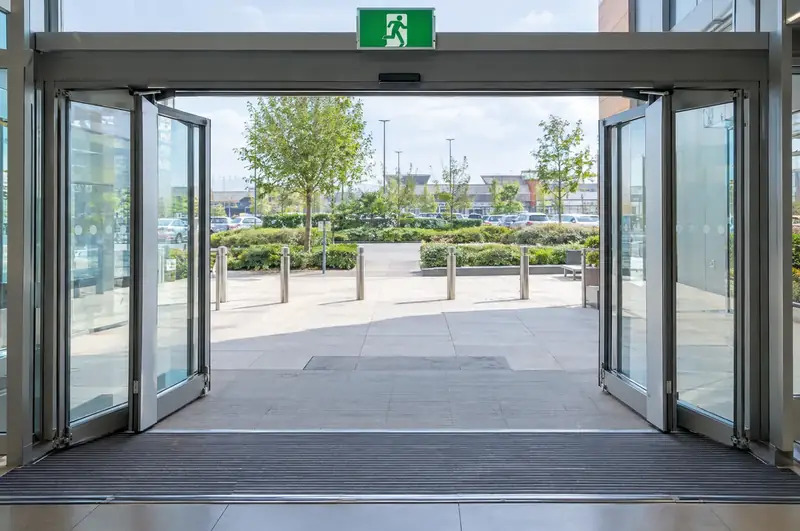
Busy entrances that lose a lot of heat often suit an automatic entrance lobby, with two sets of doors and a draught lobby between them. Where the entrance is also an escape route, break-out sliding doors let the leaves swing outwards to give a clear way out.
Inside the building, automatic internal doors and automatic swing doors suit wards and cross-corridor doors, and hermetic sliding doors are used for operating theatres, isolation rooms and clean rooms. Our guide to choosing automatic doors for healthcare and care homes goes into more detail.
What safety and compliance points apply in hospitals?
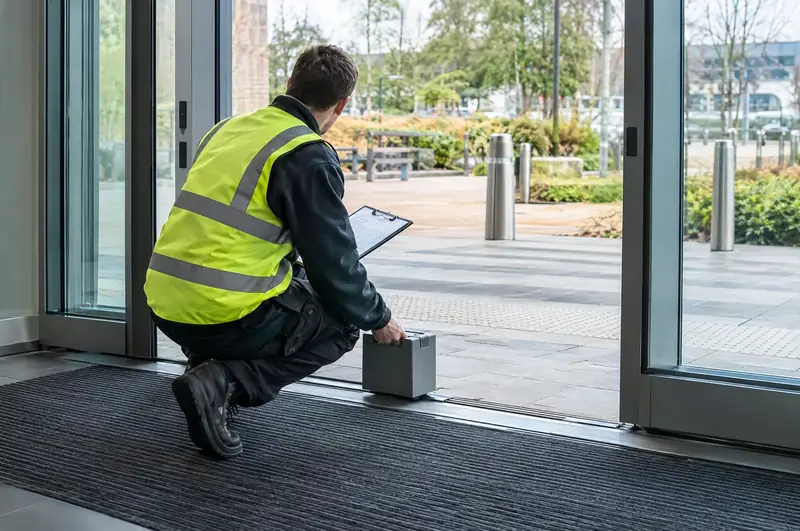
BS EN 16005 is the standard for the safety in use of power-operated pedestrian doors, and BS 7036-0 is the UK code of practice used alongside it. We set up, test and document doors with reference to both, with a site-specific risk assessment that looks at who actually uses each door.
In a hospital that matters more than most places. Patients may be confused, slow, partially sighted or on a trolley, so detection zones, opening speeds and hold-open times are set for the most vulnerable users rather than for a busy office.
- Workplace health and safety law expects powered doors to have safety features that prevent people being trapped or struck, and to be safe if the power fails.
- Doors on escape routes must let people out safely in an emergency, so automatic doors on those routes are set up to open, break out or be openable by hand, as the fire strategy for the building requires.
- Fire doors that are held open must close automatically when the fire alarm operates. Fire door hold-open devices linked to the alarm keep corridor doors open in normal use.
- Clear glass in and beside doors needs to be safety glass or protected, with markings so people can see it.
Hospital estates teams often work to their own technical guidance on top of this. We read the specification you give us and say in the quote how each door is set up to meet it.
Can you work in a hospital that never closes?
Yes. Most hospital work has to be done with the building in use, so we plan it with your estates team before anyone arrives. That usually means phasing work so one door of a pair or one entrance stays open, agreeing temporary routes and signs, and booking noisy or dusty tasks for quieter times.
Work at main entrances, theatres and other critical areas can be scheduled for evenings, nights or weekends where your site needs it, and any extra cost is shown in the quote. Engineers follow your permit-to-work, infection control and access arrangements, including dust control and cleaning before an area is handed back.
Where an existing door has to come out of service, we agree how the opening will be secured and kept safe until the new door is commissioned and tested.
How should hospital automatic doors be serviced?
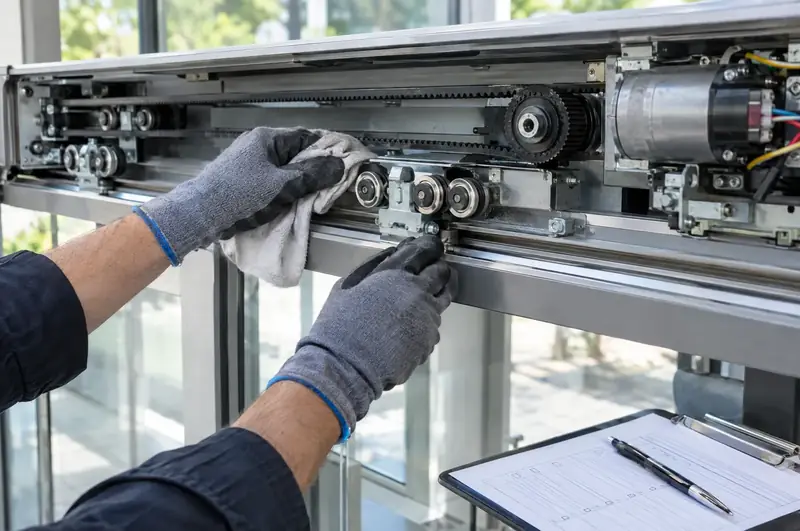
Hospital doors open many times an hour, so they wear faster than most. We recommend a trained engineer checks the safety functions at least once a year, with service intervals set by the manufacturer's instructions and how heavily the door is used. Busy main entrances are often serviced more often than that.
A service contract covers planned visits, with a written record of each one for your estates files. Between visits, someone on site should carry out simple regular checks and keep a record. When a safety inspection finds gaps on older doors, such as missing presence sensors, we quote safety and compliance upgrades separately so you can plan and budget for them.
Repairs are paid visits, with the price agreed in writing before an engineer attends. We work on the door's existing make, including doors we did not install.
How do you quote for healthcare projects?
New doors, retrofits and upgrades start with a free site survey and a fixed, itemised written quote. The survey looks at the opening, structure, floor, power, fire strategy, access control and how each door is used, and we can survey several doors or a whole site in one visit.
As a guide, a new automatic sliding door is typically £4,495 to £12,995 ex VAT, and a hermetic theatre door is from £8,995 ex VAT. The guide price tool gives a range for a single opening, and the price guide lists every item. For framework or tender work, send us the specification and drawings and we will price against them.
Questions
Can automatic doors help with infection control?
Yes. Doors that open on approach, or from a wave-to-open switch, mean people do not need to push a plate or pull a handle, which cuts the number of shared touch points at entrances and on wards. Sliding doors are also easier to keep clean than swing doors with closers and handles. For clinical rooms, hermetic doors with smooth faces and sealed edges are made to be wiped down. See touch-free activation.
Can a hospital entrance open wide enough for a bed?
Yes, if the opening and the door type allow it. Bi-parting sliding doors give a wide clear opening, and telescopic sliding doors give more width where there is little wall beside the entrance. The survey measures the structural opening and the space for the leaves to slide into, and we confirm the clear opening width in the quote before anything is ordered.
What happens to hospital automatic doors when the fire alarm sounds?
It depends on the fire strategy for the building. Doors on escape routes are usually set to open and stay open, or to break out, when the alarm operates, while doors that form part of fire or smoke compartments are set to close. We connect each door to the fire alarm through an interface agreed with your fire engineer and test it before handover. See power cuts and fire alarms.
Do you work on hospital doors that other companies installed?
Yes. We repair, service and inspect automatic doors of most makes, whoever installed them. Parts for some older or unsupported drive units can be hard to find. Where that happens we explain the options, which often include a drive unit replacement that keeps the existing frame and leaves, and we quote it before any work is done.
Can you survey every automatic door on a hospital site?
Yes. We can survey or inspect all the automatic doors on a site in a planned programme, record each door's type, condition and safety devices, and price any work door by door. That gives your estates team a clear list to prioritise. New work surveys are free; safety inspections of existing doors are paid visits, priced in writing before we attend.