What do public buildings need from automatic doors?
Council offices, libraries and leisure centres are used by everyone: older people, disabled people, parents with buggies, children on their own and people who do not know the building. The entrance has to be easy and safe for all of them, every day, often over long opening hours.
Many public buildings also have a mix of old and new doors, installed at different times by different contractors, with patchy records. Bringing those doors up to a consistent, documented standard is often as important as installing new ones.
Which doors suit public buildings?
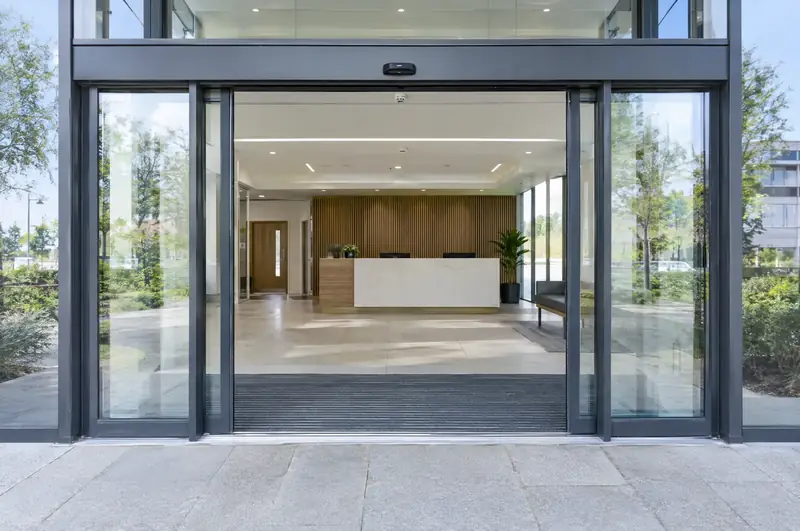
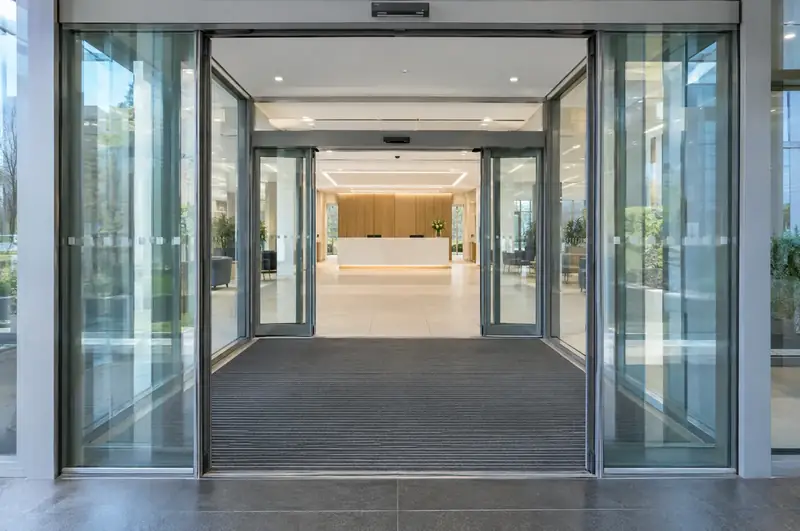
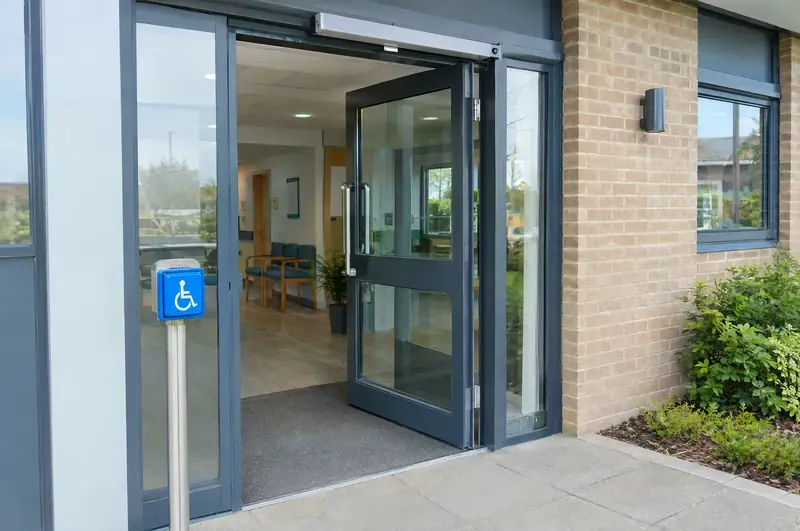
Automatic sliding doors are the usual choice for main entrances, often as an automatic entrance lobby with two sets of doors to hold heat in. Where the entrance is also a way out in a fire, break-out sliding doors let the leaves swing out to clear the escape route.
Inside, accessible door operators suit doors to meeting rooms, toilets and changing areas, and automatic internal doors suit busy corridors. In leisure centres, humid air near pools affects the choice of operator, sensors and finishes, and we check this at the survey.
Museums, galleries and civic buildings are often listed or in conservation areas, where the appearance of a new entrance may need consent. We can work with your conservation officer and architect on frame finishes, operator position and how the new door sits in the existing opening.
How do safety inspections help manage a public estate?
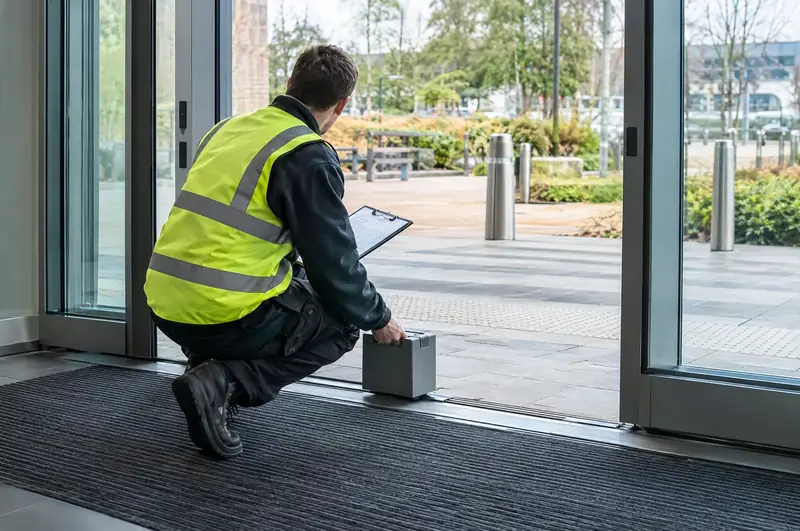
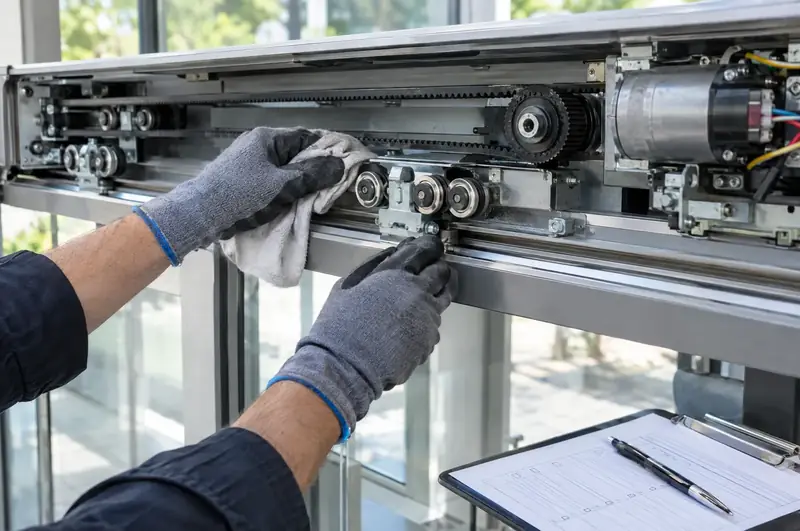
A safety inspection checks each door for the hazards BS EN 16005 deals with: crushing, shearing, impact and drawing-in. It records how the door behaves, what safety devices it has and whether they work, with a site-specific risk assessment. BS 7036-0 is the UK code of practice used alongside BS EN 16005 for that risk assessment.
Standards are not retrospective, so an older door does not become unlawful when a standard is updated. The inspection shows where an upgrade would reduce risk, and we quote any safety and compliance upgrades separately, door by door, so you can prioritise them. Sensor upgrades are the most common fix on older doors. Each report lists the door's location, type and condition, so it can go straight into your asset register.
What law and guidance applies to public buildings?
Councils and other public bodies are service providers and employers, so they have duties to make reasonable adjustments for disabled people under equality and accessibility law. Building regulations guidance on access applies to new buildings and to building work on existing buildings; the details differ in each UK nation.
Workplace health and safety law expects powered doors to have safety features that prevent people being trapped or struck, and to be safe if the power fails. Doors in workplaces must be kept maintained and in good working order, and regular servicing with a written record is the usual way to show that. The person or body in control of each building is responsible for keeping its doors safe, and inspection and service records help show that responsibility is being met.
A powered door is treated as machinery, so new and converted doors are handed over with a Declaration of Conformity, the correct marking and instructions for use and maintenance.
Can you work in buildings that stay open to the public?
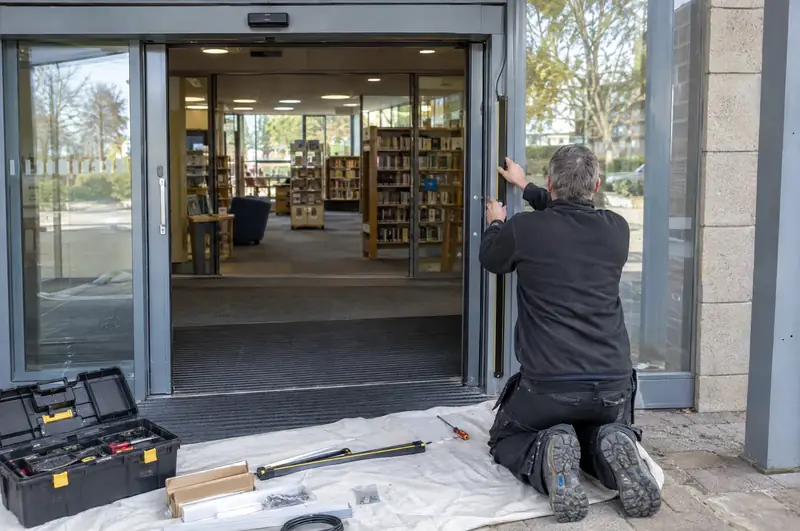
Yes. We plan the work so the building can stay open, keeping an accessible entrance in use, putting up clear signs and screening work areas. Entrance replacements can be scheduled for closed days, early mornings or evenings, with any extra cost shown in the quote. Where an entrance has to close for a short time, we agree an alternative accessible entrance and signs in advance, so disabled visitors are not turned away.
Engineers follow your contractor induction, permit and safeguarding rules, which matters particularly in libraries and leisure centres used by children and vulnerable adults.
How do you price and manage public sector work?
New doors and upgrades start with a free site survey and a fixed, itemised written quote. Repairs, servicing and inspections are paid visits priced in writing before we attend. As a guide, a safety inspection and risk assessment is typically £125 to £250 ex VAT per door, and a new automatic sliding door is typically £4,495 to £12,995 ex VAT.
For several buildings, we can inspect a whole portfolio and price each door as a separate item. Send us tender documents, a specification or an asset list and we will price against it. We recommend a trained engineer checks the safety functions of each door at least once a year, with service intervals set by the manufacturer's instructions and how heavily the door is used.
Questions
Can you inspect all the automatic doors across our buildings?
Yes. We can inspect every automatic door in a building or across a portfolio, with a written report and risk assessment for each door and a summary of recommended work in order of priority. Inspections are paid visits, priced in writing before we attend, and any upgrades are quoted separately so you can plan and budget for them.
Our doors were installed by different companies. Can you look after them all?
Yes. We service, repair and inspect automatic doors of most makes, whoever installed them, so one contract can cover a mixed estate. Where parts for an older drive unit are no longer available, we explain the options, which often include replacing the drive unit while keeping the existing frame and leaves.
Is an older automatic door unlawful if it does not meet the latest standard?
No. Standards are not retrospective, so a door does not become unlawful when a standard is updated. What matters is that the door is safe for the people using it and kept maintained. A safety inspection shows whether any upgrades would sensibly reduce risk, such as adding presence sensors or side-screen protection.
Can you work to our contractor and safeguarding requirements?
Yes. Engineers follow your sign-in, induction, permit-to-work and safeguarding procedures, and we provide the method statements and risk assessments your contractor process asks for. Tell us your requirements when you send the enquiry so they are built into the programme and the quote.
Do automatic doors on escape routes need special arrangements?
Yes. Doors on escape routes must let people out safely in an emergency, so automatic doors on those routes are set up to open, break out or be openable by hand, as the fire strategy requires. Break-out sliding doors are one common answer. See our guide to automatic doors on escape routes.