What does a surgery or clinic need from its doors?
Most surgeries and clinics have a small number of doors that matter a great deal: the main entrance, the inner lobby door and the doors to the waiting room, treatment rooms and accessible toilet. Patients need to get through them without help, often while unwell or in pain, and staff need to keep clinical and records areas secure.
Many practices are in converted houses, older health centres or shopping parades, where the entrance was never designed for wheelchairs. The usual aim is to make the existing doors easier to use without major building work or closing the practice.
Which doors and operators suit a surgery?
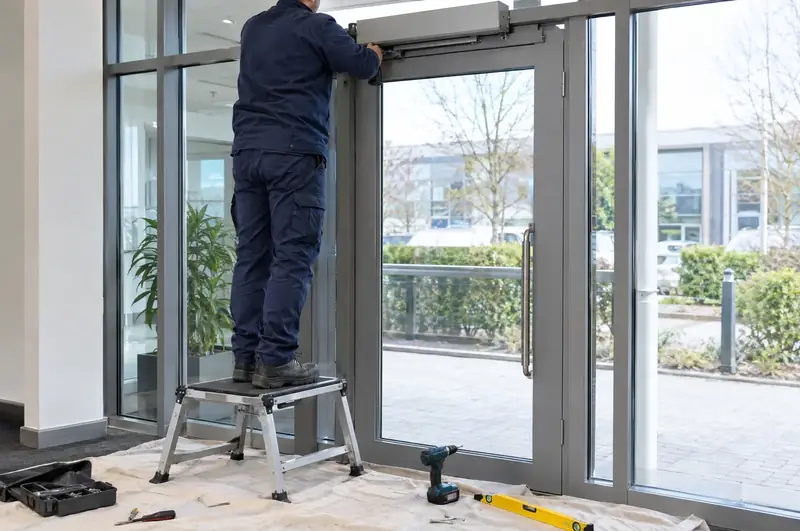
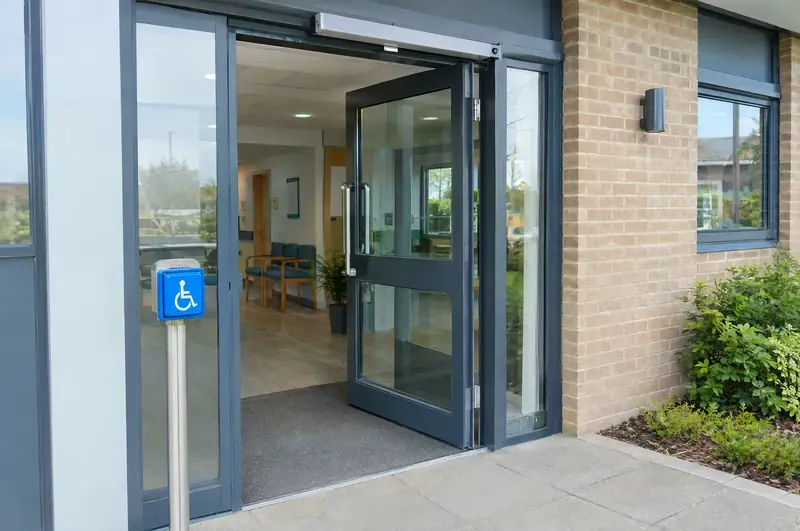
For many practices the answer is an accessible door operator on the existing entrance door. A low-energy swing operator opens the door slowly from a push pad or touch-free switch, and the door can still be used by hand. Where the door is sound, automating the existing door avoids replacing the frame.
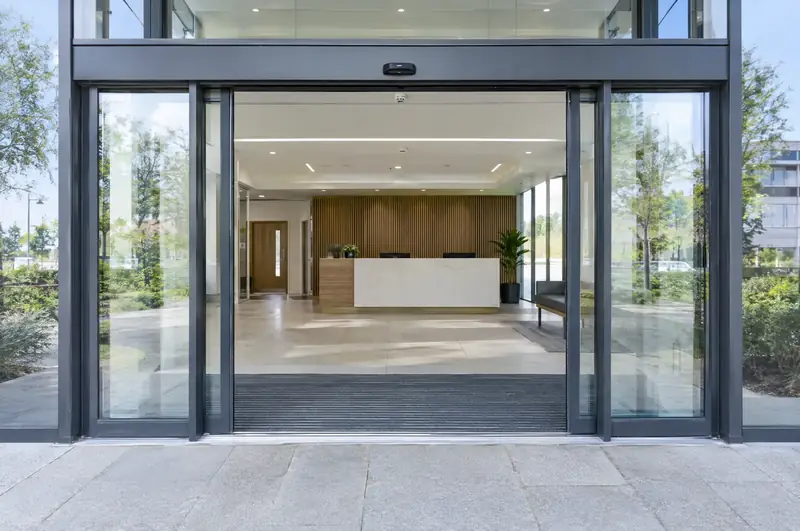
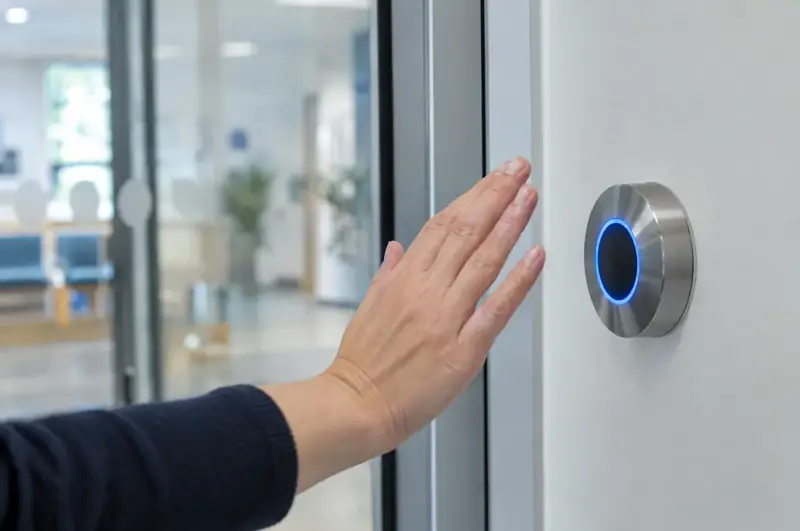
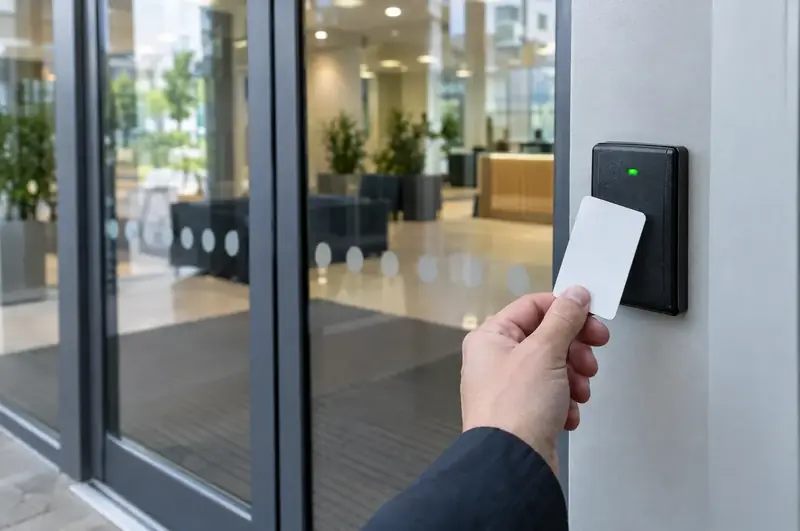
Busier health centres often suit automatic sliding doors at the entrance, which open on approach and give a wide opening, or a draught lobby with two sets of doors to keep the waiting room warm. Touch-free switches reduce shared touch points, and access control keeps staff-only areas secure.
Dental practices with surgeries off a corridor sometimes use automatic internal doors so staff can move between rooms without touching handles with gloved hands.
Low-energy or full-energy: which does a surgery need?
A low-energy operator moves the door slowly and with low force. It can usually run without extra safety sensors where the risk assessment shows a low risk to the people using it. England's building regulations guidance suggests low-energy doors for places not subject to frequent use or heavy traffic, which describes many small practices.
A full-energy operator opens faster and suits a busier door, but it needs presence sensors to stop or slow the door if someone is in its path. The survey looks at how many people use the door and who they are, and our guide to low-energy and full-energy operators explains the difference.
What are a practice's duties on access and safety?
Practices are service providers and employers, so they have duties to make reasonable adjustments for disabled people under equality and accessibility law. An automatic door is one of the most common adjustments at a surgery entrance, although fitting one does not on its own mean every duty is met.
BS EN 16005 is the standard for the safety in use of power-operated pedestrian doors, and BS 7036-0 is the UK code of practice used alongside it. We set up, test and document doors with reference to both. If your entrance is also an escape route, it must let people out safely in an emergency, and a swing door that can be pushed open by hand usually does this simply.
Push pads are placed where a wheelchair user can reach them without the door swinging into them, and the door is set to stay open long enough for someone slow to get through. Practices that rent their premises should check the lease, because the landlord's consent may be needed for changes to the entrance.
Can you fit the operator without closing the surgery?
Usually. An operator on an existing door is often fitted in a day, and we can work before or after clinic hours, or on a day the practice is closed, so patients are not disrupted. The door stays usable by hand until the operator is commissioned, and we tidy and clean before we leave.
Lead time for an operator on an existing door is typically two to four weeks once you accept the quote. A new sliding entrance takes longer, because the frame and glass are made to size.
How are surgery doors serviced and quoted?
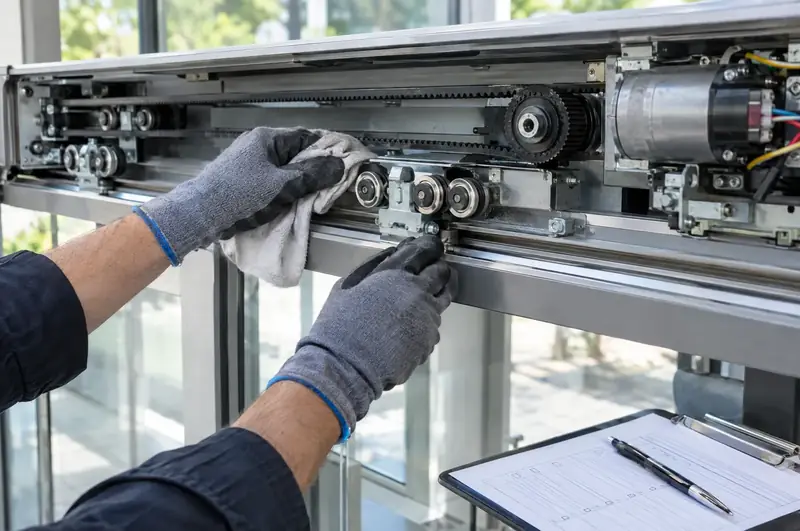
We recommend a trained engineer checks the safety functions at least once a year, with service intervals set by the manufacturer's instructions and how heavily the door is used. Servicing and repairs are paid visits priced in writing before we attend, and every visit is recorded.
New operators and doors start with a free site survey and a fixed, itemised written quote. The survey looks at the door, frame, hinges, structure and power, where patients approach from and where push pads can go, and we can price the entrance, lobby and toilet doors as separate items so you can phase the work. As a guide, an accessible operator on a single existing door is typically £1,795 to £2,995 ex VAT, and a new automatic sliding door is typically £4,495 to £12,995 ex VAT. The guide price tool gives a range for your door.
Questions
Can our existing entrance door be made automatic?
Usually, yes. Most sound swing doors in aluminium, timber or steel frames can take a low-energy or full-energy swing operator. The survey checks the door, hinges, frame and the wall or header the operator fixes to, and where power can come from. If the door is too worn or too heavy, we explain why and quote the alternatives. See automating an existing door.
Does a low-energy door operator need safety sensors?
Not always. Low-energy movement is slow and low in force, and it is often used without extra sensors where a risk assessment shows a low risk to the people using the door. If the assessment shows a higher risk, for example frequent use by frail or very young patients, sensors are added. We record the reasoning in the risk assessment at handover.
Where should the push pads go?
Push pads should be easy to find and reach from a wheelchair, and placed so the door does not swing into the person pressing them. Building regulations guidance in England, Wales and Scotland places manual controls between 750 mm and 1000 mm above the floor and expects them to contrast with the wall. We mark proposed positions at the survey and agree them with you.
Can the door be locked when the surgery is closed?
Yes. The operator can be switched off and the door locked as normal, or an electric lock can be added so the door locks automatically when closed and releases for staff with a fob or keypad. Exit from the inside stays easy, and the arrangement is checked against your fire risk assessment.
Can you automate the accessible toilet door too?
Yes. A low-energy operator can be fitted to an accessible toilet door with a push pad outside, a lock button inside and an engaged indicator, so a wheelchair user can open the door, lock it and open it again without help. The lock is set up so staff can open the door from outside in an emergency.