What do schools and colleges need from automatic doors?
Education buildings have sudden surges of people: the start and end of the day, break times and class changes. Doors need to stand up to that, and to knocks, leaning and the occasional misuse, while still being safe for small children and for pupils and staff with disabilities.
Security is a constant concern. Reception entrances usually need a secure lobby where visitors are checked before they reach the rest of the site, and internal doors may need to lock during a lockdown while still letting people out in a fire.
Which automatic doors suit education buildings?
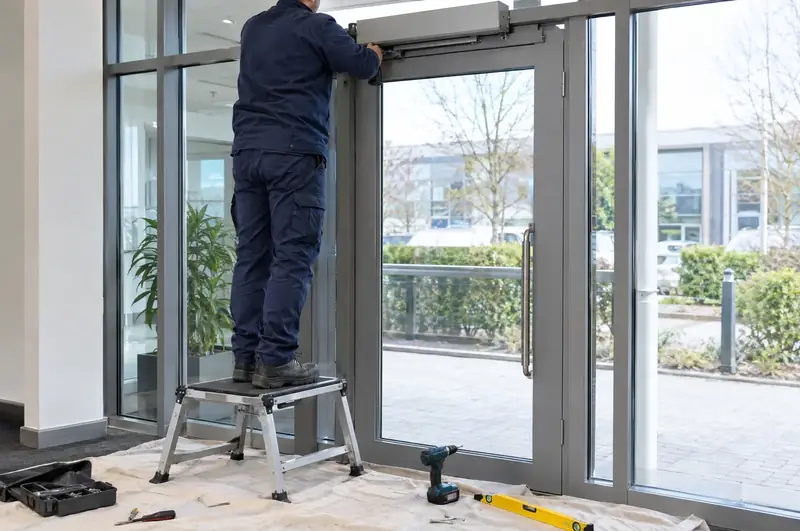
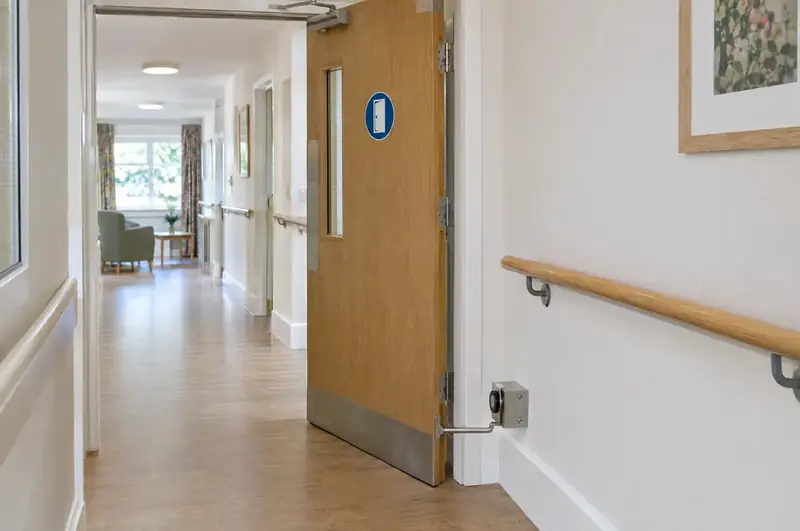
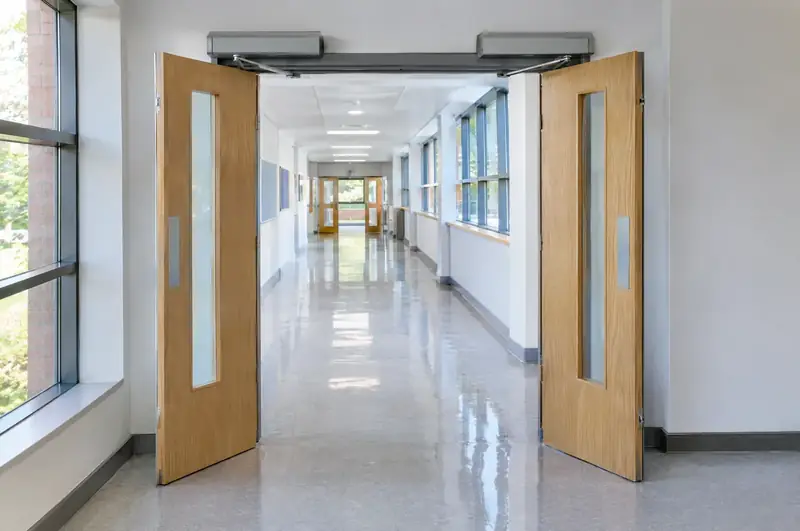
In corridors and between buildings, automatic swing doors are common, because many school doors are timber double doors that also act as fire doors. Operators can often be fitted to sound existing doors; see automating an existing door. Doors that should stand open during the day and close in a fire can use fire door hold-open devices instead.
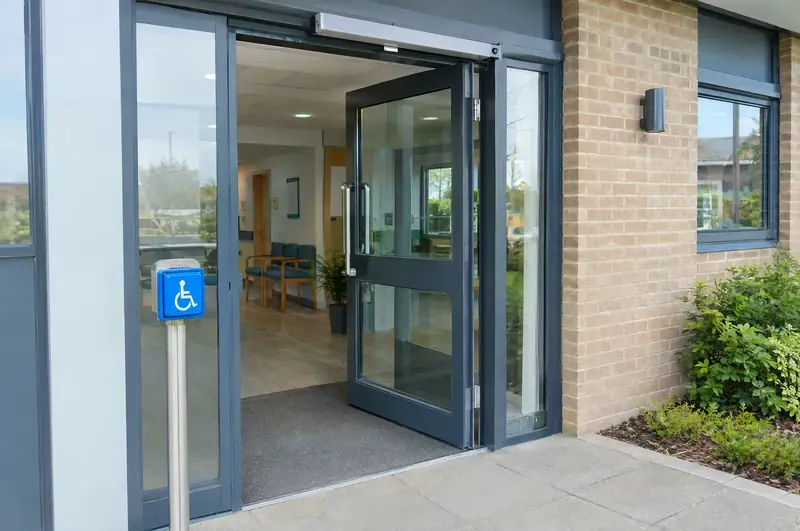
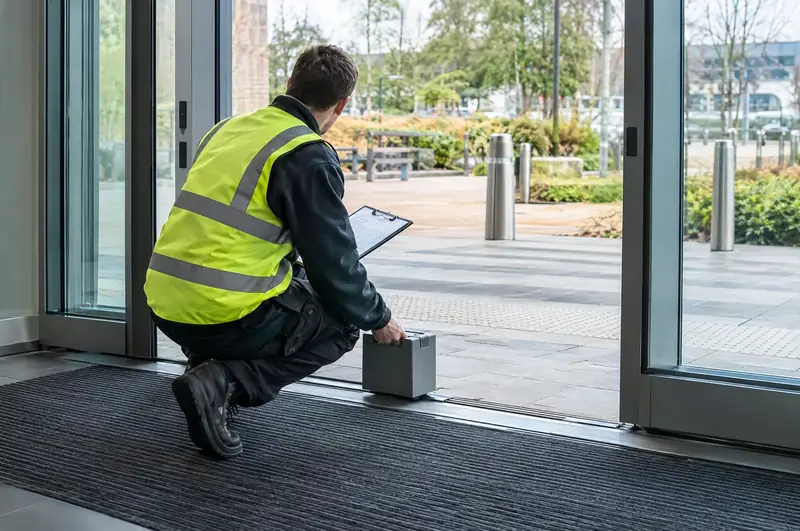
At main entrances, automatic sliding doors handle large numbers of people, and two sets of doors can form a secure reception lobby that also cuts draughts. Accessible door operators with push pads suit doors to accessible toilets, specialist classrooms and quieter routes.
University campuses often have a wide range of doors, from library and students' union entrances with heavy footfall to laboratories with controlled access. Automatic internal doors suit busy teaching corridors, and hermetic sliding doors are used for some laboratories and clean rooms.
How do you keep children and young people safe around automatic doors?
Children are among the most vulnerable door users. They run, stop suddenly, put their hands near hinges and play with doors. BS EN 16005 is the standard for the safety in use of power-operated pedestrian doors, and BS 7036-0 is the UK code of practice for risk assessment used alongside it. We set up, test and document doors with reference to both, with a risk assessment that takes the age of the users into account.
In practice that can mean presence sensors on both sides of swing doors, finger protection on the hinge side, slower speeds in primary schools and careful placing of push pads and switches. Glass in doors and side screens needs to be safety glass and clearly marked.
Doors on escape routes must let people out safely in an emergency, and fire doors that are held open must close when the fire alarm operates. Where access control or lockdown locks are added, we check the arrangement against the fire strategy so that nobody can be trapped.
Can you work around term time?
Yes. Most installation work in schools is planned for half terms and the summer holiday, when the building is quiet and work can be done without pupils around tools. Urgent work in term time can be done after school or at weekends. Engineers follow your safeguarding rules, signing in and out, wearing ID and staying in agreed areas.
For larger projects we agree a programme with the business manager or site team early, because holiday slots fill up and complete door sets take time to make. Colleges and universities stay busier through the holidays, so there we agree quieter periods and building closures with the estates team.
How should school doors be serviced?
We recommend a trained engineer checks the safety functions at least once a year, with service intervals set by the manufacturer's instructions and how heavily the door is used. Doors with heavy use, or that are often knocked, are usually serviced more often, and booking visits for the holidays keeps disruption low.
Site staff should carry out simple regular checks between visits and record them. Safety inspections give you a written report on each door, and any safety and compliance upgrades it recommends are quoted separately, so you can plan them into a budget year.
How do you quote for schools and colleges?
New doors and upgrades start with a free site survey and a fixed, itemised written quote. We can survey all the doors on a site in one visit and price them as separate items, so you can phase the work over several holidays or budget years. Each item shows the door, safety devices, any access control or fire alarm link and the work needed, so governors, trusts or estates teams can see exactly what they are approving.
As a guide, a swing door operator on an existing door is from £1,795 ex VAT (£2,154 inc VAT), and a fire door hold-open device is from £145 ex VAT. Repairs and servicing are paid visits priced in writing before we attend. The price guide lists every item.
Questions
Can you fit operators to our existing timber fire doors?
Often, yes, using operators made for use on fire doors. The door, frame and hinges need to be sound and the door must still close when the fire alarm operates. We check the door's condition and fire rating at the survey. Where a door only needs to stand open during the day, a hold-open device that releases on the alarm can be a simpler option.
Can doors lock during a lockdown and still let people out in a fire?
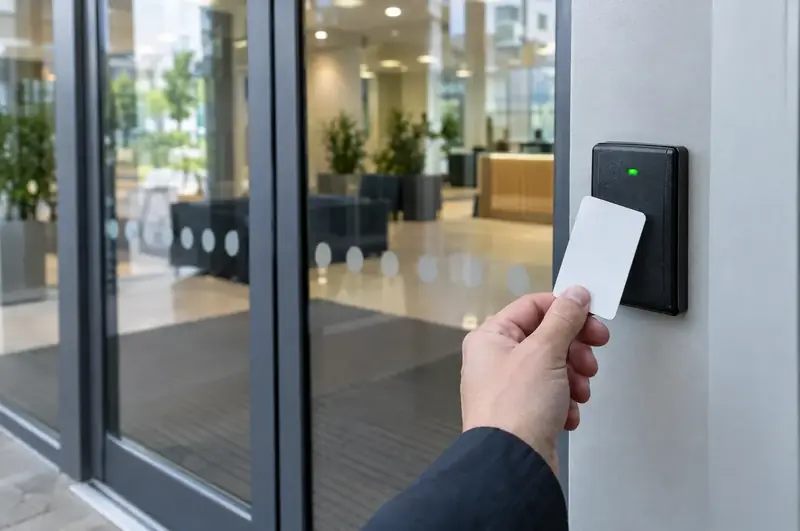
Yes, if the system is designed for both. Electric locks and access control can secure doors from the outside on a lockdown signal, while the door can still be opened from the inside and releases when the fire alarm operates, where the fire strategy requires it. We agree the arrangement with your site team and whoever manages fire safety before anything is fitted.
Will automatic doors cope with pupils knocking and leaning on them?
They can, if they are chosen and set up for it. Heavy-duty operators, sturdy arms, protective covers and robust push pads all help, and sensors can be set so a pupil leaning on a closed door does not keep opening it. Regular servicing catches damage early. We look at how each door is used at the survey before recommending equipment.
Can you do the work in the school holidays?
Yes, and we recommend it for most installation work. Holiday slots are popular, so it helps to arrange the survey and accept the quote well ahead, particularly for complete door sets that are made to size. Servicing and inspections can be booked for holidays too, so doors are checked without disrupting lessons.
Do automatic doors help disabled pupils move around independently?
Yes. A heavy corridor or classroom door can stop a wheelchair user or a pupil with limited strength moving around on their own. A low-energy operator with a push pad, or a fob that opens the door, lets them get through without waiting for help. Schools, colleges and universities have duties to improve access for disabled pupils, students and staff, and an automatic door is a common way to improve an entrance.