What do hotels and venues need from their doors?
Guests arrive with suitcases, pushchairs and wheelchairs, often after a long journey and sometimes late at night. The entrance needs to open for them without a struggle, look right for the building and keep the lobby warm and quiet whatever the weather.
Behind the scenes, doors to restaurants, kitchens, function rooms, pools and accessible bedrooms each have their own needs, from staff carrying trays to guests who cannot open a heavy fire door.
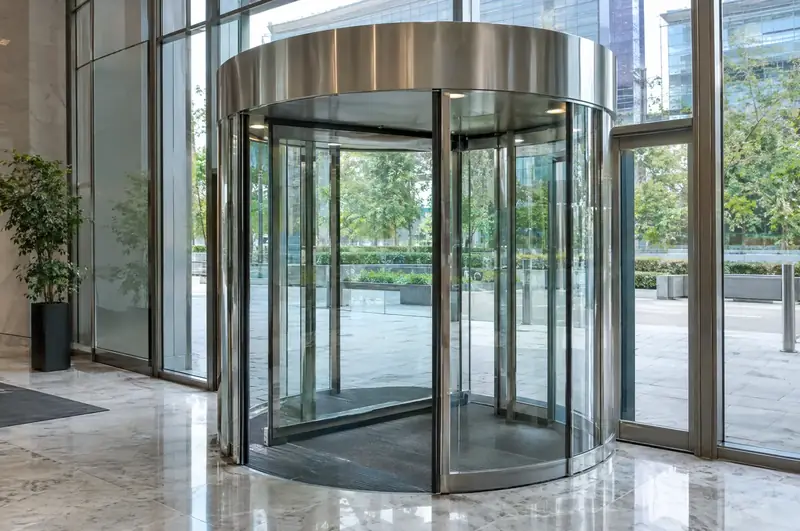
- Main entrance: curved, revolving, frameless or sliding doors, often with a draught lobby.
- Restaurant and bar doors: doors that open for staff carrying trays and for guests in wheelchairs.
- Function and conference rooms: wide doors that stand open for events and close for fire.
- Pool, spa and leisure areas: doors and operators chosen for humid air and wet floors.
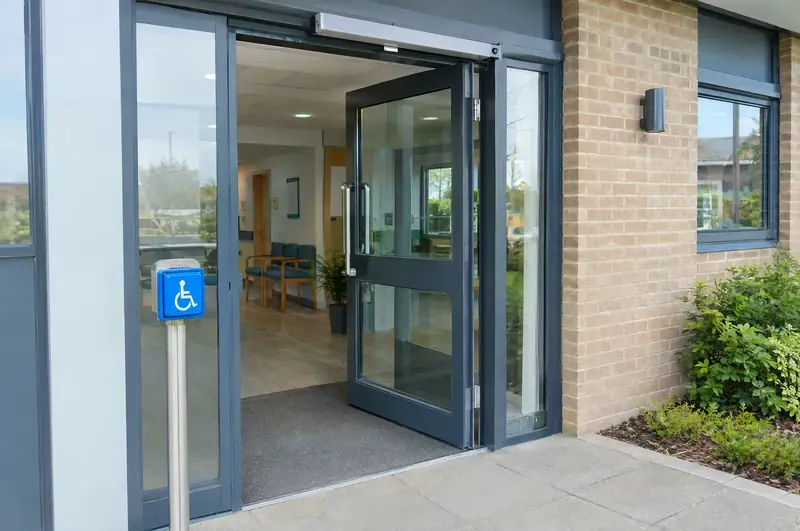
- Accessible bedrooms: doors that a guest using a wheelchair can open without help.
Which entrances suit hotels and hospitality?
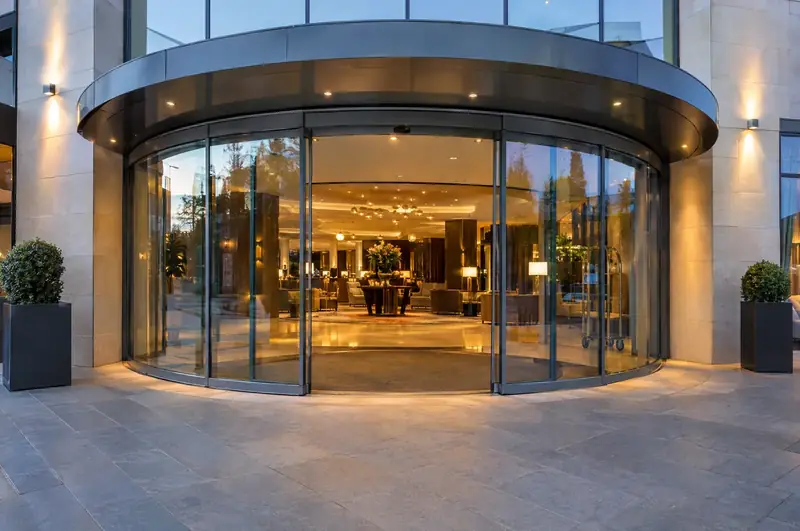
Curved automatic doors and revolving doors are popular at hotel entrances because they look striking and cut draughts. A revolving door is not accessible on its own, so an accessible sliding or swing door is provided alongside it.
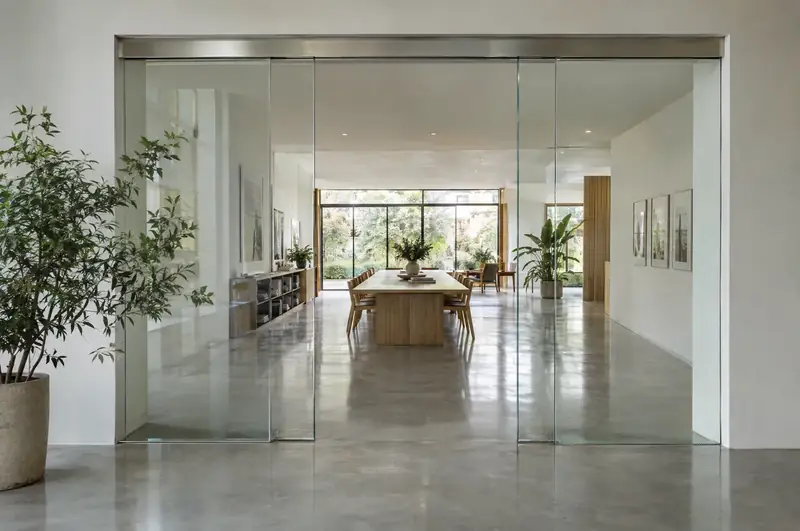
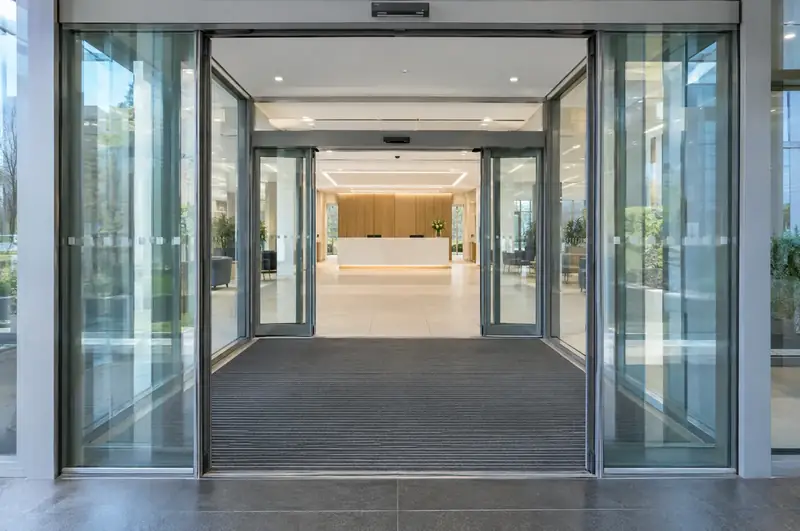
Frameless glass automatic doors suit boutique hotels, restaurants and bars that want an all-glass front, and automatic sliding doors suit most other entrances. On exposed or windy sites, an automatic entrance lobby with two sets of doors helps keep the lobby comfortable.
Inside, accessible door operators help on routes to accessible bedrooms, toilets and function rooms, and fire door hold-open devices keep corridor fire doors open in normal use and release them when the alarm sounds.
What safety and accessibility points apply?
Hotels and venues are service providers and employers, so they have duties to make reasonable adjustments for disabled people under equality and accessibility law. A step-free automatic entrance and easy-to-open internal doors are common adjustments.
BS EN 16005 is the standard for the safety in use of power-operated pedestrian doors, and we set up, test and document doors with reference to it. Revolving doors need particular care, because guests may be unfamiliar with them, carrying luggage or with children, so speeds, sensors and emergency stops are set up for the people using them. Clear glass in and beside doors needs safety glass and markings, which matters at all-glass entrances where the door can be hard to see at night.
Doors on escape routes must let people out safely in an emergency. Automatic doors on those routes are set up to open, break out or be openable by hand, as the building's fire strategy requires, and doors linked to the fire alarm are tested at handover.
Can you work without disturbing guests?
Yes. Hotels never really close, so we plan entrance work for the quietest days and times, keep a safe, signed alternative entrance open and limit noisy work to agreed hours. Engineers keep work areas tidy and screened and leave public areas clean at the end of each shift. Where a fire door or escape route door is affected, we agree temporary arrangements with whoever manages fire safety for the building before work starts.
Curved and frameless glass entrances are made to measure, so there is a longer gap between survey and fitting. We agree the programme in advance so the work can be timed around bookings and events.
How do you keep hotel doors running?
An entrance door that fails at check-in is a problem for guests and staff. We recommend a trained engineer checks the safety functions at least once a year, with service intervals set by the manufacturer's instructions and how heavily the door is used; revolving doors and busy entrances are often serviced more often.
Servicing visits are recorded in writing, and repairs are priced in writing before we attend. Ageing entrances can often be brought back with refurbishment or a drive unit replacement rather than a new door.
How do you quote for hotels and venues?
New entrances and upgrades start with a free site survey and a fixed, itemised written quote. As a guide, a curved automatic door is from £14,995 ex VAT and an automatic revolving door is typically £29,995 to £59,995 ex VAT, with a full design after the survey. The survey looks at the entrance structure, canopy, floor, power, wind exposure and how guests and staff use each door.
For groups and operators with several sites, we can survey and price each site separately, so each property has its own quote and records. The guide price tool gives a range for a single entrance before anyone visits.
Questions
Is a revolving door a good idea for a hotel entrance?
It can be, at busy or exposed entrances where holding heat in and keeping the lobby quiet matter. A revolving door is not accessible on its own, so it needs an accessible sliding or swing door alongside it, and it takes more space and costs more than a sliding door. The survey looks at your footfall, space and budget before we recommend one.
Can our existing entrance be refurbished rather than replaced?
Often, yes. If the frame and glass are sound, new rollers, tracks, seals and floor guides can bring a tired door back, and a new drive unit can replace a worn or unsupported operator while keeping the existing leaves. We assess the door at a free survey and quote refurbishment and replacement side by side. See automatic door refurbishment.
Can the door be locked at night but open for late arrivals?
Yes. A programme switch or timer can put the entrance into night mode, locked from the outside with free exit from the inside. Late arrivals can be let in by reception, an intercom or a room key card linked to access control. The arrangement is checked against your fire strategy so nobody can be locked in.
Do curved automatic doors take longer to make?
Yes. The curved glass, track and screens are made to the radius of your entrance, so the lead time is longer than for a standard sliding door. We measure the entrance at the survey, confirm the design and give the expected lead time in the quote, so the work can be planned around your bookings.
Can you automate the doors to accessible bedrooms?
Yes. A low-energy operator with a push pad or a fob lets a guest who uses a wheelchair open the bedroom door, and often the corridor doors on the way to it, without help. Bedroom doors are usually fire doors, so we use equipment made for use on fire doors and make sure the door still closes when the alarm operates.