What do care homes need from their doors?
In a care home the door has to work for the people least able to cope with it. Residents may walk slowly with a frame, use a wheelchair, have poor sight or be living with dementia. Staff move between rooms with trolleys, hoists and laundry, and visitors come and go all day.
So the doors need to open gently, stay open long enough, detect someone who stops in the doorway and close without force. Many corridor and bedroom doors are also fire doors, so they have to support the fire strategy, and the building needs to stay secure without trapping anyone inside in an emergency.
- Entrance doors that open on approach for residents and visitors, and can be controlled out of hours.
- Corridor and lounge doors that residents can use without waiting for help.
- Bedroom and bathroom doors that close for fire safety but are not too heavy to open.
- Garden doors that let residents get outside safely.
Which doors and devices suit care settings?
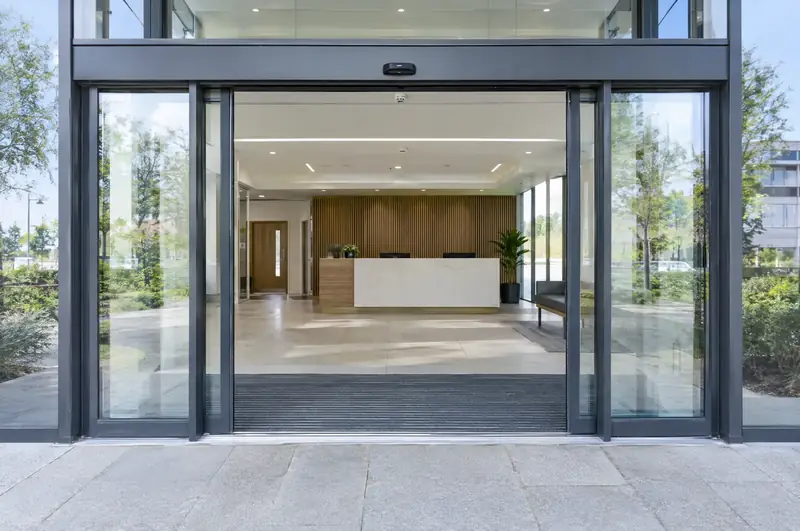
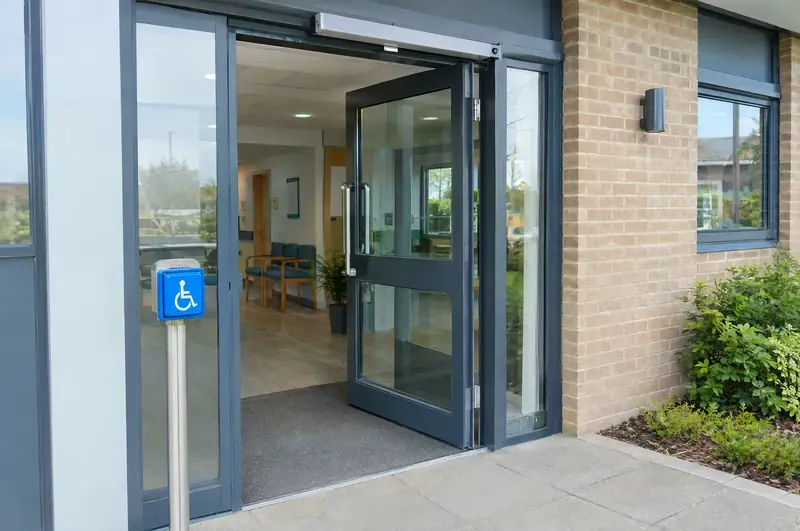
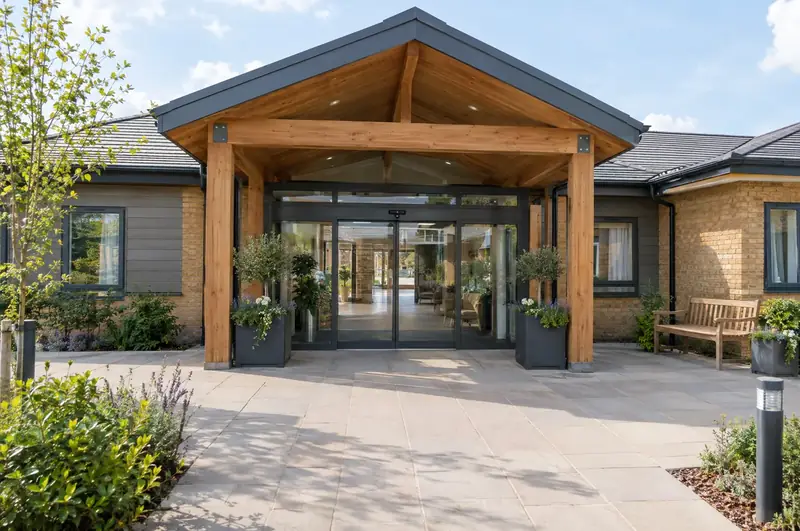
At the main entrance, automatic sliding doors are usually the best fit, because the leaves move sideways and never swing towards someone with a frame. Where the existing entrance door is sound, automating the existing door can be a lower-cost option.
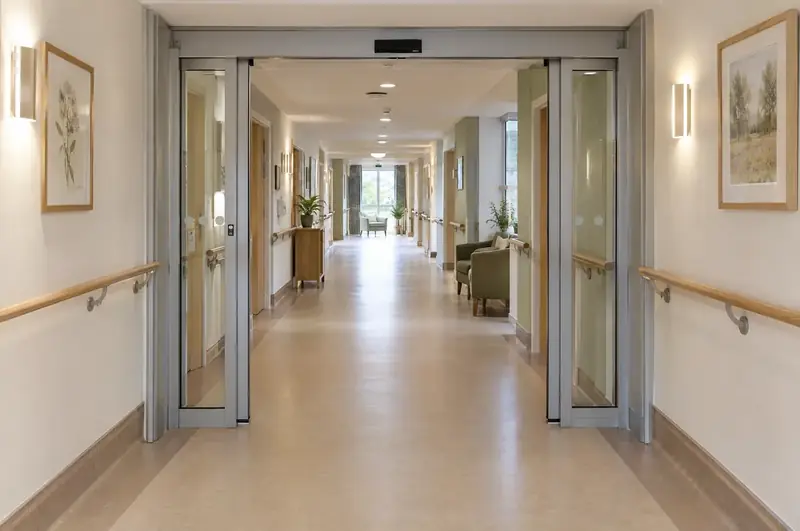
For internal doors, accessible door operators use slow, low-force movement and a push pad or touch-free switch, which suits doors that are not in constant use. Busier corridor doors may suit automatic internal doors with full safety sensors.
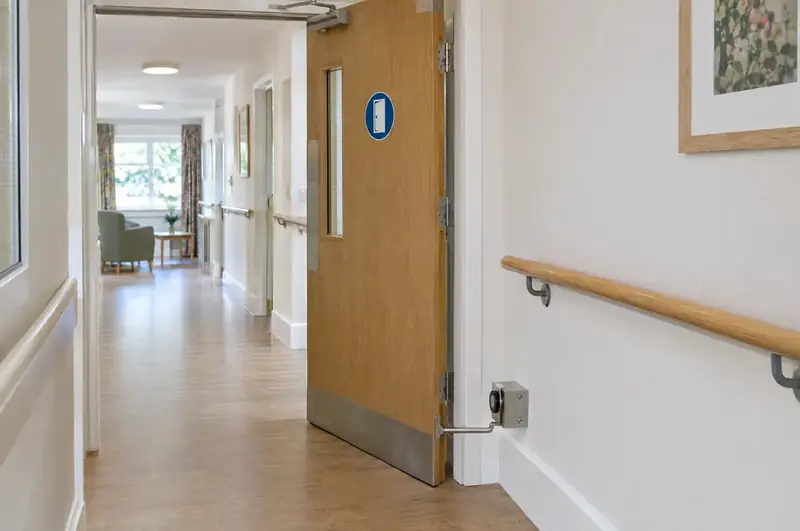
Many care homes use fire door hold-open devices on corridor doors and free-swing closers on bedroom doors. A hold-open device keeps a door open in normal use and releases it when the fire alarm sounds. A free-swing closer lets a resident open the door as if it had no closer, then closes it on the alarm. Your fire risk assessment decides which suits each door.
How do you keep residents safe and secure?
Safety starts with the risk assessment. BS EN 16005 is the standard for the safety in use of power-operated pedestrian doors, and BS 7036-0 is the UK code of practice used alongside it. Both expect the people who use the door, including older and disabled people, to shape how it is set up. In a care home that usually means slower speeds, longer hold-open times and sensors that cover the whole area where a resident could be standing.
Low-energy operators move slowly and with low force, and are used only where the risk assessment shows a low risk to vulnerable users. Where that is not the case, the door has presence sensors to stop or reverse it.
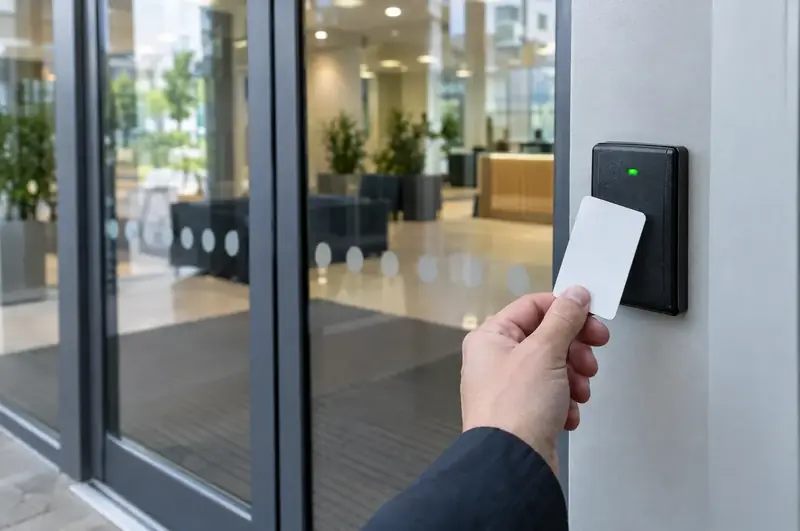
Security matters too. Access control such as keypads, fob readers or timed modes lets staff and visitors come and go while the entrance stays controlled. Decisions about who can open which doors belong to you and your care team; we set the doors up to match them and check the arrangement against the fire strategy, because doors on escape routes must let people out safely in an emergency.
Can you fit doors while residents are living there?
Yes, and most care home work is done that way. We agree the timing with the home manager so the work fits around meals, medication rounds and visiting, and we keep at least one safe route in and out at all times. Engineers sign in, follow your safeguarding and infection control rules and keep tools and cables out of reach.
Noisy work such as cutting or drilling is kept short and planned for times that suit residents. Where a door has to be out of use, we agree temporary arrangements so the entrance stays secure and the escape route stays clear, and we tidy and clean before handing the area back.
How often should care home doors be serviced?
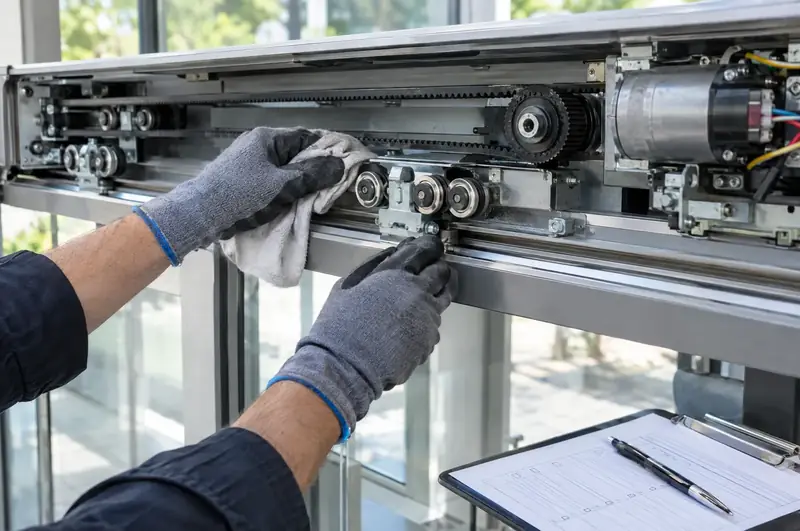
We recommend a trained engineer checks the safety functions at least once a year, with service intervals set by the manufacturer's instructions and how heavily the door is used. Main entrances in busy homes are often serviced more often.
Between visits, staff should carry out simple checks, such as making sure the door opens, stops and closes as it should, and keep a record. Hold-open devices and alarm releases should be tested as part of the home's routine fire safety checks. Our servicing visits come with a written record you can show to inspectors and your insurer, and repairs are priced in writing before we attend.
How do you quote for a care home?
Start with a free site survey. We walk the building with you, look at each door and how residents use it, check the fire strategy and power supply, and send a fixed, itemised written quote for the doors you want to change. Each door is priced as a separate item, so you can phase the work.
As a guide, an accessible low-energy operator on an existing door is typically £1,795 to £2,995 ex VAT and a fire door hold-open device is from £145 ex VAT. The guide price tool gives a range for a single door, and the price guide covers every item.
Questions
Are automatic doors safe for residents living with dementia?
They can be, when the door is chosen and set up for the people using it. Sliding doors that move sideways, slow speeds, long hold-open times and presence sensors that cover the whole doorway all reduce the risk of a resident being struck. Signs and a clear, uncluttered approach help residents understand the door. The risk assessment at handover records how each door has been set up for your residents.
Can a fire door have an automatic opener?
Yes, with equipment made for use on fire doors. A fire door can take an operator or a hold-open device, provided the door still closes when the fire alarm operates and the door, frame and hardware remain suitable for the door's fire rating. We check the door at the survey and agree the arrangement with whoever manages fire safety for the home. See fire door hold-open devices.
Can residents open the doors themselves?
Yes. Push pads, touch-free switches and radio buttons can be placed where a resident in a wheelchair can reach them, and a wristband or fob can open a door for a resident who cannot press a button. Low-energy operators can also be pushed open by hand. You decide which residents can open which doors, and we set the controls up to match.
Can the entrance be locked at night but still let people out in an emergency?
Yes. A programme switch or access control can lock the entrance overnight, with staff opening it by keypad or fob. The door is set up so it can still be opened from the inside in an emergency, and electric locks release when the fire alarm operates where the fire strategy requires it. We check the arrangement against your fire risk assessment before handover.
Do you service care home doors that other companies installed?
Yes. We service, repair and inspect automatic doors and hold-open devices of most makes, whoever installed them. The visit price is agreed in writing before we attend, and every visit is recorded. If a door is missing safety devices that we would expect for your residents, we explain why and quote the upgrade separately.